

A Mentor, Innovator, and Leader in Bladder Cancer
While considering a professional career, Colin P.N. Dinney, MD, figured he would simply follow in his family’s footsteps in business. But instead of attending Harvard Business School, as he planned, he carved his own path in medicine – and became an internationally recognized leader in the biology and management of bladder cancer.
After receiving his medical degree from the University of Manitoba, Dinney planned to focus on organ transplantation. During his research fellowship in surgery at Dalhousie University, he made the switch to urology because he thought that the program’s leadership provided more opportunity for career development.
When it became clear that the kidney was the only organ he could transplant, he made another switch–to urologic oncology. He completed his fellowship in urologic oncology at the University of Texas MD Anderson Cancer Center.
At MD Anderson, Dinney had the opportunity to work under Josh Fidler, PhD, the "Godfather of Metastasis Research.” Dinney’s initial research focused on understanding the biology of bladder cancer metastasis and then on examining interferons’ impact on angiogenesis in bladder cancer.
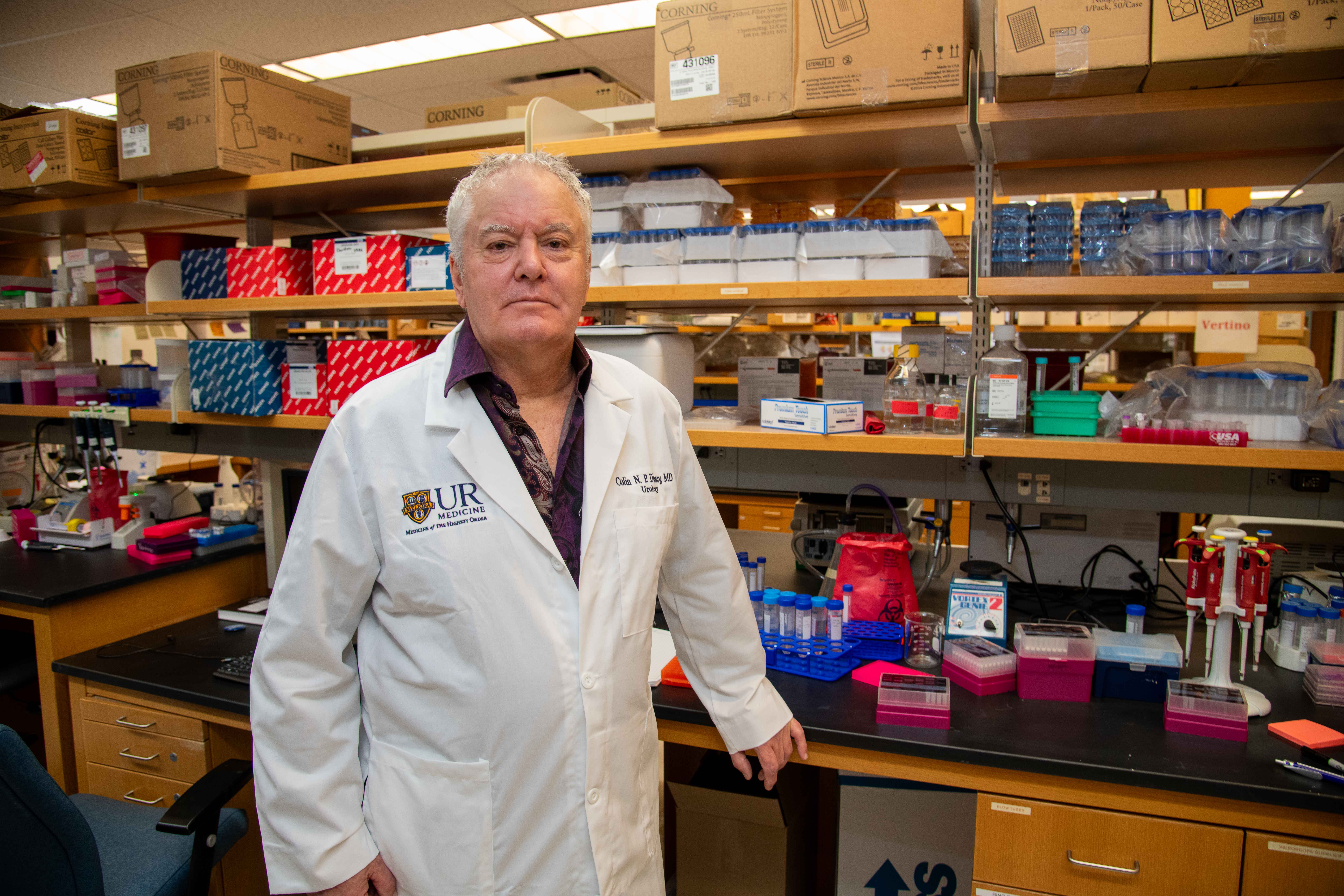
Novel therapies for bladder cancer
Throughout his esteemed career, Dinney has contributed to major advances in bladder cancer research, including work that helped lead to the development of novel intravesical gene therapies.
Dinney earned his first R29 grant in 1995 to study the biology of bladder cancer metastases over a five-year period. Collaborating with David McConkey, PhD, and other MD Anderson faculty members, Dinney then secured the first-in-the-nation Specialized Programs of Research Excellence (SPORE) grant for bladder cancer.
It was during his time at MD Anderson that Dinney conducted a major effort to develop a new drug, Nadofaragene firadenovec, for non-muscle invasive bladder cancer (NMIBC), the most common form of bladder cancer, through Phase 3 and FDA approval in 2022.
Correlative studies identified that a favorable response to Nadofaragene was linked to a urine cell-free DNA signature and durability by the generation of systemic anti-adenoviral antibodies.
As its founding president, he established the Society of Urologic Oncology Clinical Trials Consortium (SUO-CTC) to promote urologic oncologists’ participation in clinical trials and enhance the image of the specialty.
At the heart of his work was always the need to provide high reliability in patient care and clinical outcomes, education, research, and administration. Accolades for his clinical and academic achievements and his significant contributions to the field of urologic oncology include the Society of Urologic Oncology's Medal and his selection as the Society’s Whitmore lecturer in 2017.
Dinney has authored more than 400 book chapters and papers on urologic oncology and bladder cancer.
Revolutionizing the FDA registration process
Through his leadership within the SUO-CTC, Dinney worked to address the scarcity of approved agents for non-muscle invasive bladder cancer.
In 2011, only four drugs had been approved by the Federal Drug Administration for NMIBC since the 1950s, resulting in a glaring unmet need. Dinney initiated a collaboration between the SUO, American Urological Association, and the FDA that led to a restructuring of the drug registration process for Bacillus Calmette-Guérin (BCG) Unresponsive NMIBC.
This effort revolutionized the registration process, resulting in new approval guidelines and spurring an explosion in clinical trial activity for NMIBC. Since 2020, the FDA has approved four new drugs.
The Rochester opportunity
Dinney chaired the Department of Urology at MD Anderson for 20 years. Following his retirement, he wanted to conduct research somewhere new to allow his former department to prosper under its new leadership.
URMC’s Department of Urology and the Wilmot Cancer Institute provided the opportunity he was looking for, and he joined the Department in the fall of 2025.
“Colin Dinney is a legend in the field of urology, and his impact on bladder cancer research is unmatched,” said Department of Urology Chair Jean Joseph, MD, MBA, FACS. “We are delighted to have Colin on our team, assisting in crafting important research questions and developing clinical trials.”
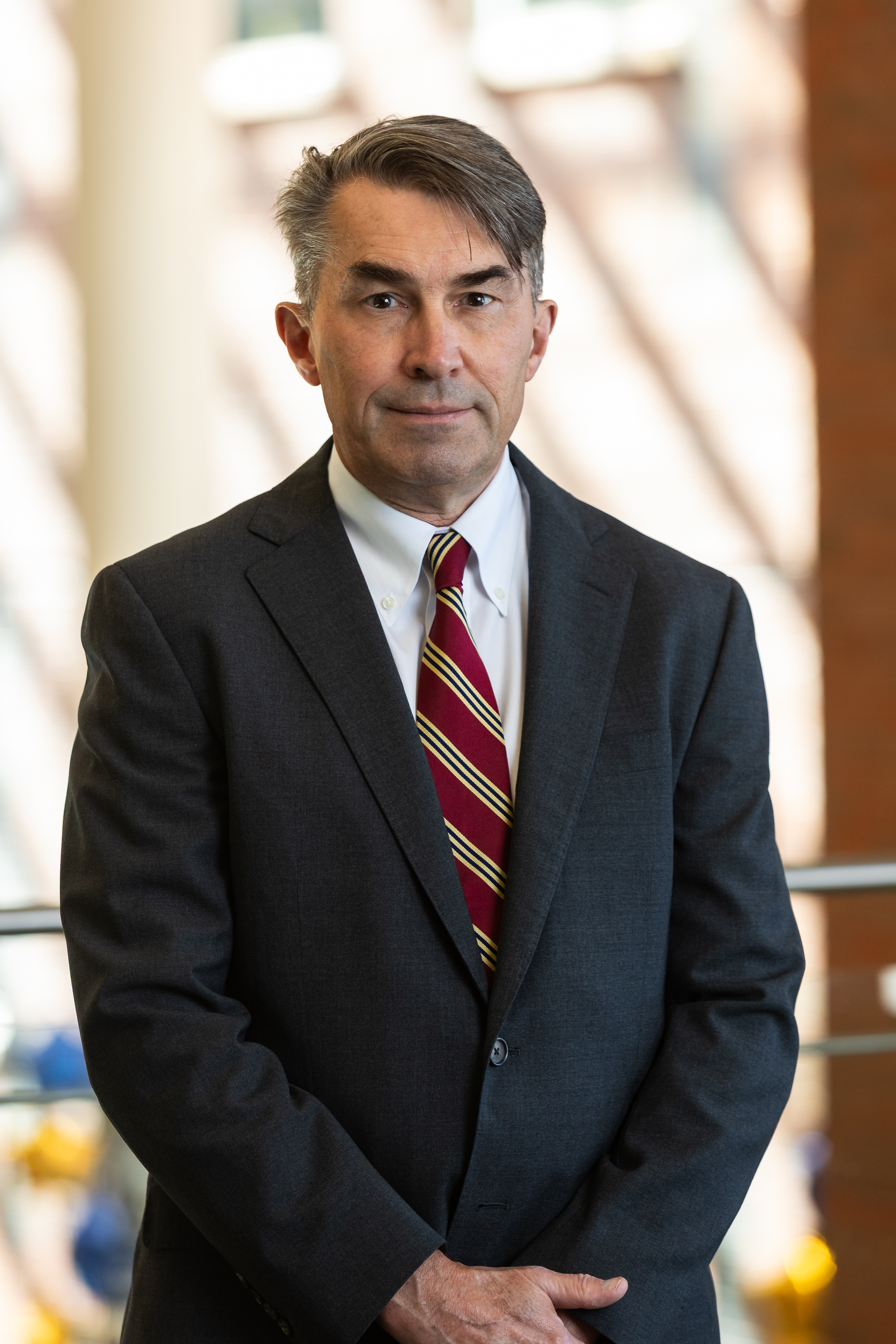
Dinney’s decision to make the move to Rochester was twofold: the Department’s commitment to building a research and development powerhouse and the opportunity to reunite with his SPORE-study collaborator, McConkey.
When serving as Department Chair at MD Anderson, Dinney recruited McConkey to the Urology Department. For McConkey, this was a daring move, as he was changing his focus from basic science to translational work.
“David and I had talked over the years about continuing our research together,” Dinney said. “I’ve always known that the two of us are much more effective working together than by ourselves.”
Two former fellows of Dinney’s at MD Anderson are also in the Department’s faculty: William Tabayoyong, MD, PhD, Assistant Professor of Urology, and Alexis Steinmetz, MD, Assistant Professor.
At URMC, in collaboration with MD Anderson and Columbia University, Dinney and McConkey are looking at the molecular mechanisms that mediate the initiation and progression of human bladder cancer. Project 3 of this PO1 grant proposes to define the role of type-1 interferon signaling in luminal-basal plasticity to identify molecular vulnerabilities to improve interferon gene therapy for bladder cancer. Dinney’s lab is also heavily invested in improving the therapeutic response to the oncolytic adenovirus Cretostimogene through a deeper understanding of the mechanisms involved in direct cell killing and indirect immune-mediated pathways.
Dinney also plans to leverage the Department’s expertise to develop novel predictive biomarkers isolated from extracellular vesicles shed into the urine. This work will be complemented by in vivo studies testing novel combination therapy and novel vectors using spontaneous models for bladder cancer in immunocompetent mice.
Of note, a recent study demonstrated that the combination of Cretostimogene with gemcitabine inhibited the growth of tumors resistant to both agents. This concept has been translated into the clinic through an ongoing industry-sponsored trial and will be tested in a future cooperative group trial.
The results of these studies will serve as the basis for additional peer-reviewed funding.
“We have a great opportunity to build on an already strong bladder cancer program here,” Dinney added. “I look forward to continuing to help develop the next generation of thought leaders in urology to foster new discoveries.”