

Pushing for Progress: Wilmot Cancer Institute Spotlights Four New Leaders
The Wilmot Cancer Institute stepped into a new era in 2025 when the National Cancer Institute designated it as one of the 73 premier cancer centers in the United States for research and innovation. As Wilmot and the University of Rochester joined the elite club, the designation jump-started recruitment of top scientists, adding depth to a strong team and planting roots for the future.
Already, Wilmot’s leaders have signed several exceptional new members to the cancer institute. The story below shines the spotlight on four of these big thinkers, who bring fresh ideas and an outsider’s perspective. They share an “it” factor—an ability to be visionary, to challenge the status quo, while also managing an impossible number of details to build programs, streamline operations, and achieve more for cancer patients.
Read how Ryan Fields, MD; Tanya Mayadas, PhD; David McConkey, PhD; and Lori Medeiros, MD, are making an impact.
“I can assure you that if we weren’t anNCI-designated cancer institute,none of them would be here today.”
Ryan Fields, MD
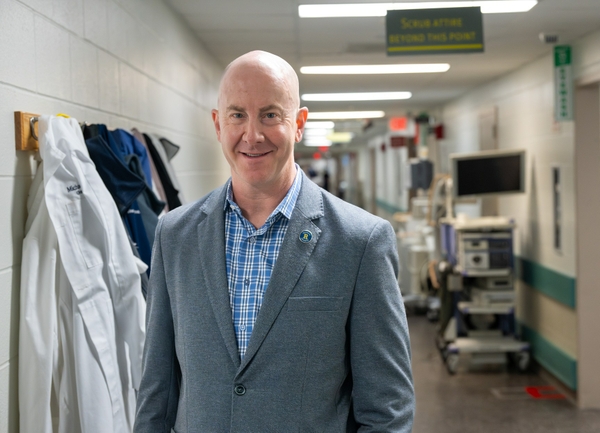
Ryan Fields jokes that as he looks out at the possibilities at the Wilmot Cancer Institute: “I feel like I’m here for the birth of a child. We can really craft something new.”
On July 1, 2025, he became chair of Surgery at the University of Rochester Medical Center and started in a newly created position at Wilmot, associate director of Translational Research. A surgeon-scientist, he investigates immune-system-related cancers such as melanoma and gastrointestinal tumors and performs surgeries.
His connection to cancer is personal: When he was a first-year student at the University of Michigan, his mother was diagnosed with early-stage breast cancer. She received treatment and is doing fine today, but decades later, he is still intrigued by the unanswered questions about the disease. Here in Rochester, in his Translational Research role, he is focusing on speeding up discoveries by bridging the gaps between laboratory scientists who study nuanced cell pathways or why cancer behaves the way it does, with researchers at the other end of the spectrum—those who design clinical trials to evaluate new treatments.
“And in the middle is this idea of ‘translation,’” Fields says, “or how do we take something that’s an idea in a lab and get it to the point where it’s a clinical trial that may benefit patients?”
Some of that work happens in back rooms, improving infrastructure to knock down workplace barriers—for example, making sure all researchers have the same access to the right tissue samples to conduct their studies. He also wants to create more “aha moments” by connecting smart people, he says: “Oh gosh, there’s somebody working in the geriatrics group studying aging and I’m interested in cancer in an aging population, and they study that too. Okay? Instant collaboration. New grant. Opportunity. Success.”
It’s better if this happens by design rather than by accident, he says. “When you bring people together intentionally at a place like this, we see a lot of success.”
Fields also has his eye on improving bridges between the University’s RNA biologists and Wilmot investigators, and other closely related areas such as biomedical engineering and imaging. Broad collaboration is the sign of a great cancer center, he believes.
Fields came to Rochester from Washington University in St. Louis, where he achieved national prominence, and says he is already smitten with the UR: “It’s the people. You can build the nicest building and put the fanciest toys in there for everybody… but if you don’t have the right people, it won’t work well. And from day one, I was just captivated by the people here.”
Tanya Mayadas, PhD
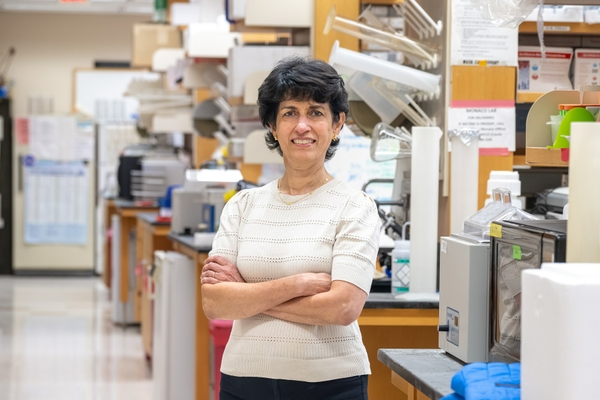
Tanya Mayadas first landed in Rochester as a child in 1976 when her parents moved the family from India. Her father had taken a job as assistant manager of the Rochester Philharmonic Orchestra. She attended Our Lady of Mercy High School and the University of Rochester as an undergraduate. She loved it and decided to stay for her graduate degree, but she ended up following a mentor to Boston.
She didn’t want to leave. However, work bound her to the Boston area for 37 years: First to Tufts University, then to Massachusetts Institute of Technology for post-doctoral research with a world-renowned investigator, and then to Harvard Medical School and Brigham and Women’s Hospital, where she rose to the rank of tenured professor of Pathology. While there, among other achievements, Mayadas discovered a promising cancer immunotherapy treatment and will continue that investigation here.
She built a career studying the immune system, how immune cells interact and obtain the proper balance in the body, and what she calls the unique “triggers and breaks” within the immune system that can prompt diseases such as cancer. At the University of Rochester, Mayadas is the new chair of Microbiology and Immunology and director of the inaugural cross-campus Institute for Immunological Science.
She came back home to Rochester with great enthusiasm.
“The University of Rochester is a remarkable community, defined by its inclusiveness of people…and what I call the quiet confidence and deep expertise of the investigators, which creates the foundation for truly collaborative science,” Mayadas says.
She is planning extensive collaborations with others at Wilmot who are studying innovative combination therapies that both ramp up the immune system to attack the tumor and directly kill tumors.
Mindful of the national scientific landscape, Mayadas is also recruiting researchers with a cancer focus to join Wilmot. “I tell them, ‘Come to the haven of Rochester.’ When you come here, you won’t want to leave,” she says.
As Mayadas moves her Boston lab 400 miles west, settles in, and establishes herself as a mentor for the next generation—a deep commitment—she is grateful to be where her career began.
Her favorite hobby even has Rochester roots, harkening back to the days when Mayadas attended RPO concerts with her father, handing out programs. “I love music, and I play the piano. I took classes at the Eastman School as a high school student and an undergraduate, and I play whenever I have time” she says. “It keeps my mental energy in the right place.”
David McConkey, MD
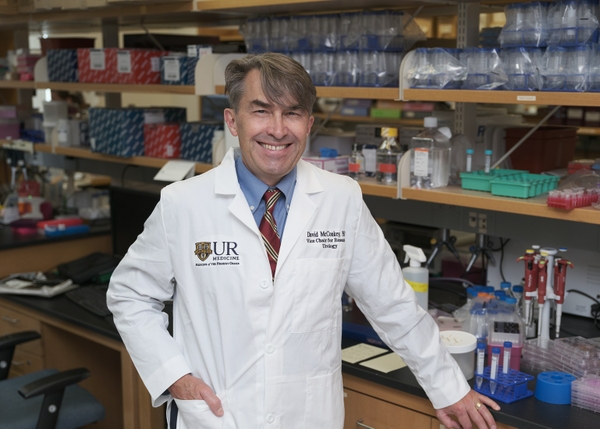
David McConkey moved to Rochester just a few months ago from Johns Hopkins University in Baltimore, but his professional impact is coming in fast.
Topping the list: The National Cancer Institute recently awarded McConkey and co-investigators across the U.S. a prized PO1 grant worth $10 million ($1.7 million of which will come directly to the University of Rochester). It’s a type of funding that is exceptionally difficult to get, as it requires multiple scientific projects with different research teams that all lead to one goal. In his case, the goal is tackling bladder cancer—specifically, mapping DNA and RNA in bladder cancer tumors, understanding the impact of inflammation on bladder cancer, and improving gene therapy for bladder cancer.
Earlier in his career, McConkey shaped his own vision and mission while working with several scientific rock stars in prestigious places—including a fellowship in Sweden where he studied under Nobel Prize winners investigating cancer-cell death; a three-year stint at Dana-Farber Cancer Institute in Boston; and many years at the distinguished MD Anderson Cancer Center in Texas, where he focused on how bladder cancer cells spread. He and his team discovered molecular subtypes of bladder cancer and developed new treatment approaches.
But McConkey was born in Buffalo and was delighted that Rochester offered a terrific opportunity to come home to western New York, he says.
“There’s so much excitement here,” McConkey says. “The leadership at Wilmot and the University Medical Center are all on the same page and embracing the same vision.”
McConkey is the new vice chair for Research in Urology and co-director of Wilmot’s Genetics, Epigenetics, and Metabolism (GEM) basic science program.
He’s also leveraging the advantages of the “small world in cancer research,” he says, relishing being near one of his lifelong professional role models: Ed Messing, MD, a trailblazer at the University who has revolutionized bladder cancer care. McConkey also praised Urology Chair Jean Joseph, MD, for empowering him to make changes.
He is renovating outdated lab space, introducing new ideas for clinical trials at Wilmot, and launching a project to recruit scientists who understand microbiomes and links to bladder cancer. Importantly, he also recruited to Rochester a prominent physician-scientist from MD Anderson, Colin Dinney, MD, to collaborate on the latest PO1 grant.
“This feels right,” he says, reflecting on settling in at Wilmot. “The timing was perfect. It was just serendipitous. Sometimes fate sends you in the right direction for complicated and wonderful reasons.”
Lori Medeiros, MD
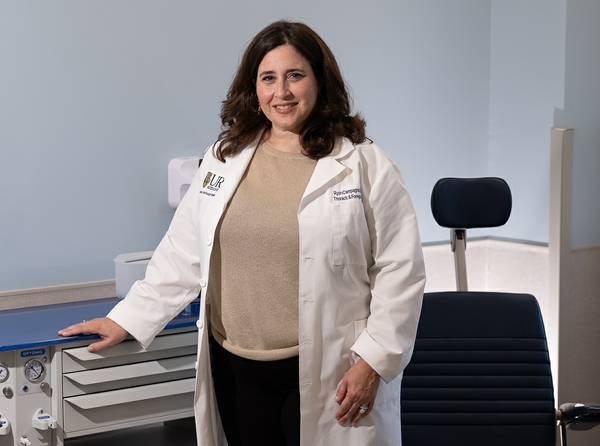
Lori Medeiros joined the Wilmot Cancer Institute from just a few miles away, having led the breast cancer service line and business development at Rochester Regional Health. Moving to an academic setting gave her the chance to amplify her skills, she says.
Medeiros is a revered breast surgeon—but at Wilmot she’s also tapping into the strategic side of her brain, the part fueled by an MBA and a knack for digging into workflow issues and operations. She is serving in a newly created role as Wilmot’s associate medical director, Regional Surgical Services and director of Cancer Surgery Business Development.
Her vision? “It’s about marrying an enthusiasm for academics and science with practicalities. How people actually experience being a patient at Wilmot. When you’re diagnosed, you’re worried about cancer, so we want to move everything else out of your hands and into those of a well-oiled team.”
Efficiency and access are the keys. Breast cancer patients now have access to streamlined appointments for surgeons and medical oncologists at Wilmot’s Pluta Comprehensive Breast Care Center. Many will now also have access to genetic profiling at the first point of cancer care, rather than later in the process. Medeiros also helped to lead efforts to open a new office in Farmington, Ontario County, in a UR Medicine multipurpose building that’s closer to residents in the Finger Lakes region.
A native of Canada, Medeiros earned a medical degree and completed specialty training at McGill University in Montreal. She is comfortable wearing many hats. As a new doctor, she ran her own solo practice: “You learn pretty quick about everything,” she says.
The Rochester Institute of Technology awarded her the MBA. She studied banking, manufacturing, and did a consulting project in hydroelectricity for a construction company in South Africa. Her takeaway? Most industries, including healthcare, have the same problems to overcome—and it often boils down to changing workplace culture.
“It becomes very easy to have ‘group think’ when you’re immersed in one industry,” she says. “There is some benefit to looking at things from different viewpoints. How are you making an impact? Are you achieving any of the things that you set out to do? Where are you in this process?”
Organizations must be flexible, she says. And, although she is still learning about Wilmot, she is excited to be offering innovative ideas at an NCI-designated cancer center that has already embraced change.
“A vision is like your North Star,” she says. “But how you get there is going to be very different from what you think it’s going to be when you start out. Strategy is a living, breathing thing.”
Author
