

Building a Urology Research and Discovery Powerhouse
The University of Rochester Medical Center’s (URMC) Department of Urology is greatly expanding its research enterprise, with a continual focus on finding the best treatment for every patient suffering from cancer.
The Department is investing in personnel and resources, and growing its research capabilities to expand into other urologic disciplines and subspecialties. Efforts focus on the common cancers: prostate, testicular, kidney, and bladder cancer, as well as research in benign conditions such as kidney stones, reconstruction, and BPH.
“Research is at the core of everything we do, and we are committed to building a research and development powerhouse, in line with our core mission as a research-focused academic department,” said URMC Department of Urology Chair Jean Joseph, MD. “We are investing heavily in all aspects of our mission—clinical care, research, and education—looking at every patient to see if there is a question we can answer through further investigation.”
These efforts will include making the Department’s experts even more visible at national and world conferences and events, expanding basic and translational science, and building on existing clinical trials. Funding for this expansion has been secured through the National Institutes of Health and other external sources.
A team of experts and rising stars
According to Jathin Bandari, MD, Director of Clinical Trials, the Department’s recruitment of researchers is two-pronged: to attract a combination of senior-level thought leaders as well as rising stars.
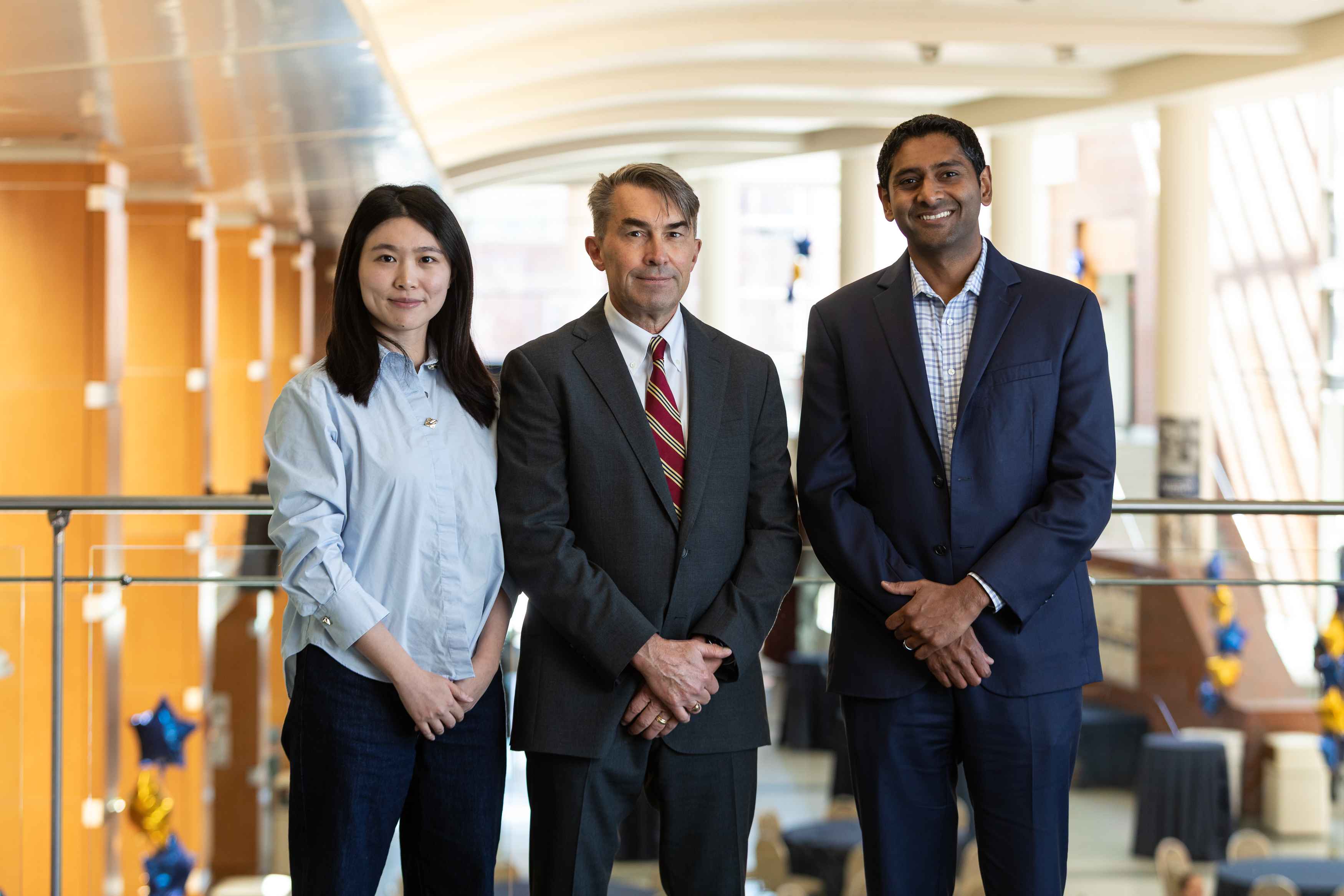
The first wave of key additions includes leading scientists David J. McConkey, PhD, and Colin P.N. Dinney, MD, and rising star Zijing Cheng, PhD.
The dedication to research was key in recruiting McConkey, who previously served for eight years as director of the Johns Hopkins Greenberg Bladder Cancer Institute.
A researcher for more than 30 years, McConkey also served as Director of Urological Research in the Department of Urology at The University of Texas MD Anderson Cancer Center before his role at Johns Hopkins Greenberg Bladder Cancer Institute. Dinney and McConkey worked with other faculty members at MD Anderson to secure the first-in-the-nation Specialized Programs of Research Excellence (SPORE) grant for bladder cancer.
Internationally recognized for bladder cancer research, McConkey is a member of the American Urological Association, the Society for Basic Urological Research, the American Society of Clinical Oncology, and the American Association for Cancer Research.
Once Joseph shared his vision and the opportunity to grow laboratory science, it did not take long for McConkey to accept his new role as Vice Chair for Research.
“I decided to take on this position because of the incredible opportunities ahead of us,” McConkey said. “We will renovate our space to build a state-of-the-art laboratory, recruit new faculty and expand our research capabilities, with an emphasis on laboratory science and on growing foundational and translational research.”
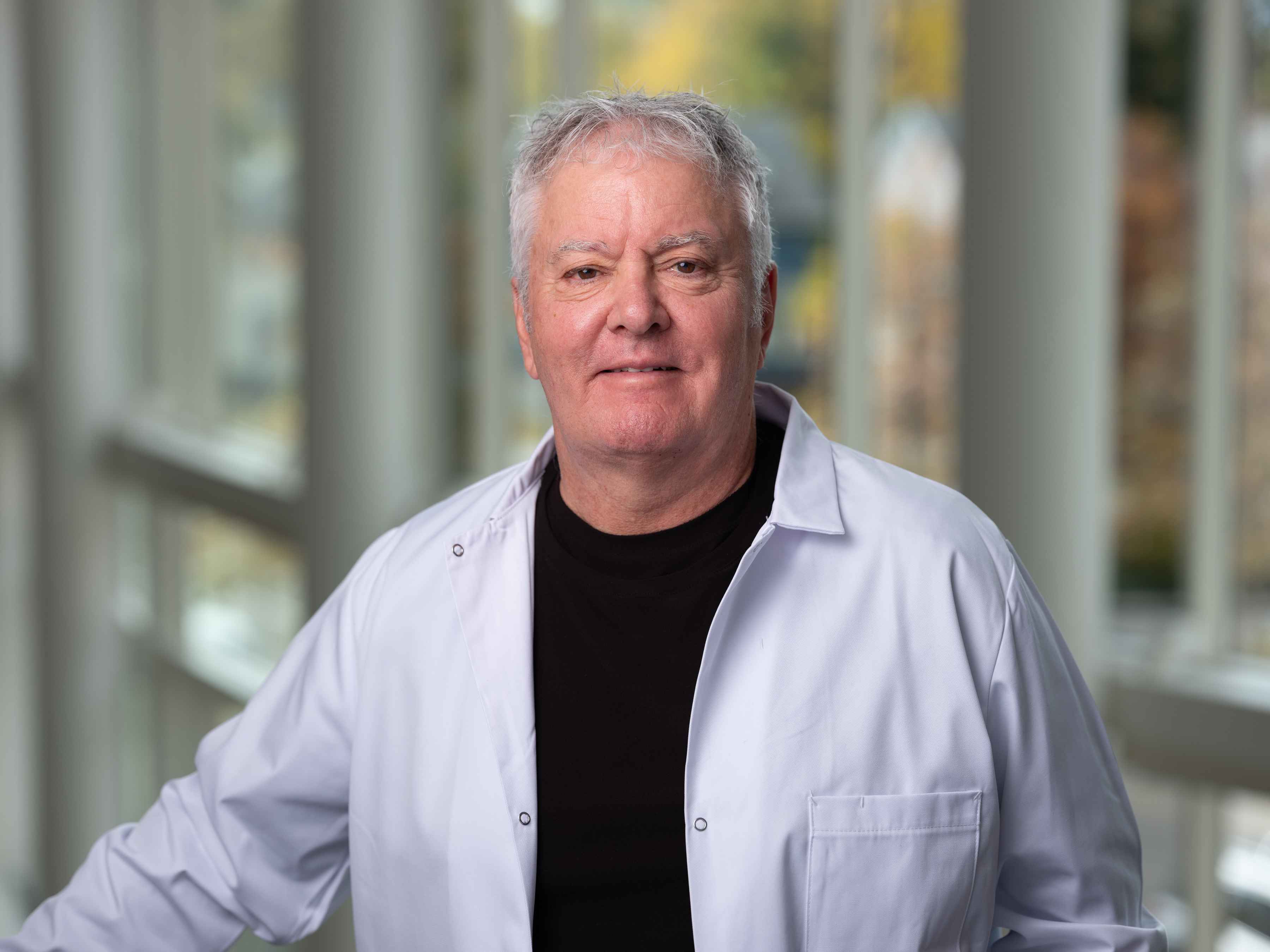
McConkey is also reuniting with a SPORE study collaborator, Dinney, MD. The past chair of the Department of Urology at The University of Texas MD Anderson Cancer Center joined the URMC team in the fall. Dinney is a world-renowned contributor who developed the drug, Nadofaragene firadenovec, for non-muscle invasive bladder cancer.
“It is exciting to have our research team back together,” McConkey added. “Colin and I will continue collaborating to develop new therapies for bladder cancer.”
That collaboration will include targeting new gene therapy drugs and performing mechanistic research on Nadofaragene firadenovec and another new gene therapy, cretostimogene grenadenorepvec. While effective, these drugs can lead to upregulation of PD-L1, which inhibits the immune system's recognition of tumors. Further research will target this and other resistance mechanisms.
Other research will look to understand how basic mechanisms of tumors work, using both human models and tissues, and on local therapies targeting the bladder itself.
One newly funded multi-institutional Program Project Grant is a collaboration among URMC, MD Anderson, and Columbia University researchers who are looking at the molecular mechanisms that mediate the initiation and progression of human bladder cancer. Project 3 of this grant, based at the University of Rochester and led by Dinney and McConkey, proposes to define the role of type-1 interferon signaling in luminal-basal plasticity to identify molecular vulnerabilities to improve interferon gene therapy in bladder cancer.
Aligning with Wilmot Cancer Institute
Future urologic cancer research will build on current expertise in clinical trials and align with the University of Rochester’s Wilmot Cancer Institute. Wilmot recently earned the prestigious National Cancer Institute (NCI) designation, a recognition of its leading role in advancing cancer care and research. The distinction places Wilmot in the top four percent of all cancer centers in the U.S.
Wilmot, which has a catchment area of 3 million people, will receive $10 million in funding over five years to expand patient access to clinical trials and develop new research initiatives.
Under Bandari, our department’s director of clinical trials, the research team will focus on therapeutic clinical trials. Research will be built out so there is more clinical and translational work, emphasizing such areas as extracellular vesicles, carcinogenesis, and microbiome research, leveraging existing expertise in bladder cancer, kidney cancer, and prostate cancer.
Current trials the Department is leading or collaborating on include:
- A pivotal trial in kidney cancer utilizing the HistoSonics Edison system, to be presented at the World Congress of Endourology and Northeast Sectional AUA.
- A pivotal trial in prostate cancer exploring Aquablation versus Radical Prostatectomy.
- Multiple non-muscle invasive bladder cancer trials, including the PIVOT-008 and the CORE-008 trials, evaluating cretostimogene grenadenorepvec.
- Multiple investigator-initiated studies, conceived and written by URMC faculty.
A recently launched investigator-initiated study will involve patients who have had stress urinary incontinence after prostatectomy or the Holmium Laser Enucleation of the Prostate (HoLEP) procedure. While pelvic-floor physical therapy is an integral part of recovery following surgery, it can be time-consuming and difficult to sustain. This study of 132 subjects (66 per cohort) will look at whether sending text messages to patients, reminding them to do their Kegel exercises, will improve outcomes through increased adherence to the intervention. This study was conceived and designed by URMC resident Laena Hines, MD, and her mentor, Scott Quarrier, MD, MPH.
A prime location for cancer research
The Western, Finger Lakes, and Central New York region is a prime location for advancing urologic cancer research, given Wilmot Cancer Institute’s large catchment area, higher-than-average cancer rates, the prevalence of co-morbidities, and its aging population.
The Department of Urology is building its research enterprise to help meet the needs of the region.
“By further advancing research, we aim to give patients access to advanced, nonsurgical treatments that aren’t available anywhere else in the region and to find the best treatment for every one of our patients,” Joseph concluded.