

When Famed Photographer Ansel Adams Turned to Rochester for Inspiration
Note: This story originally appeared in Rochester Medicine Magazine in 2002.
Ansel Adams, the famed nature photographer, was bored. It was 1952, and the 50-year-old Adams was confiding to friends that he had hit a creative impasse and was lacking inspiration—a shocking development for someone so dedicated to his craft.
But then a call came.
The University of Rochester was looking for someone to take photographs for a new brochure. The University wanted to combine its men’s and women’s campuses, and it needed a special publication to help raise money to build new dormitories, a dining center and academic buildings.
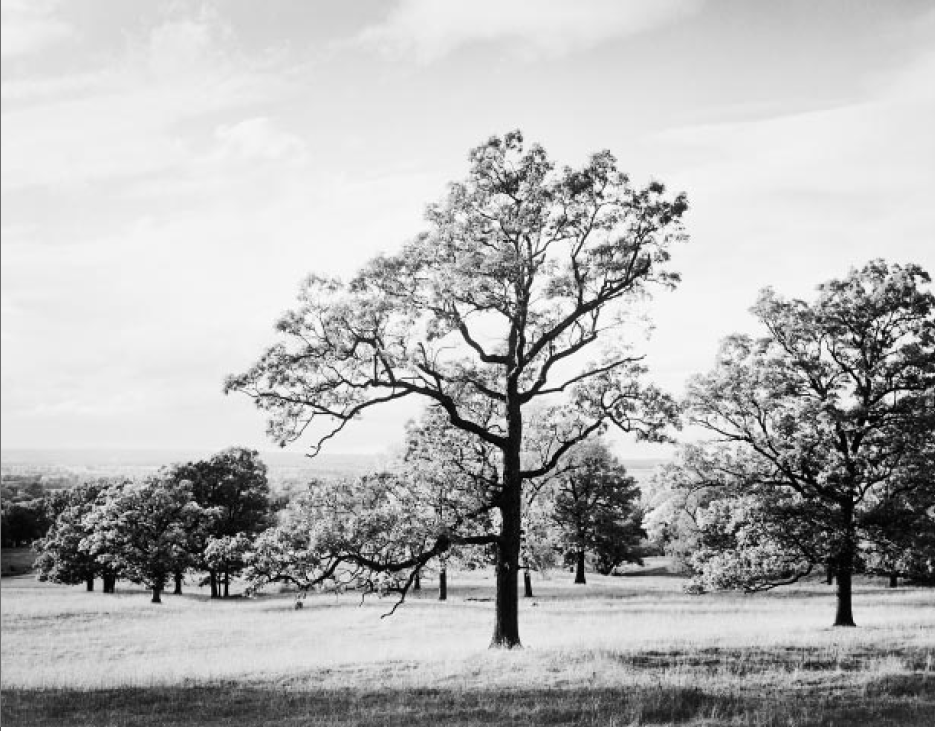
And so he came, far from his haunts in the rocky peaks of Yosemite, to the autumnal banks of the Genesee.
Nobody can be sure what role his Rochester visit might have played in re-energizing Adams, but it did get him behind a camera at a time when, as he wrote to a friend: “I have had no burning desire to make a picture in a long time.”
It did lead to more than 200 photographs—work so impressive that the University decided to pay an extra $1,000 (in 1952 dollars) for exhibit prints, so it could display them in the main library.
And it did result in a beautifully conceived publication that helped the University meet its goal and integrate its campus.
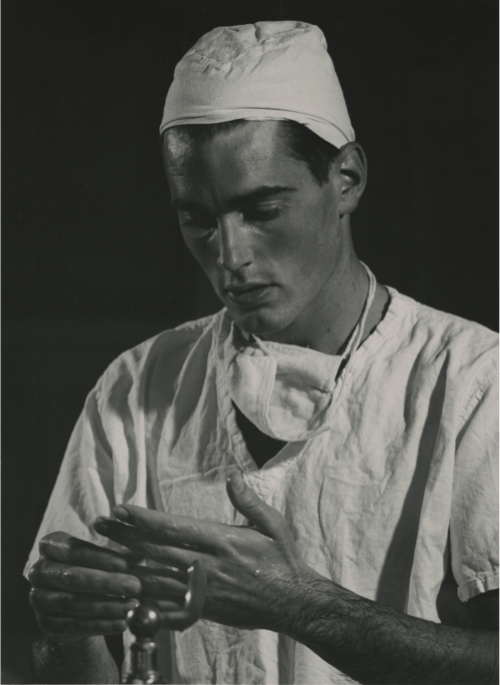
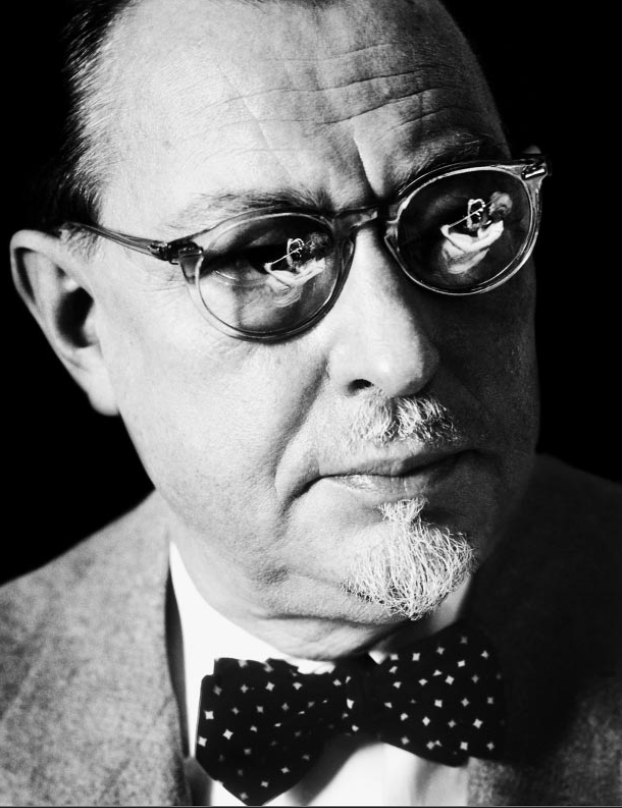
Charles G. Cochrane, M.D. (M ’56, B ’51), recounts sitting for this photo (above):
I was cramming down a sandwich in Bill’s lunch room, prior to attending a conference, when in walked a strange-looking smiling fellow who balanced the loss of hair on the top of his head with a huge growth of beard. He walked straight up to me and asked if he could take my picture. I replied in the negative as I was so short of time. He retorted that it was for the University. Since I was devoted to the school that provided me so much, I assented to the photograph rather than the conference. Little did I know what he wanted.
He marched me to the surgical suites and asked that I don surgical scrubs, and in response to my question regarding time, responded that an hour should do. I tempered my annoyance with the thought that I could send to my parents, who had been so supportive of my schooling, a copy of the photo or the negative.
After the promised hour and endless flashes of the camera, he announced we were done. I then sought my reward, asking for a negative or a copy of the photo. He looked me straight in the eye and then broke into a loud laugh that I can hear to this day. It was obvious my education was not in the realm of photography. But after my humiliation, he added that he would see what he could do, and within a month or so, I received a copy of a positive, together with the name of the bearded, smiling intruder on my sacred lunch-time: Ansel Adams.
The latest I have seen of Ansel Adams’ work in galleries, the cost per print was out of sight, which explains the laugh in response to my question. I also have found that his negatives are tightly held in museums such as that at the University of Arizona. We learn in various ways.
Now, 50 years later, the Ansel Adams photographs offer a glimpse into the history of the University through the eyes of one of the greatest artists ever to peer through a lens.
Included are a half dozen shots of the Medical Center and its people, including faculty, a medical intern and the first dean of the School of Medicine and Dentistry—Nobel laureate George Whipple.
That the photographs are fascinating is little surprise. What is more of a surprise is the inspiration Adams seemed to gain from the University.
Initially he had planned to stay only one or two weeks, but he ended up working on the project for a month.
In Rochester Review magazine the following year, he explained that he had expected to stay just a short while: “But your University,” he said, “turned out to be about 10 times as large and interesting as I had expected.”
The connection that brought Ansel Adams to Rochester was Beaumont and Nancy Newhall.
Beaumont Newhall, then curator of the George Eastman House and the International Museum of Photography in Rochester, had been a curator at the Museum of Modern Art in New York, where he and his wife had become close friends with Adams.
Nancy Newhall and Adams collaborated on numerous photography books and exhibitions. At times they wrote several letters a day to each other.
By this time, Adams had established himself in the small world of art photography, but he still needed to do commercial work.
Photography, as an art form, was fairly new,” says Melissa Mead, librarian at the University’s Rare Books and Special Collections, where a set of the prints is archived. “You didn’t make a lot of money out of it.”
Adams arrived in Rochester in September and stayed in the Newhalls’ house—without them, initially, because they were out of town. A letter from Adams to the Newhalls, dated Sept. 30, documents an eventful first few weeks.
Adams had to contend with Pinky, the Newhalls’ chicken-wing-stealing cat (“I gave Pinky the old Judo treatment”); a fender-bender with a drunk driver; a short circuit that knocked the lights out in the house; and borrowed camera equipment that malfunctioned and had to be replaced.
But he had better luck with the actual work.
Though he at first lamented the conception for the brochure as “completely nebulous,” this actually meant he had the freedom to proceed the way he thought best.
Adams decided to approach his task as if he were creating pictures for an exhibition. With that in mind, he threw himself into the University community.
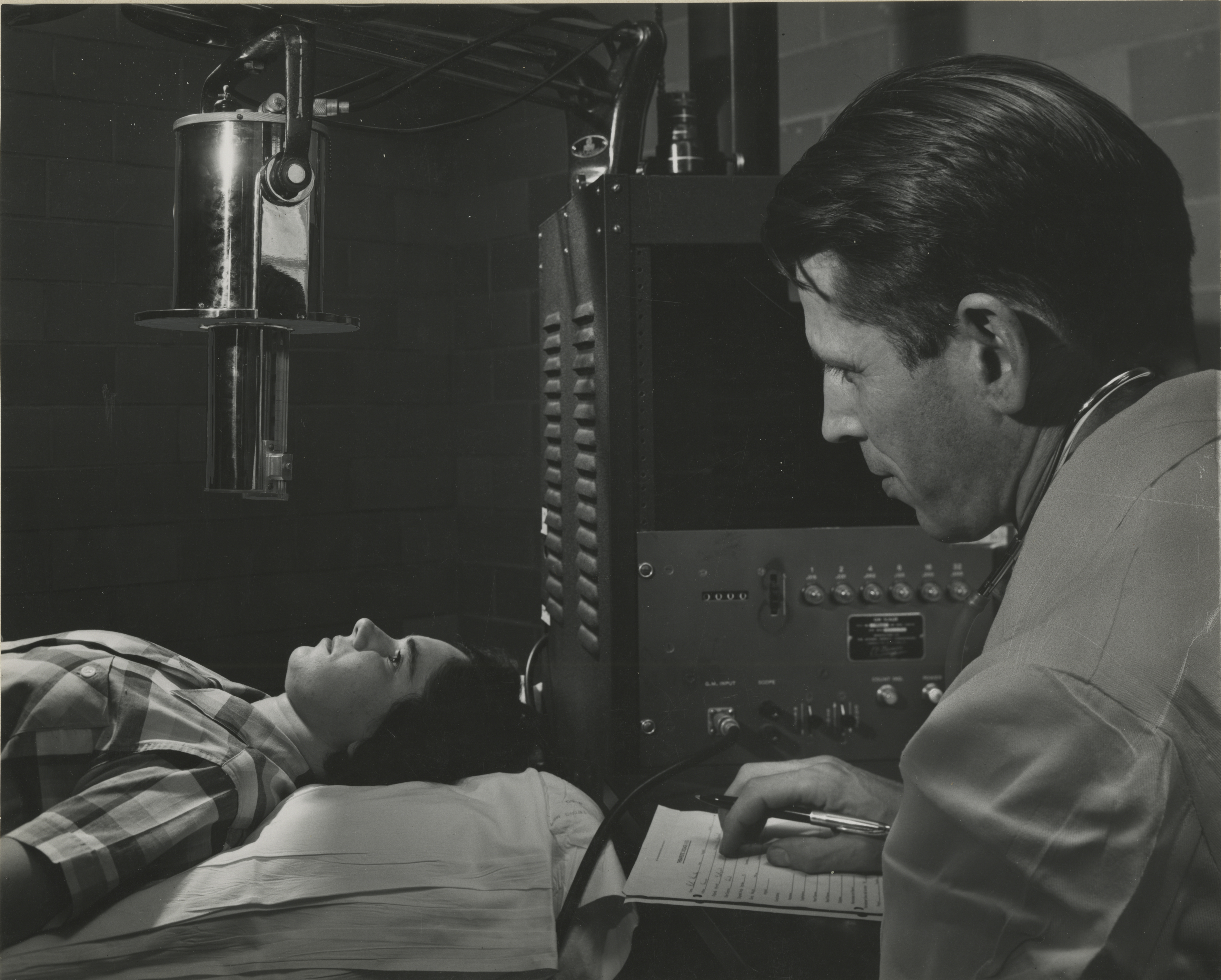
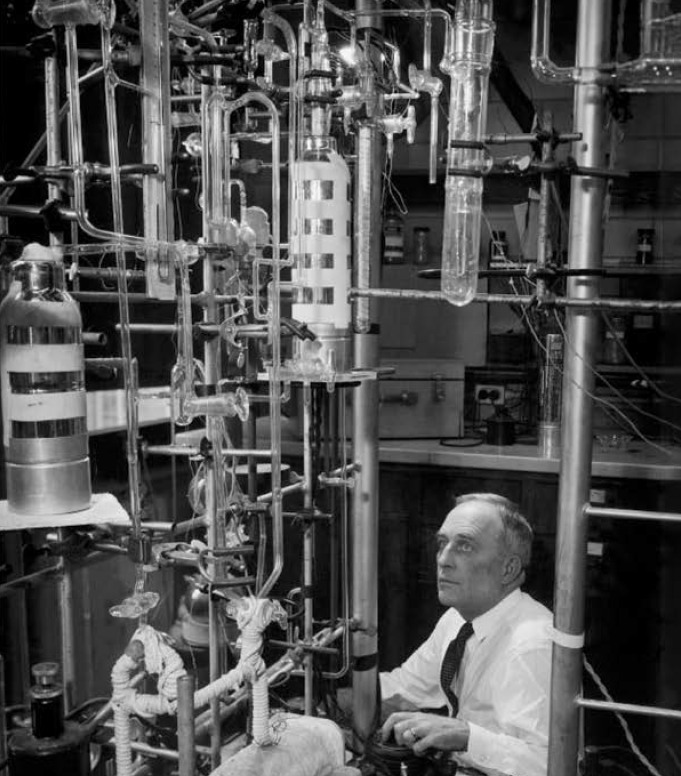
Dr. Joe Howland, former professor of Radiation Biology and Chief of Division, Atomic Energy Project, Cancer research.
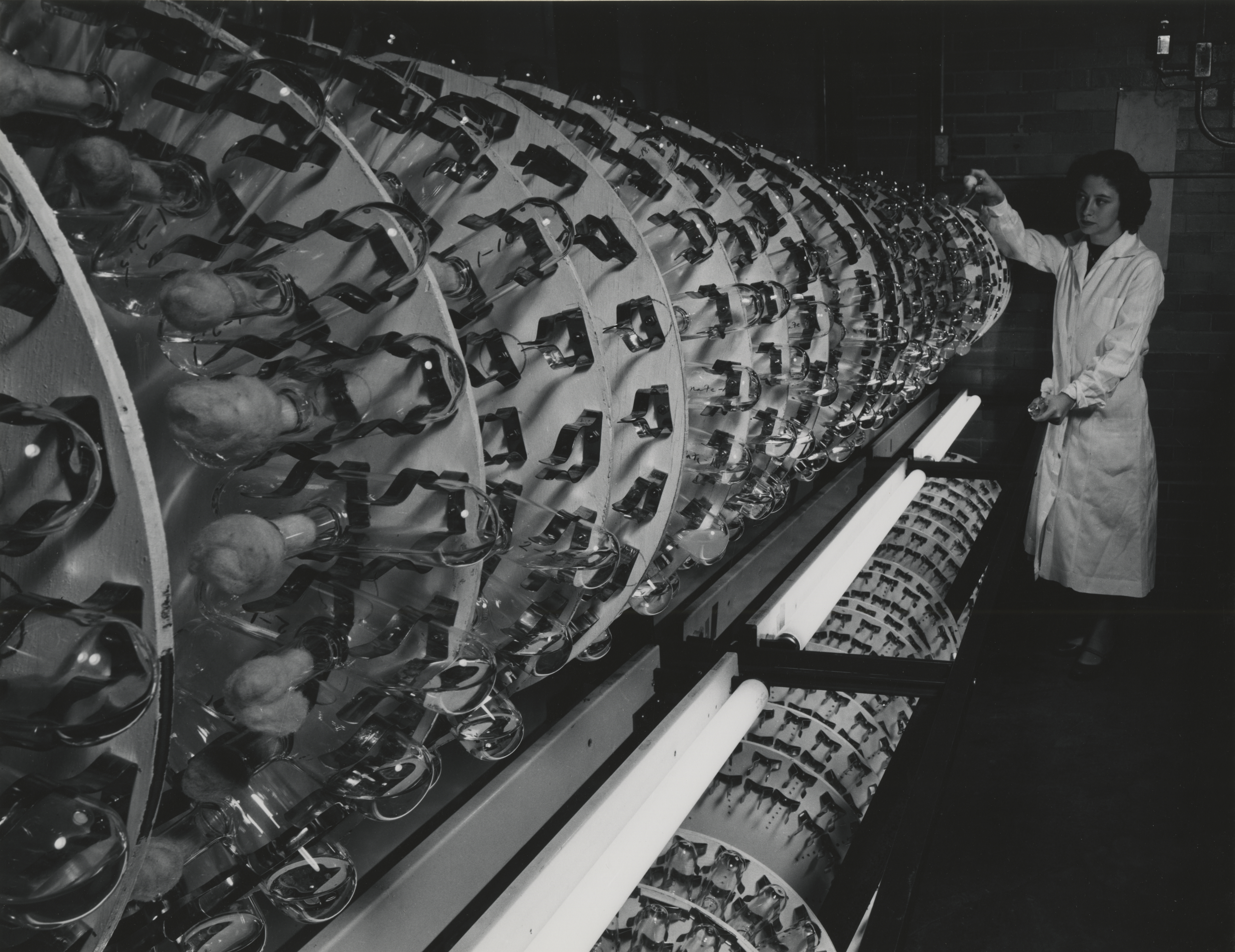
The brochure, called “Creative Change,” was printed in 1953. It contained dozens of faculty portraits, scenes of researchers in action, and glimpses of campus life.
But the photographs went beyond mere documentation. The University administration, quoted in a newspaper article, said that Adams has done much to establish the true image of the institution.” The administration lauded Adams’s ability to “interpret the spirit of the university in visual images.”
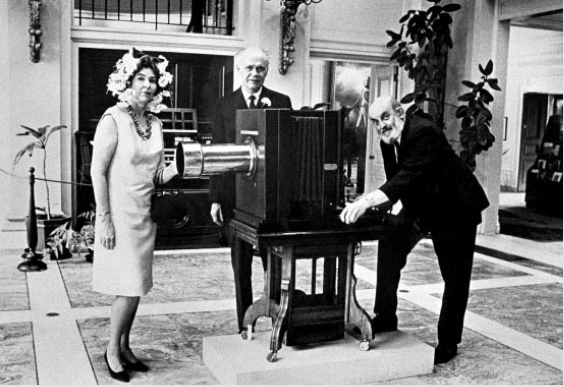
That ability to capture the spirit of his subjects—whether they be a granite mountain, a celebrity or an unknown medical student—is, of course, why Ansel Adams is considered an artistic genius.
Months after his stay in Rochester, Adams was back to his prolific self.
In a letter to Nancy Newhall dated December 17, 1952, he wrote: “Made 7 subjects today!” He also said that Time magazine had commissioned him to make photographs for an upcoming story.
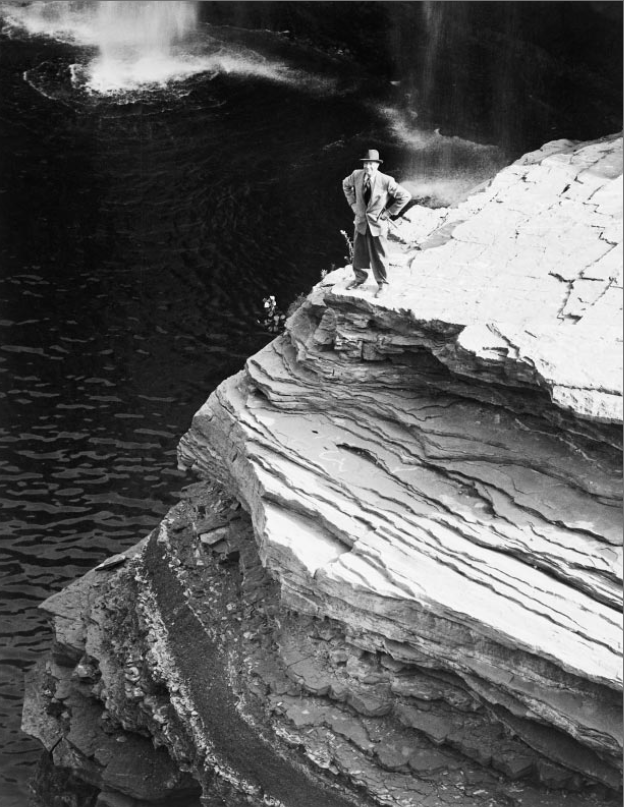
DDr. J. Edward Hoffmeister, former dean of the College of Arts and Science and professor of geology, by the Genesee river.
Apparently, he was excited about the prospect. He wrote: “Let’s do a real job on it!!!!!!”
A year later, the periodical U.S. Camera released its annual publication of what it considered the year’s best photography from around the world. Eight of Adams’s Rochester photographs appeared in the magazine.
And 50 years later, the University once again displayed the exhibit prints in its main library—proud as ever to show how a great artist captured the spirit of its people and places.
Author
