

Life Lessons that Shaped the CEO and Dean
To understand David Linehan, MD, and how he operates, just look to his childhood.
The new dean of SMD and CEO of the University of Rochester Medical Center grew up in Dorchester, a working-class, Irish-Catholic neighborhood in inner-city Boston.
He learned about healthcare from his mother’s role as founder and executive director of a residential recovery facility for men addicted to alcohol and drugs. He and his sisters spent occasional afternoons there (he loved the pool table) because his mother was working full-time and raising three kids alone.
Linehan was only three when his father, a member of the Massachusetts State Legislature, died suddenly. His sisters were four and one. They lived the challenges faced by single-parent families without much money. The Catholic schools Linehan attended assisted the family. His grandparents lived a mile away, so he walked there and back for meals while his mother was at work.
“I could do my own laundry when I was seven years old: wash, dry, and fold,” he says. At age nine, he had a paper route.
Linehan’s experiences prepared him well for life and career. Childhood taught him about independence and the challenges faced by working-class families. Competitive swimming at his Jesuit high school showed him that winning is a team effort. Balancing swim practices, home chores, and working part-time jobs while still earning top grades in school required him to learn time management. From exposure to his mother’s career and the Jesuit philosophy, Linehan grew to understand the importance of a life of service.
He had once considered becoming a detective or an FBI agent. But medicine called.
His favorite TV series while he was growing up was M*A*S*H, about a mobile army surgical hospital during the Korean War. Like many viewers, he admired Alan Alda’s character Hawkeye Pierce, the wisecracking and gifted surgeon.
“The show captured a lot of what it means to be in an operating room and captain of that ship,” he says.
In high school he shadowed a surgeon and was allowed to scrub in for surgery. He saw the patient anesthetized and operated on, then witnessed the patient waking up in pain but cured. He was fascinated by the patient’s transformation, the surgical teamwork, and the “immediate gratification of seeing a problem and fixing it.”
In February 2024, Linehan, 61, was appointed CEO of URMC, dean of the School of Medicine and Dentistry, and senior vice president for Health Sciences.
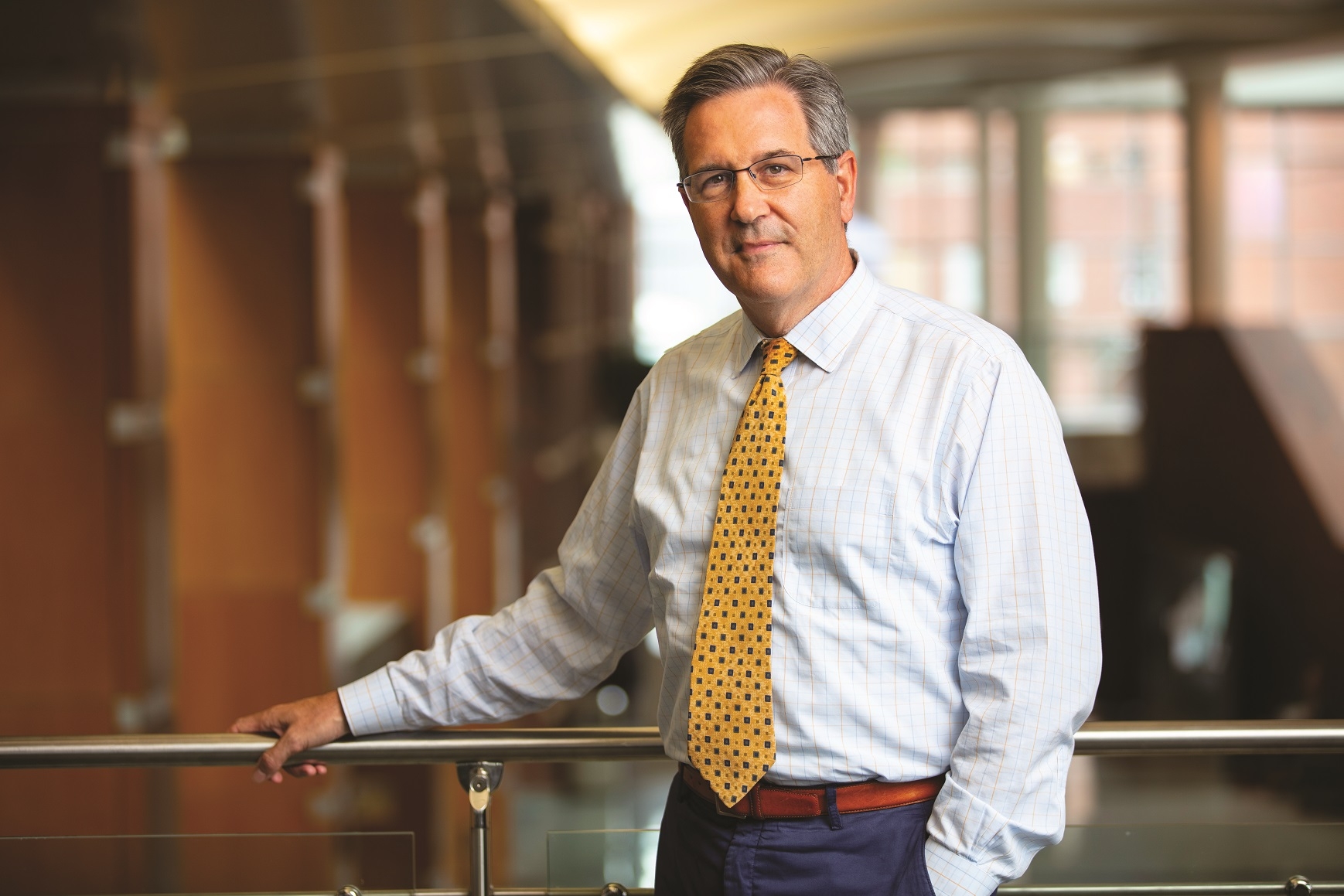
Linehan is known as a “quadruple threat”—a gifted surgeon, accomplished cancer researcher, compassionate clinician, and skilled administrator. He is internationally renowned for his research in immunotherapy treatments for pancreatic cancer. But among his patients, he’s just as renowned for his caring demeanor.
For 10 years, he served as chair of the URMC Department of Surgery and the Seymour I. Schwartz Professor in Surgery. He was recruited from Washington University Medical Center in St. Louis, where he was chief of Hepatobiliary, Pancreatic and Gastrointestinal Surgery.
Linehan has said that he loved serving as chair of Surgery but sees his new role as a chance to contribute even more to the Medical Center. He comes across as friendly and relaxed, though he acknowledges that his new position comes with stress. He oversees a budget of almost $6 billion and 27,000 employees while shepherding the institution through the uncertain world of healthcare in the 21st century.
But he’s quick to point out that his stress pales next to what providers face.
"Taking care of patients in the operating room—that’s stressful, when you’ve got hard-to-control bleeding, and the patient’s life is on the line,” he says. “In many ways, the docs who come in to work here every day have a much harder job than I do, and I will always respect that.”
And he knows what unites all of the Medical Center’s missions. “We have to start with the core value—the ‘why we come to work every day’—which is the patient,” he says, quoting Elizabeth McAnarney, MD (Flw ’70), professor emerita of Pediatrics: “ ‘If you’re lost, focus on the patient, and you’ll see the path.’ If we start there when we’re thinking of a vision of the future, then we’ll be in the right place.”
Coffee, Kindness and Beyond
Linehan’s vision for URMC plays off the culture of collaboration that distinguishes Rochester.
He wants to increase team-based science, transdisciplinary care teams, and the transformation of research into cures. The idea is to become even better known as a beacon of innovation. That includes embracing digital tools and applying data and AI to improve delivery of care and access to care. The end game is improved outcomes, raising Rochester’s reputation ever higher.
True to his roots, Linehan knows that reaching a vision like this begins and ends with empowering people.
“You treat people right, you value what they do, and you respect everybody on the team because everybody has a role,” he says. “The person coming in to empty the trash in my office—that was my grandfather two generations ago. So I’m not going to treat them any differently than I treat the chair of the board.”
A few years ago, a friend who is an Irish surgeon brought him to a spot on the west coast of Ireland where, in the mid-1800s, poverty-stricken families boarded ships for America. The Atlantic Ocean is wild here, roaring as it crashes into Ireland’s rocky coast.
“My friend wanted me to appreciate my heritage,” says Linehan, who is Irish on his father’s side and still has family in Ireland. “He said, ‘I want you to think about your ancestor who looked out there and then got on the boat into the vast ocean. I want you to think about what drove them to take that risk.’”
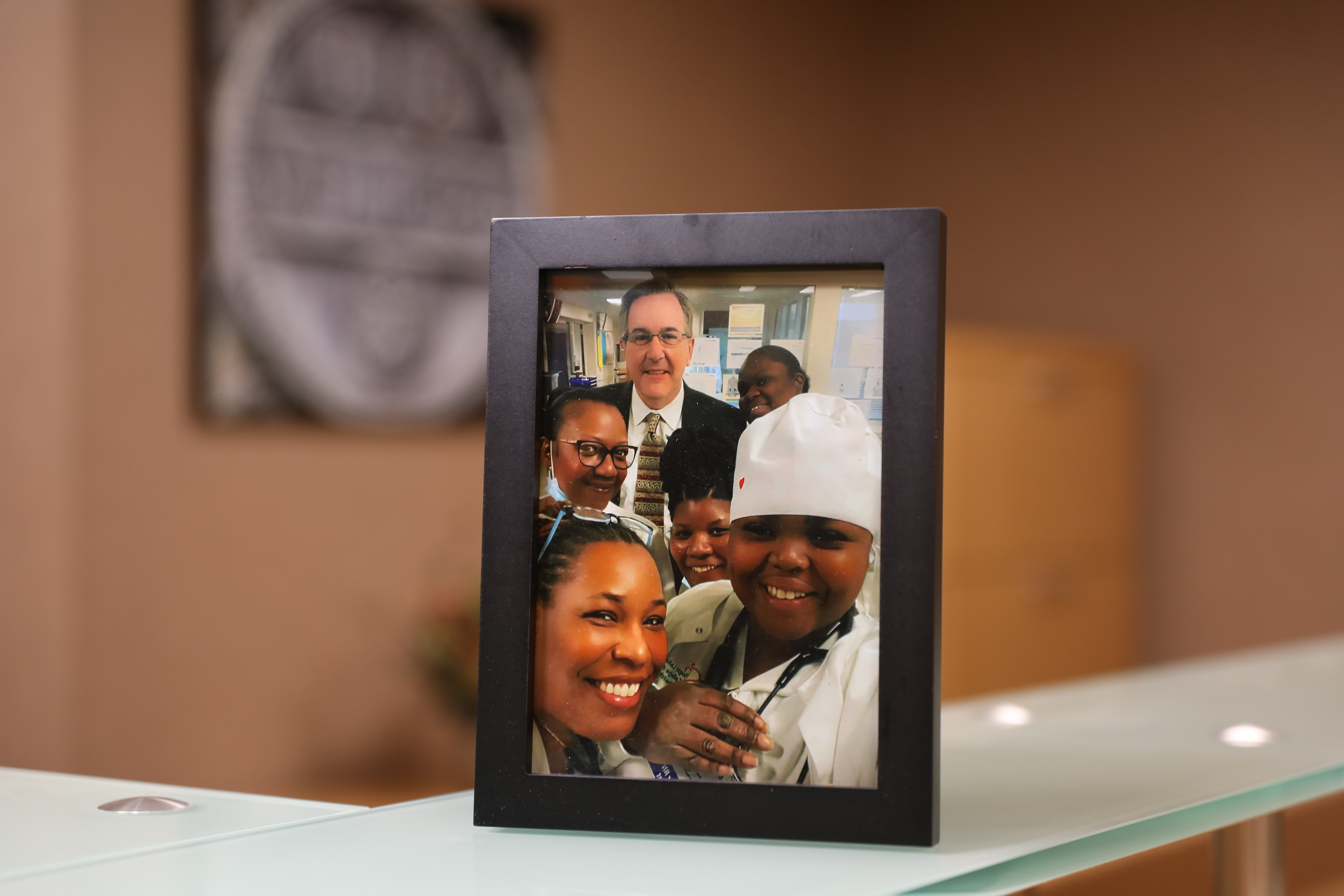
For Linehan, the experience remains a vivid reminder that people will take incredible risks to care for their families. And circumstances can change for anyone, so medical care should be accessible to all regardless of income.
Mentors and Progress
“I hit the jackpot when it comes to mentors,” he says. “And they were actually more than mentors. They were sponsors who took an intense interest in the advancement of my career and used their influence to get me national exposure.”
Linehan makes it a point to carry on that tradition of teaching and mentoring. For example, he stays in contact with residents by occasionally taking call and joining rounds instead of just running into them in the hallway.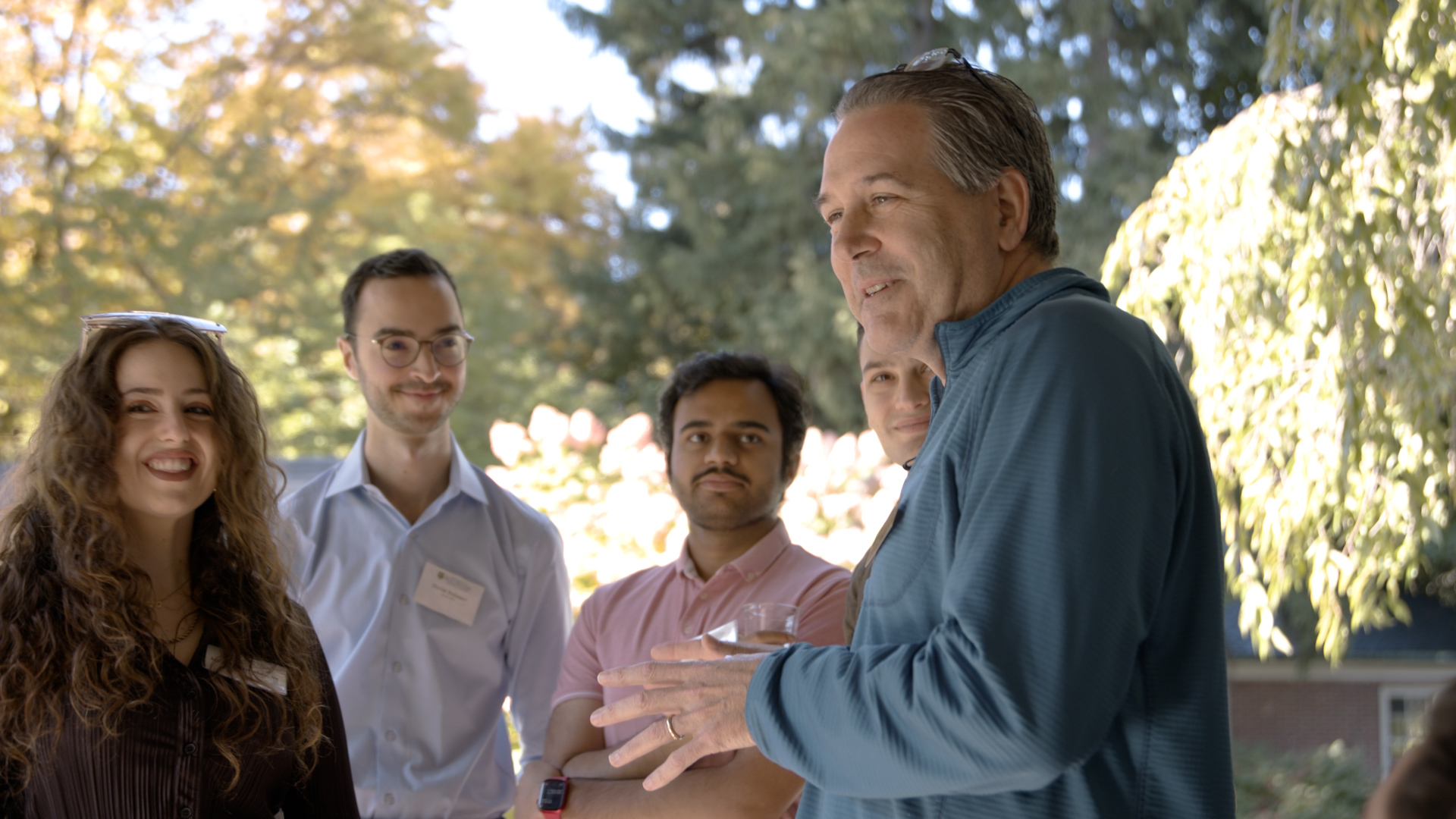 Unsurprisingly, Linehan credits others with assisting him in building his career.
“David was revered by students [at Washington University] as a great teacher,” says Steven Strasberg, MD, emeritus professor of Surgery at Washington University School of Medicine. “He is also a talented surgeon, humanitarian, and leader.”
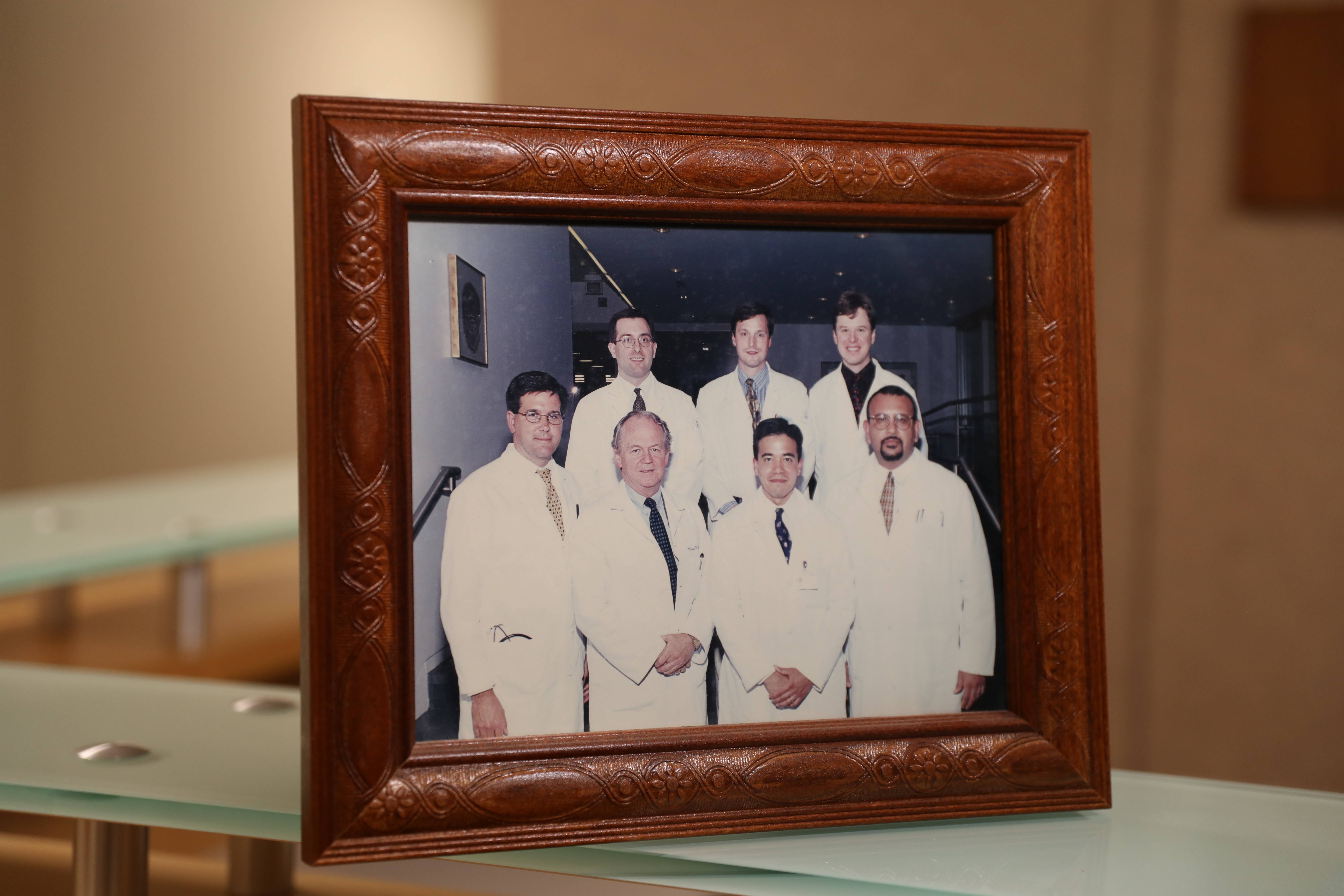
Murray Brennan, MD, recalls that Linehan showed leadership potential even as a fellow. “He has a high emotional IQ,” says Brennan, an oncology surgeon and former chair of surgery at Memorial Sloan Kettering Cancer Center. “He would listen carefully … Rochester is fortunate to have him there and in a leadership role.”
“To me, it’s always rewarding when the student becomes the master,” says Timothy J. Eberlein, MD, director of the Alvin J. Siteman Cancer Center and the Spencer T. and Ann W. Olin Distinguished Professor at Washington University School of Medicine. “In Dave’s case, that’s what happened.”
That, he notes, shows the great promise of medical research.
“Dr Schwartz, this iconic and venerated academic scholar, challenged the next generation to seek new knowledge, to question professors and not accept the status quo. The irony is that he’s the most important professor, and he’s saying it’s OK to doubt. In fact, he says ‘you’re obligated to doubt me. You’re obligated to find a better way.’ ”
Finding a Better Way
Linehan knows the pandemic made workforce challenges even greater. The nursing shortage, for example, is expected to surge to 35,000 in New York state and to 500,000 across the nation by 2030.
“Nurses were the heroes of COVID,” he says. “They were on the front lines.” They also bore the brunt of patient and societal frustration and sometimes hostility.
Linehan wants to persuade more nurses from the travel ranks to join URMC and to encourage young people to consider nursing and other healthcare careers. Every summer, youth from the Teen Anti-Violence Alliance spend two months in the Department of Surgery, shadowing surgeons and practicing skills such as suturing.
“That exposure can be a spark that ignites something in a kid,” he says.
Much is at stake. Workforce shortages and reduction in government payments create pressure on doctors to achieve better outcomes but with fewer resources. And that’s a path to burnout, Linehan says, especially considering that sometimes 60 percent of a doctor’s time is spent on documentation.
Linehan envisions strategic use of AI to help both patients and providers. The Medical Center is piloting an “ambient documentation” program using AI to record, transcribe, and organize conversations between doctor and patient during visits. The results have been game-changing, freeing up doctors to spend less time on administrative tasks.
Yet Linehan says that “AI will never replace the human touch in medicine.” In fact, it will enable more personal contact between doctor and patient.
This is where URMC’s unique focus on the biopsychosocial model still comes into play.
“We are going to see an explosion of healthcare improvements of AI over the next decade. It’s going to be an important part of the plan and the vision,” he says. “How are we going to be smart about applying AI to healthcare? How can we take that data, extract the important stuff, and help the practitioner make the right decision about diagnosis or treatment in the clinic or at the bedside? That to me is really exciting.”
“That model of medicine seems so obvious to us, but it wasn’t 50 years ago,” Linehan says. “That’s why AI will never supplant the doctor-patient relationship. That human touch is what makes all the difference.”
It comes back to people skills and emotional IQ.
“Compassion doesn’t cost you anything. It’s the easiest thing to say to patients who are scared, ‘I’m really glad you’re here, and it’s going to be rough but we’re going to fight this with you. We are experts and know how to handle this. Give me the stress; I know what to do with it.’ That’s so comforting to a patient, and you see the weight of the world lifting off their shoulders.”
Happiness, Myth and Discontent
Linehan says he was happy to return to the East Coast. His wife, Janice, is a former physician assistant in thoracic surgery and lung transplantation who now serves as a hospice volunteer. She also volunteers for local organizations, including the Memorial Art Gallery and the Humane Society.
Their elder son, Ben, 25, lives in Maine after completing his service in the U.S. Navy. Their younger son, Eric, 23, graduated in 2024 from Savannah College of Art and Design.
As a skier, Linehan looks forward to the Rochester winter. On warmer days, he takes the family’s two spaniels, Hazel and Hugo, to Ellison Park to watch the sunrise. He also enjoys fly fishing in Oatka Creek in the Town of Wheatland.
“I find fishing with a rod and reel boring, but with fly fishing you’re in the water so it’s also hiking. It’s a cerebral sport because you have to know which fly to use. It’s an art. You never get good at it,” he jokes.
“At the end of the day, Rochester is an understated city. If you want big city excitement, go to New York for the weekend. But 99 percent of your everyday life is your life, and here you can watch your kid pitch two innings and still get back to work quickly,” says Linehan, whose elder son played high-school baseball in the suburb of Pittsford.
When he arrived here, Linehan was told it was impossible to recruit people other than those who already had a connection to upstate New York.
“That’s a myth,” Linehan says, noting that he has hired 50 surgeons from all over the world.
What does he look for in a recruit?
“I’m looking for inquisitive people who are uneasy because things could be better,” Linehan says. “They’re the ones who are going to be the next leaders in healthcare. They’re the ones who are going to make a difference because they won’t settle for the status quo.”
As a visiting professor at Emory University in 2018, he saw this sentiment reflected in a quotation from Coca-Cola Company CEO Robert Woodruff: “The future belongs to the discontented.”
“I was thinking that if he was discontented about soda pop, then we have to be discontented about poor outcomes, lack of access to healthcare, and health inequities,” Linehan says.
Linehan returns to Schwartz. “He challenged the next generation to prove him wrong, to be ever better. That’s Meliora.”
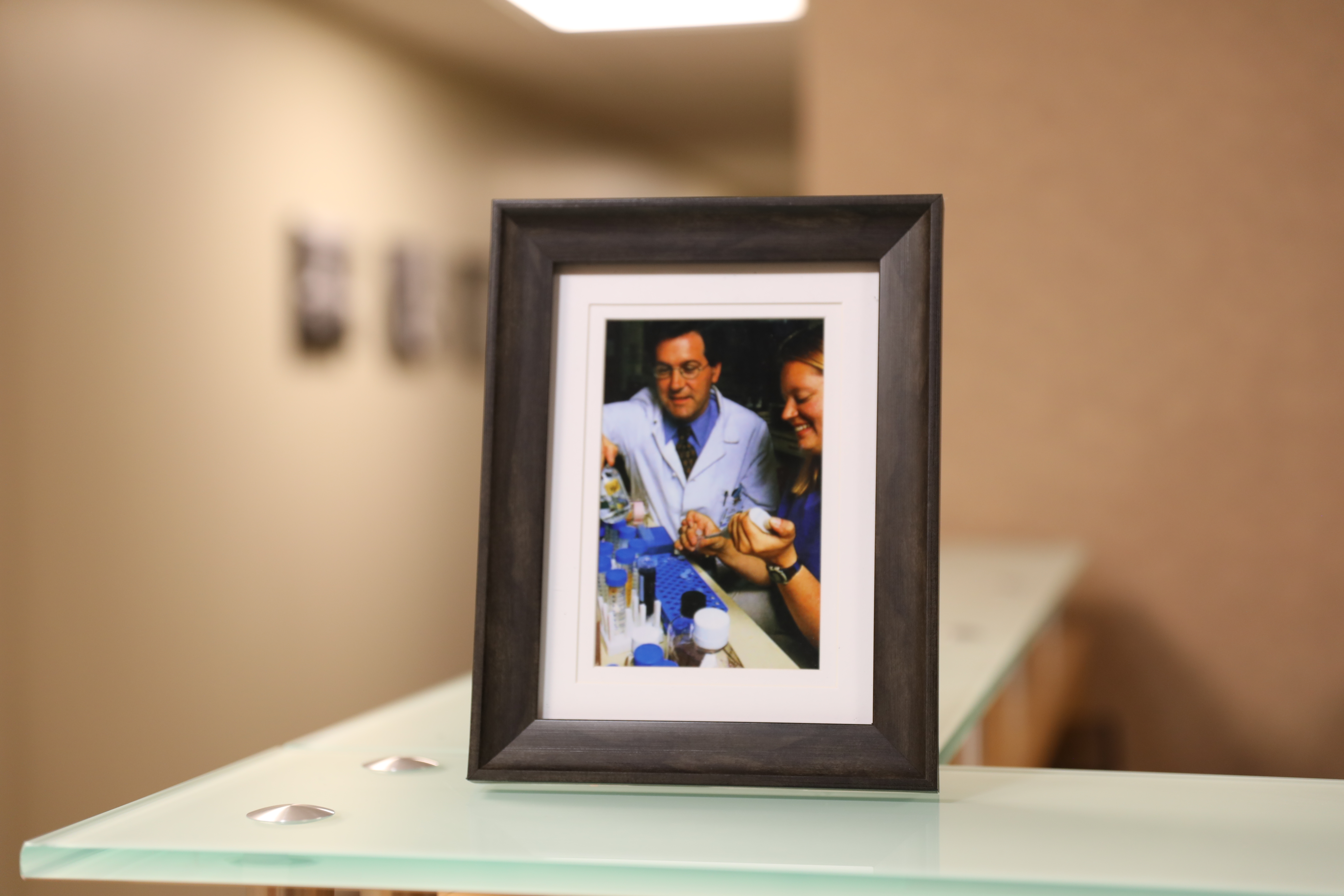
Linehan’s own research into immunotherapy in pancreatic cancer is a good example. When he started in the field, the survival rate was five percent. Now it’s 12 percent—much room for improvement, but also much improved.
He has researched new cancer treatments that combine immunotherapy with radiation therapy and chemotherapy. He has received funding from the National Cancer Institute for the past 20 years.
Despite success in the lab, Linehan says he considers it a breakthrough only when the research translates into treatment that helps the patient.
At the UR medical school commencement in 2024, Linehan offered advice on how to deal with the uncertainties of practicing medicine:
“I’ve had really bad days when a favorite patient died or an operation didn’t go well,” Linehan says. “I told the graduates about my drawer that holds 25 years’ worth of letters from grateful patients. The letters say things like, ‘You operated on me five years ago and took out half my liver and here I am at my daughter’s wedding or here I am mountain climbing in the Alps.’ When I have a really bad day, I open the drawer and am reminded of why I go to work every day.”
Recently he received a letter that started out: “I’m sure you don’t remember me.”
“I looked at the name and knew immediately who she was,” Linehan recalls. More than a decade ago in St. Louis, he performed a risky operation to remove a large tumor from a young man’s liver. At a follow-up appointment, the man’s eight-year-old daughter, Maisy, thanked Linehan for saving her father’s life and announced that she was planning to become a nurse. Linehan told her that was a wonderful career choice.
Inside the letter, Maisy included a picture of her graduation from nursing school.
“That,” Linehan says, “goes right in the drawer.”
Connect with us!




Author
