

His Inventive Mind Led to “the Patch,” “the Pill” and So Much More
NOTE: This story originally appeared in the FALL / WINTER 2004 issue of Rochester Medicine magazine. Zaffaroni died in 2014 at the age of 91.
More than once, when Alejandro Zaffaroni (PhD ’49, FLW ’51) has run an invention idea past a colleague, the response has been, “That’s impossible.” And more than once, Dr. Zaffaroni has gone forth and turned his impossible idea into something that not only works but also changes the world.
His might not be a household name, but when people use “the patch” or “the Pill,” or if they take any of numerous “controlled-release” medications, they’re using innovations that Dr. Zaffaroni had a hand in or exist only because they first lived in his imagination.
His accomplishments have reached legendary status in scientific and business circles alike. In all, Dr. Zaffaroni has founded more than a dozen biotech companies—and counting—and continues to invent and work at age 81. (Editor’s note: Zaffaroni died in 2014 at the age of 91).
One of the secrets to his success, say colleagues, is his total commitment to projects. At his first research job, after his biochemistry graduate and fellowship studies at Rochester, Dr. Zaffaroni’s commitment took him into the Veracruz jungle on a search for wild yams.

It was 1951, and Dr. Zaffaroni had joined a Mexican company called Syntex, which was small in size but huge in significance. The company had just won a furious race to synthesize the wonder drug cortisone, beating out the pharmaceutical giants north of the border.
Dr. Zaffaroni was hired to establish a research lab at Syntex, which was extracting the plant steroid diosgenin from Mexican yams for conversion into human steroid hormones. While he waited for the new laboratories to be built, Dr. Zaffaroni decided to look into the steroid production process.
“One of my first realizations was that, if we could improve the collection process of the raw materials, we should be able to get a better quality product,” he said.
Everyone, even the founder of the company, said it couldn’t be done. Locals gathered the yam roots in their off hours and would simply pile them up outside for someone else to deliver.
But Dr. Zaffaroni searched and found someone interested in helping him deploy equipment designed for chopping potatoes so the raw material could be properly stored and promptly delivered to the factory. Dr. Zaffaroni then introduced a new step, adding the precursors for the biosynthesis of steroids. His new process improved the quality and yield immensely.
It was a pattern he would follow throughout his career. As Arthur Kornberg (MD ’41) wrote in his illuminating book The Golden Helix, Alex had recruited local laborers and imbued them with a team spirit to advance the technology by their efforts. By applying the scientific insights acquired in his graduate research at Rochester, he had made a real impact on a practical problem.”
Syntex’s research prowess soon yielded an even larger prize: Dr. Zaffaroni’s colleagues Carl Djerassi and George Rosenkranz led the effort to synthesize norethindrone, the active ingredient in what would become the birth-control pill.
To bring it to market, Dr. Zaffaroni left the jungles of Mexico for the jungles of the boardroom, where he led successful licensing negotiations with the Johnson & Johnson subsidiary Ortho after leading clinical testing of the new product. Tiny Syntex had struck again.
“The pill” got the headlines, of course. But it was the blockbuster success of another Syntex drug that would foreshadow an entire new approach to how drugs are delivered into the body.
Dr. Zaffaroni, who was named president of Syntex Laboratories in 1962, led the development of a steroid cream called Synalar, which became the leading topical anti-inflammatory product of its day. The medication incorporated a new technique based on the simple observation that the medication worked better when wrapped in Saran Wrap.
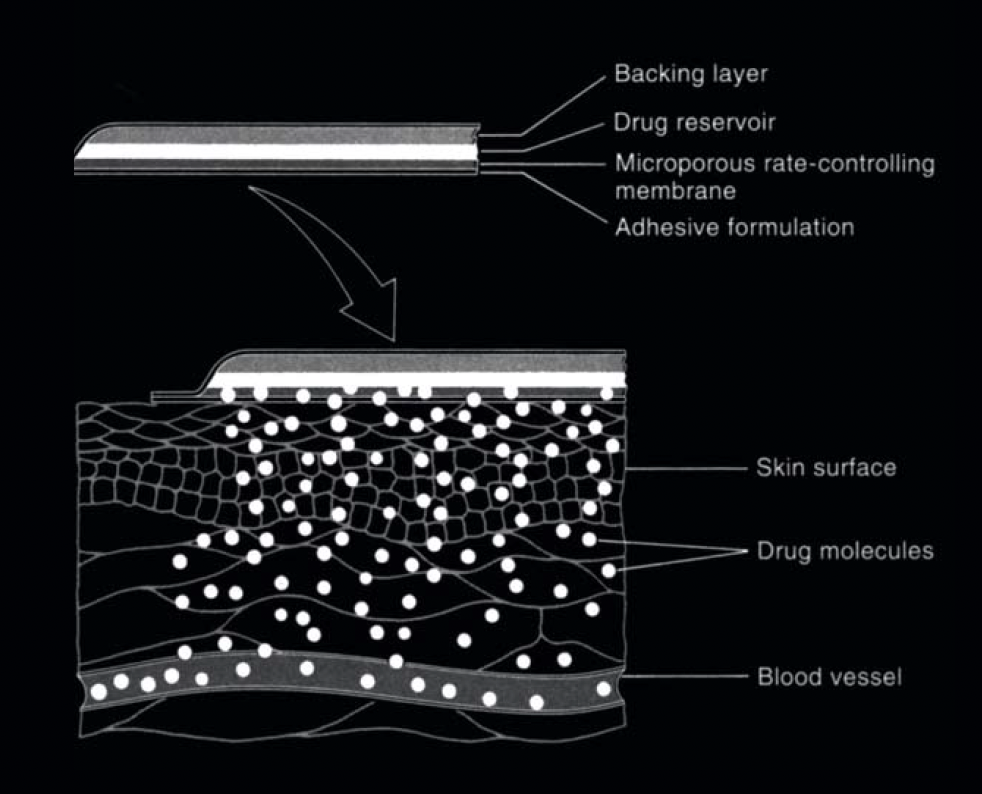
It was a hint of how Dr. Zaffaroni would reach true biotechnology fame, with his idea of new drug-delivery systems that spawned innovations such as the transdermal patch.
Controlled-drug delivery was one of those ideas that caused heads to shake when Dr. Zaffaroni mentioned it, and his own company wouldn’t touch it. To someone without the vision and knowledge that Dr. Zaffaroni possessed, the idea must have sounded like science fiction. Given what shaped Dr. Zaffaroni’s imagination, that’s not such a surprise.
The Jules Verne Approach
Dr. Zaffaroni was born in Uruguay’s capital city of Montevideo in 1923, a year before the tiny country shocked the sports world by winning the Olympic soccer gold medal. Uruguay took gold again at the next Olympics, then won the first-ever World Cup tournament in 1930, held in Dr. Zaffaroni’s very hometown. Soccer was clearly king in Uruguay, but Dr. Zaffaroni suffered from asthma as a child, which meant he couldn’t join his friends in their “futbol” games.
Instead, curious child that he was, he explored the world partly through books and especially through the science fiction of Jules Verne.
“I believe that those books may have opened my mind to the field of science and exploration,” Dr. Zaffaroni said.
He got more down-to-earth training from a relative who founded a hospital in Montevideo and didn’t mind a teenager sitting in on medical procedures. Soon Dr. Zaffaroni was giving shots to patients, entrusted even to administer to the local priest.
In college he discovered a love for biochemistry, but there was no Ph.D. biochemistry program in Uruguay. So he applied to several U.S. universities. Two accepted him: Harvard and the University of Rochester. He set sail for the United States to visit both, arriving in New York amid huge celebrations—just a few days before, Japan had surrendered to end World War II.
At Harvard, he met the faculty and was told how things would work. “I was to join a group of six students and would be under direct supervision of a professor who would direct our field of study,” Dr. Zaffaroni said.
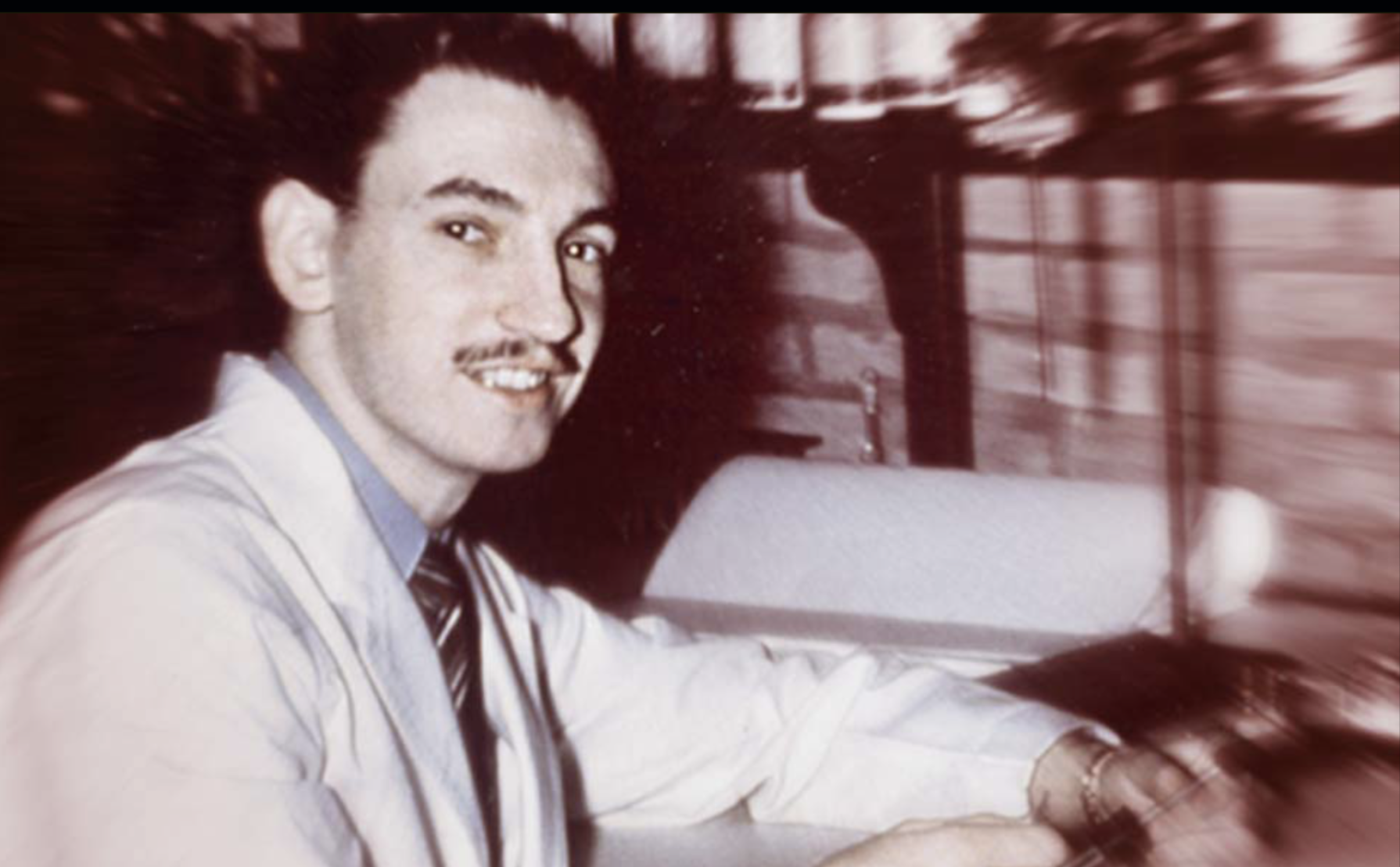
Dr. Zaffaroni enjoyed having his own lab while studying at Rochester.
At Rochester, on the other hand, W. R. Bloor—the “great professor” in Dr. Zaffaroni’s words—told him he’d be working in the area of lipids, with his own small lab and control over his own research.
“This freedom sounded like heaven to me,” Dr. Zaffaroni said. So he chose Rochester for his new life.
He had to adjust to a new country, a new language, and a climate he labels as “different.” As he put it, We had no snow in Uruguay.”
Apparently he adjusted well. While earning his PhD at Rochester, and subsequently during an NIH fellowship at Rochester from 1949 to 1951, Zaffaroni developed a technique that became widely used in the synthesis of steroids, representing what he called “a turning point in my life.”
He began numerous collaborations with scientists around the country and beyond, and he started a family. He married his Uruguayan girlfriend, Lida, who joined him soon after in Rochester, where their first child, Alejandro, was born. His daughter, Elisa, was born a couple of years later.
Dr. Zaffaroni’s invention, a paper chromatography technique to separate and track steroids, gained him international attention and made him a natural fit for that first job at Syntex, where he could apply his analyses to the company’s steroid work.
His versatility was invaluable at Syntex, especially as he and his colleagues worked to transform themselves from a manufacturing supplier to a worldwide pharmaceutical company.
By the early 1960s, Syntex had established its U.S. headquarters in Palo Alto, California, and was on its way to becoming a pharmaceutical success.
That success also meant a certain degree of complacency, at least with the board of directors. When Dr. Zaffaroni was ready to pursue his idea for revolutionizing the way drugs are delivered in the body, the board was not.
So, though it was difficult personally, Dr. Zaffaroni decided to “branch out and start from scratch.” He launched ALZA in 1968, using a good deal of the money he made at Syntex and even his very name.
“I named the company after my own name to show my full commitment to the company,” he said.
That commitment—some would say “gamble”—would be as much a business adventure as business venture, with near bankruptcies, huge stock swings, and even the loss of control of the company at one point. It didn’t help that his idea was so innovative, experts dismissed it as impossible.
The Natural Approach
It might sound like a simple observation, but only Dr. Zaffaroni seemed to make it. In the human body, glands release hormones in a very precise, controlled way, yet when people take pills or receive injections, it’s the opposite. The drug blasts into the body, then gets broken down and eliminated in a peaks-and-valleys pattern. At the peaks, the drug creates side effects; in the valleys, the drug drops to ineffective levels.
Dr. Zaffaroni’s work with adrenal glands, dating back to his Rochester days, gave him the idea to explore delivering drugs in a way that more closely resembled how glands disperse hormones in the body. Generally, it was seen as a nice idea that couldn’t be executed.
“The concept of controlled drug delivery was a very tough sell,” Dr. Zaffaroni said.
Yet a small group of people believed, in part because they weren’t expert” enough to dismiss a radical idea. Martin Gerstel signed up immediately after hearing Dr. Zaffaroni’s idea, “due to the fact I knew almost nothing about the drug industry, and that his ideas seemed so logical,” he said. Gerstel, with a newly minted Stanford MBA, became ALZA’s chief financial officer at age 28 and later its CEO.
“Over the years, I noticed this to be a pattern,” Gerstel said. The ‘experts’ in the medical/technical areas where Alex had his breakthrough ideas almost always saw them as either unimportant or not possible, but people not that familiar with the field would often immediately see the logic, truth and value in what he was proposing.”
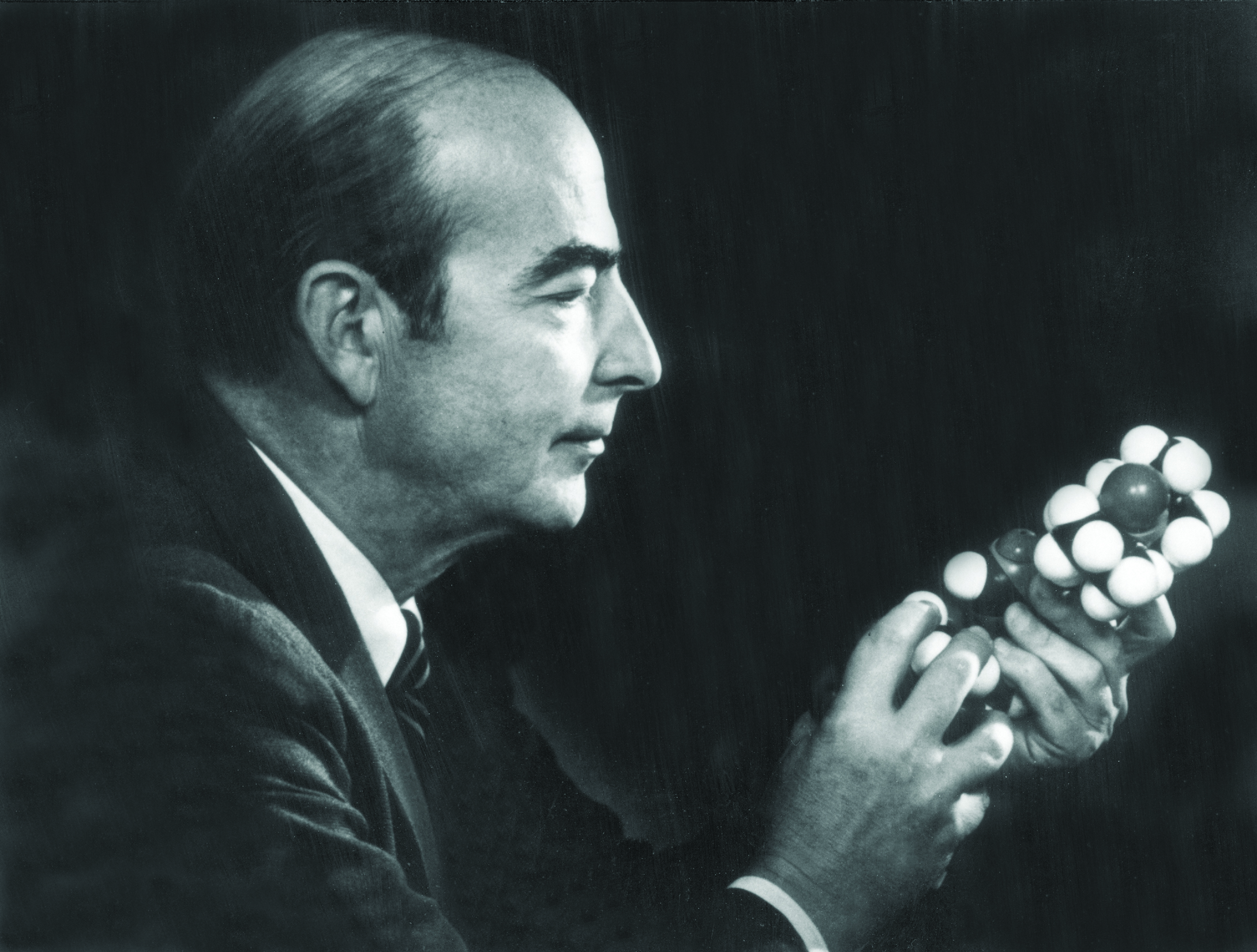
Logical or not, the idea faced daunting challenges.
As Dr. Kornberg wrote in The Golden Helix, “systems would have to be designed, developed and tested; then they would have to clear the hurdles of extensive clinical trials, regulatory approvals, and the minefields of marketing. It could take many years, cost one hundred million dollars or more, and still fail at any stage.”
Innovation would be needed at every level—even financing. As part of Dr. Zaffaroni’s departure agreement, Syntex received 25 percent of ALZA’s initial stock, which would go to Syntex shareholders. But the Securities and Exchange Commission frowned on stock coming from a company with no products in development, no facilities of its own, very few people on staff and almost no capital. ALZA argued that no additional funds were being sought, since the shares were distributed through another company to existing shareholders.
“In the end,” said Gerstel, “they had to allow the distribution, creating the first publicly traded venture company.”
Gerstel said this opened the floodgates for venture capital to fund early startups following ALZA’s model. The new approach got attention on Wall Street. Fortune magazine’s feature story on ALZA was titled “Visionary on a Golden Shoestring,” and investors lined up in the early 1970s for a piece of the company.
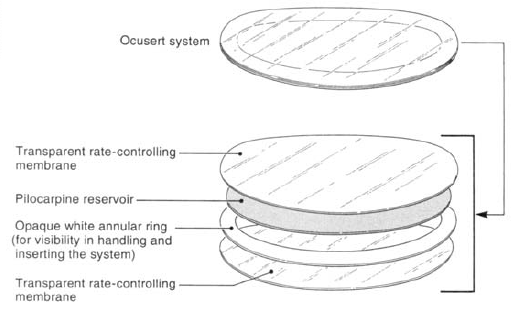
Meanwhile, with Dr. Zaffaroni doing double duty as a manager and researcher, ALZA invented two products that received approval for sale by the mid ’70s, securing patents along the way for systems that released drugs at a constant rate for a certain length of time. Ocusert™ was marketed for glaucoma and Progestasert™ for contraception (Progestasert released a tiny dose of progesterone to the uterine lining over an entire year).
Both were scientific breakthroughs, available commercially for several years, yet both failed to catch on. Neither is on the market today. Older patients had trouble inserting Ocusert into their eyes, and Progestasert had to be inserted by a doctor once a year in a procedure that was often painful.
Beyond that, the manufacturing techniques for both products required a significant amount of manual work, and converting the process to a more automated method would have been extremely costly. And to this day, women prefer oral contraceptives to any other type.
By the end of 1977—a decade after Dr. Zaffaroni threw himself and his very name into his vision—ALZA “had virtually no money left, owed $20 million under its bank line, was expecting a loss of about $15 million for 1978, and our stock was selling at less than $1 per share,” Gerstel said. It seemed like the end was near.”
Eventually, the company had to sell a controlling interest to the Swiss pharmaceutical giant Ciba-Geigy (now Novartis). For the next five years, ALZA essentially disappeared from public view.
Perhaps Dr. Zaffaroni’s biggest accomplishment through these times was his leadership. If he was at all discouraged, he never showed it, said Dr. Kornberg, who won the Nobel Prize in 1959 for his DNA research and served on ALZA’s scientific advisory board. “He had a sort of serenity about him, and that is what gave people who answered to him the faith to persevere. The loyalty people had to him was of a very high order.”
In fact, said Gerstel, even when things looked hopeless, not one of ALZA’s key people ever left for other jobs. After all, ALZA was something different, and the people who were part of it were devoted to its leader.
As Gerstel put it, “Alex typically relied on very young, bright people… to carry out his dreams. And in the beginning, his companies almost always were dreams, and so an absolute requirement for new employeeswas to be a ‘believer.’ No matter how talented someone was, if they did not believe,’ Alex would not hire them.”
“Everyone knew that Alex would be there for them if they needed help, personally or professionally,” Gerstel noted.
In 1982, five years after purchasing ALZA, Ciba-Geigy decided to give up its controlling interest but maintain a licensing agreement. ALZA’s finances had not improved in the interim. The company still owed most of a $20 million loan and had essentially no revenues.
Yet the company’s loyalty to employees never wavered. Once they held control again, Dr. Zaffaroni and his leadership team decided to place a percentage of the company ownership into an employee stock plan, which would kick in if the company ever made a profit. It was a guarantee that, should the company succeed, its employees would benefit. At the time, it looked like wishful thinking. That year, the Wall Street Journal ran a front-page story titled “The End of the Dream of ALZA.”
But the company faithful were still dreaming—and still inventing. ALZA had perfected a new product, Transderm-Nitro, a nitroglycerin patch for the prevention and treatment of angina pectoris. Ciba-Geigy introduced the product under the licensing agreement in 1983, with ALZA earning royalties. The patch turned a $20 million market into one worth more than $1 billion.
Within a year, ALZA was making a profit. Within another year, the pie-in-the-sky employee stock plan kicked in (and proved to be much more than a token gesture; if each employee had held the stock until 2001, the combined value of the shares would have been worth half a billion dollars).
Two decades after Dr. Zaffaroni began formally pursuing the idea, drug-delivery systems had arrived. ALZA began working with other companies to incorporate the concept into their products.
By the early 1990s, ALZA was developing more than 60 products. One, Procardia XL for angina and hypertension, became Pfizer’s first-ever billion-dollar product, and ALZA’s sales were topping $2 billion.
And what was Dr. Zaffaroni doing, now that his idea was finally becoming reality? Dreaming up more confounding, life-improving ideas.
The Hybrid Approach
Entrepreneurship often requires obsessive control and grueling hours, but colleagues say that Dr. Zaffaroni was not known for either. Instead, he came to his work with preparation and vision.
“He is knowledgeable about the science, and he has a gift for seeing how it might be developed and applied,” said Dr. Kornberg.
According to Gerstel, “Alex’s ideas almost always brought together technologies from very different fields, and fields where people did not often interact. This introduction of ‘foreign’ technology to accomplish your objectives probably also added to the difficulty for ‘experts’ to recognize the potential in his ideas.”
But with the success of ALZA, the experts started giving Dr. Zaffaroni’s hybrid ideas the benefit of the doubt. Dr. Zaffaroni went on to found or co-found numerous businesses that merged different disciplines, showing what happens when a medical-minded scientist interacts with the high-tech ideas of Silicon Valley.
DNAX (co-founded with Dr. Kornberg and two others in 1980) combined genetic engineering and immunobiology technologies for discoveries that could correct problems in the immune and blood-forming systems.
Affymax N.V., in 1989, applied semiconductor technology to accelerate the drug-discovery process.
Symyx, in 1994, merged the disciplines of new materials and chip-making, synthesizing arrays of different materials on a miniaturized scale to enable thousands of experiments at a time.
Maxygen, in 1997, blended genetics and drug discovery, speeding up the process for preparing genes and proteins for commercial use.
The man who at one time couldn’t get anyone to invest in his company had arrived as a true biotech entrepreneur.
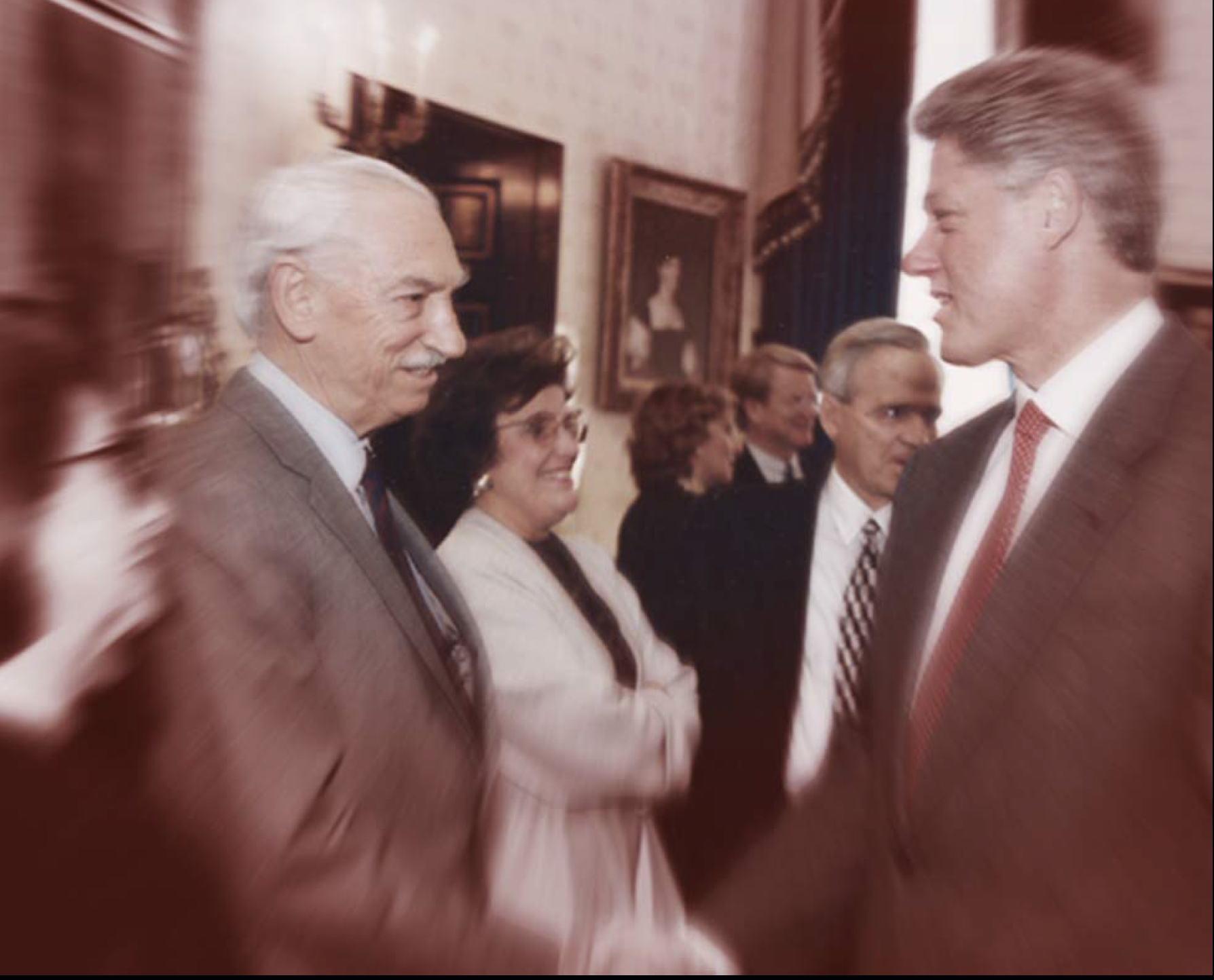
Just in case there were any more doubters, President Clinton in 1995 presented him with the National Medal of Technology, the highest award given by the president for technological innovation.
That award takes its place among honors Dr. Zaffaroni has received from all over the world, including Israel and Japan. As testament to the longevity of his creativity, the dozens of patents he holds for his inventions have been awarded over six decades.
Dr. Zaffaroni’s influence on biotechnology is unmistakable. DNAX was acquired by Schering-Plough and Affymax by Glaxo Wellcome. And in 2001, Johnson & Johnson purchased ALZA—the company that made it all possible—for $11 billion. Yet making money was never the main point.
“As far as career, the thing I am most proud of is the creation of a large number of companies that have added value for the world and not just products that produced financial gains,” Dr. Zaffaroni said.
In that respect, his legacy is secure. Even beyond the work of his newer companies, controlled drug delivery has taken its place as the safest and most efficient method for many types of treatments.
“About 80 percent of new drugs utilize some type of controlled drug-delivery technology,” Dr. Zaffaroni said. “There are somewhere around 700 companies in the drug-delivery space, the market size continues to grow, and I do not see an end to it.”
Neither did there appear to be an end to Dr. Zaffaroni’s inventive impulse. In 2000 he launched Alexza MDC, a company dedicated to the delivery of pure drugs to the brain. The company designed a whistle-like device that uses heat to turn existing drugs into an odorless vapor that is then inhaled, providing almost immediate relief. The idea came from observing that the cigarette is actually a very efficient drug-delivery system, sending nicotine to the brain within seconds.
Dr. Zaffaroni explored numerous existing medications to see which could be delivered in a similar process. When he realized that a large percentage of existing compounds could be volatilized, he decided to launch Alexza. Essentially, he took a well-known system and applied it in a brand-new way.
Anyone wondering why Dr. Zaffaroni kept working into his 80s doesn’t understand that he was not so much starting businesses as solving problems.
“I don’t think I will ever ‘retire’ if the definition of retirement is to unplug yourself from everything you have done in your past and move to a faraway place and do nothing,” he said. “From my point of view there is nothing I can retire from. This is what I do; it comes with my own self. I wake up in the middle of the night, I think and write about ideas or thoughts and the next morning I start over. The concept of retirement is not something I ever consider.”
Author
