

How D.A. Henderson Saved the Planet from Smallpox. Twice.
NOTE: First published in 2002. Henderson died in 2016 at the age of 87.
Really, he just wanted to be a cardiologist. Instead, in a globe-spanning career packed with high adventure and serious risk-taking, D. A. Henderson, M.D., M.P.H.(M ’54), became known as the first person in history to wipe a disease from the face of the earth.
Henderson is quick to credit the many people who contributed to the World Health Organization’s smallpox eradication program in the ’60s and ’70s. But he was the one in charge. He was the one who transformed previous eradication attempts into a successful global campaign. He was the one who innovated at every step, learning on the run and applying experimental techniques against a disease that killed one of every three people who contracted it.
Now, after evading gunfire and dodging land mines, after decades of outfoxing epidemics and human suffering, Henderson is maneuvering through what may be the trickiest landscape of them all: government. (Note: Henderson died in 2016.)
When he was named director of the newly formed federal Office of Public Health Preparedness in November 2001, a daunting task lay before him. He became responsible for the medical and public health response to terrorism, with a special emphasis on bioterrorism. The man who waged war against natural epidemics was now faced with the sad and ugly reality of defending against manmade ones.
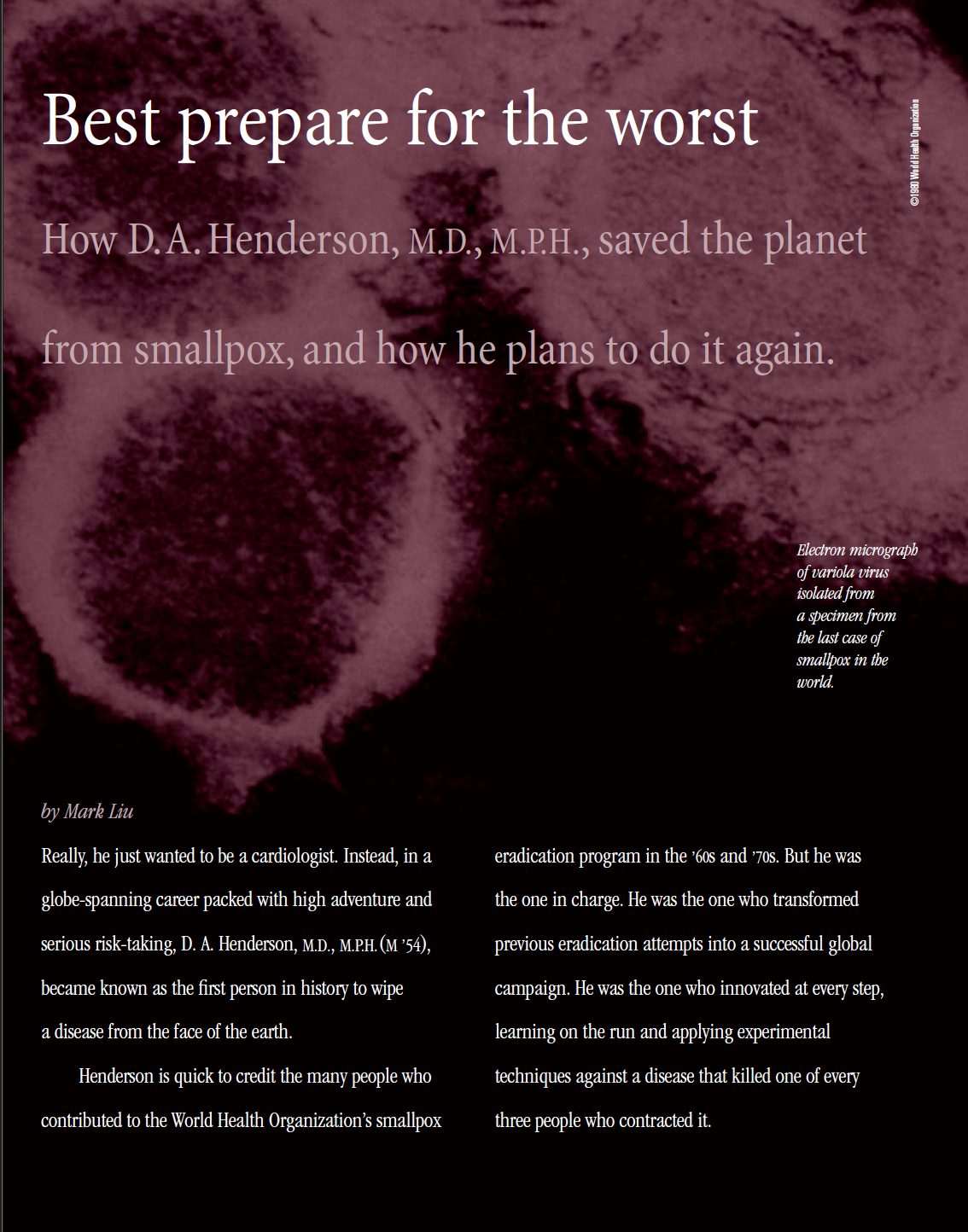
Electron micrograph
of variola virus
isolated from
a specimen from
the last case of
smallpox in the
world.
At least one key person thinks he’s up to the task.
“Dr. Henderson brings a lifetime of preparation for the demands of this job,” says Tommy Thompson, Secretary of the Department of Health and Human Services. “His distinguished record speaks for itself, and we are fortunate to have him join the department on a full-time basis.”
In many ways, the position is the logical culmination to the work Henderson did throughout the ’90s, in his other career as a bioterrorism expert and White House advisor.
Back then, he and a handful of others implored the government to take the bioterrorism threat seriously. It was a tough sell—until anthrax hit the headlines last fall.
“It felt like we were praying for rain in the desert,” says Henderson from his Baltimore home. “And then when it came, it was a flood.”
How he became the man at the floodgates—how he gained the insight to predict a problem that plagues us now—is the stuff of a good page-turner. And, in fact, he was working on the book. But duty called. The book will have to wait.
Into Africa
Donald A. Henderson earned his medical degree from Rochester in 1954, then completed his internship at Bassett Hospital in Cooperstown, N.Y. With the “doctor draft” still in effect, Henderson applied to the Centers for Disease Control and Prevention (CDC), even though the CDC was little known and very small at the time.
Henderson had only one qualification for public health work: He had written a paper on the history of cholera in Rochester for a contest, which he had entered only because he wanted the prize money to buy a hi-fi.
“I applied to the CDC not because I was interested in public health or anything like that. But we all had to do military service,” he says. I thought, ‘Well, I’ll spend two years in public health.’ ”
Henderson ended up in the Epidemic Intelligence Services (EIS) in Atlanta, among a group of epidemiologists who, with the Korean War fresh in their minds, were looking into the problem of biological warfare.
They were ahead of their time in other respects, as well. When they got word of an epidemic, they responded like an emergency department that made house calls. They packed their bags and went, bringing with them the latest ideas in vaccinating and isolating patients to contain outbreaks.
On one assignment, to fight an outbreak of botulism toxin in Argentina, local officials asked Henderson if he wanted to see any sights. He said he wanted to see a case of smallpox.
Henderson and a World Health Organization (WHO) doctor were flown far up the Amazon to a tiny town, where he got his first glimpse at how complicated smallpox work could be out in the trenches. The clinicians in the treatment tent were baffled by smallpox patients who seemed to be experiencing relapses several weeks later. As it turned out, some patients with chickenpox were acquiring smallpox, and others with smallpox were getting chickenpox. It was a good, first-hand lesson in differentiating one disease from the other.
Henderson had come face to face with the disease that would make him famous.
He tried to stick to his original plan, returning to Cooperstown to study internal medicine, but he decided that public health was far more exciting. He enrolled at Johns Hopkins University to earn his M.P.H., then found himself back in Atlanta, running the surveillance section of the EIS. Henderson was already thinking big about what the EIS could do.
Lawrence Altman, M.D., now a medical correspondent for The New York Times, remembers his very first conversation with Henderson when Altman came to the EIS for a job interview.
“He was talking about eradicating smallpox,” says Altman. “I had never heard the concept of eradicating a disease before. It was never talked about in med school, or any other training. It was just an eye-opener.”
The idea was to break the human chain, which would stop the disease because it was communicable only through human contact. When an outbreak occurred, epidemiologists could vaccinate a ring of people around the outbreak, effectively cutting off all paths for it to spread.
Eradication would require teams of experts to cross world cultures and negotiate through civil wars, in places that had the least developed health services in the world. They would have to secure and transport hundreds of millions of doses of vaccine in places that barely had roads, let alone communication systems—all with the Cold War heating up around them. Understandably, talk of smallpox eradication was just that: talk, with no practical plan in sight.
Even when Henderson saw a chance to fight the disease in a major hot spot, he wasn’t thinking about eradication. In 1965, the U.S. Agency for International Development (AID) was fighting a losing battle against measles in West Africa. AID turned to Henderson for more manpower, which the EIS really couldn’t spare. But rather than say it that way, Henderson cleverly said the opposite. He proposed a massive, combined effort to fight measles and smallpox in 18 countries, at a staggering cost of $35 million.
Essentially, it was a bluff. Henderson knew that neither group was equipped to handle such an undertaking. As he tells it, he was thinking, “We know they’ll turn it down, and then we’re off the hook. But we needed to offer something.”
Henderson, an avid bridge player at the time, had played his cards right. AID did turn down his proposal, and he was off the hook— for a moment.
Then something completely unexpected happened. For its 20th anniversary, the United Nations had declared 1965 “International Cooperation Year,” and President Johnson was looking for a cause to showcase American cooperation. Someone in the Public Health Service brought the big, unwieldy smallpox-measles proposal to a presidential advisory committee, explains Henderson. They liked the idea, and so did the president.
He ordered AID to fund the program,” says Henderson. “So all of a sudden, there we were with an enormous program.”
History would see Henderson’s bluff differently. Don Millar, M.D., a 32-year CDC veteran who led the CDC portion of the eradication effort, says, “If a single idea can be said to have launched the global smallpox eradication program, it was D. A.’s proposal for a joint smallpox-measles program in Africa. It stands as a bold stroke of managerial genius.”
The idea snowballed, and suddenly the United Nations was voting on launching a 10-year effort for global smallpox eradication. It passed by only two votes, says Henderson, and the director of WHO, a Brazilian, was livid.
He blamed the Americans for getting us into this terrible mess, because he felt it could not succeed,” says Henderson. The WHO director wanted an American to head the program, notes Henderson, so when it failed, the United States would receive the blame it deserved. Henderson was his guy—his fall guy, actually.
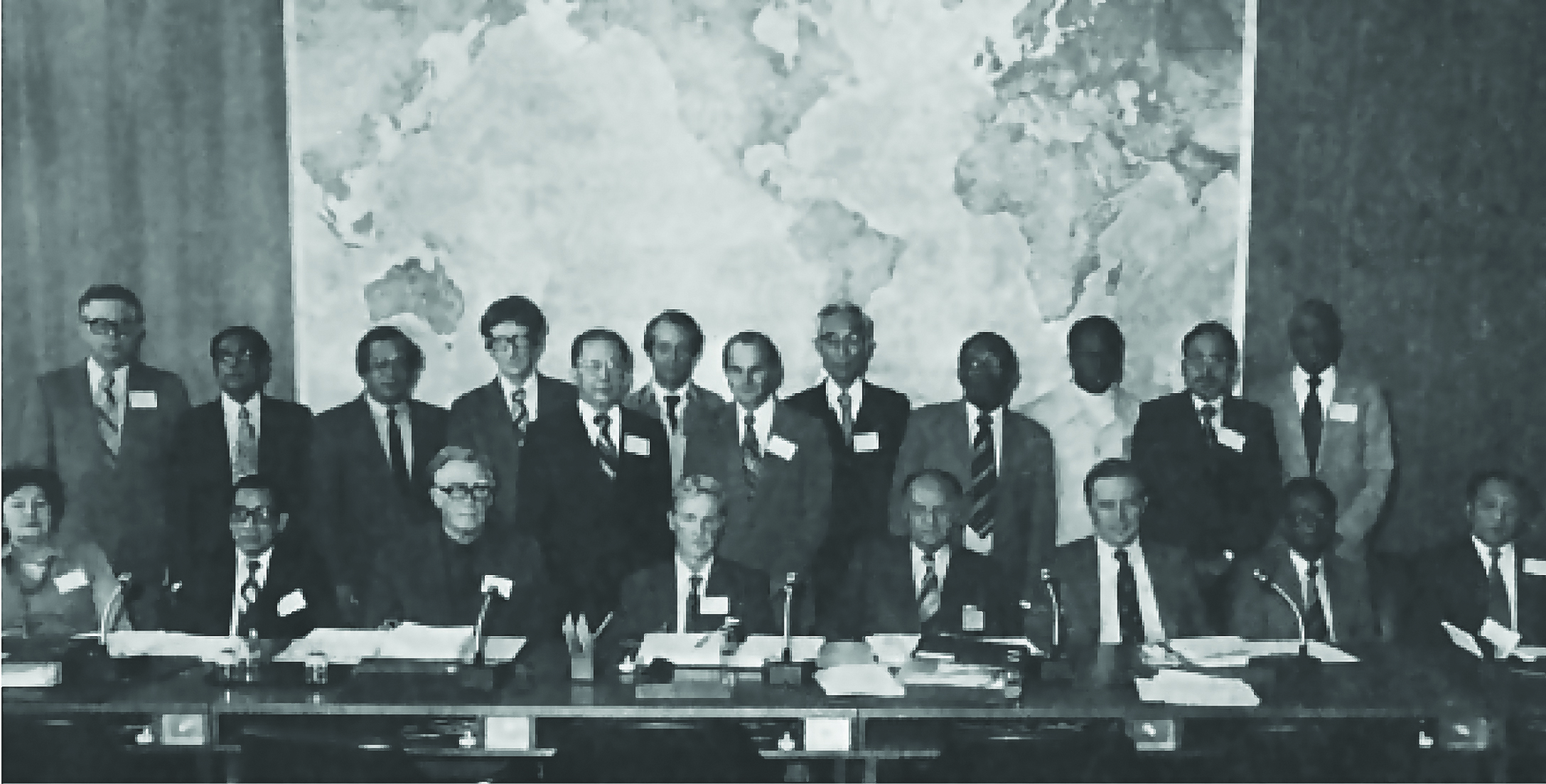
That overwhelming program was now just one piece of something much, much larger. Programs would need to be conducted in 50 countries, with a total population of more than a billion people. The WHO budget provided for only $2.6 million; the rest would have to come from contributions, volunteer work—wherever it could be found.
And roughly 15 million new cases were appearing each year. Henderson was now in charge of stopping every last one of them.
Bullets or Missiles?
Those who worked with him say that Henderson’s unique abilities made him ideal for the task. People cite his commanding presence and sonorous voice, but also his ability to foresee outcomes much larger than mere mortals can see. And when he saw opportunity, he seized it.The kingdom of Tonga in the South Pacific is a prime example. While Henderson was still with the CDC, he learned that the king of Tonga had a business meeting with the Coca-Cola Company in Atlanta. Henderson saw it as an opportunity to test an experimental jet-gun vaccination technology, so he arranged his own meeting with the king.
Somehow, he sold the king on his plan. Henderson got his test study, and the entire kingdom of Tonga—roughly 80,000 people—got vaccinated against smallpox.
As head of the global eradication effort, Henderson would have to be just as resourceful. With Geneva as home base, he and teams of workers and volunteers began to solve problems, one at a time. Many of the problems weren’t medical at all.
“It’s war,” says Millar about fighting epidemics, speaking quite literally. “I was involved in seven coups d’etat. I was under house arrest during several.”
Special treaties had to be arranged so that vaccination could proceed amid revolutions and civil wars. Sometimes, as in Nigeria, treaties were made on both sides. And where agreements couldn’t be reached, Henderson found other ways.
When Ethiopia’s minister of health refused to have his country participate in the program and refused even Henderson’s request to visit, Henderson waited until the minister was out of the country, then managed to get permission through other channels. He then befriended the emperor’s personal physician who, in turn, persuaded the emperor. The minister was ordered to execute the program.
Later in the campaign, Henderson found himself back in Ethiopia, flying extremely low in a helicopter while rebel soldiers fired at them from the ground. Henderson turned to the pilot and asked, “Why don’t we fly a little higher?” The pilot answered, “We heard they got surface-to-air missiles last month. We thought it was better to brave rifles than SAM missiles.”
Routine Kidnappings and Other Hazards
There were other difficult choices to make. In Bangladesh, Henderson was trying to get a UN team out to a health center in the middle of a revolution. As Henderson tells it, the authorities asked, “Doc, do you want a military escort? There are lots of landmines out there. Better that the car in front of you hits them. So an escort is good. But the army draws lots of gunfire from militants. So an escort is bad.” Henderson thought hard, eventually choosing to go without the escort.
“I felt that trip was 200 miles, but it was more like 15,” he says.
Yet he insists that the “incredible bunch of people” on the eradication staff and in local teams actually faced worse dangers. “What I experienced was really minor compared to what they did,” he says.
Every few months, recalls Henderson, someone on the staff was kidnapped. They’d disappear from Ethiopia and sometimes end up in Somalia, where their release would have to be negotiated.
Somehow, Henderson kept his teams committed to the cause. A clue to how he pulled it off comes from the likes of Don Millar. Millar says it “wasn’t always pleasant working for him. He was hard-driving. He expected more of me than I thought I had to give. I never had as lofty an opinion of me as he did.”
Yet, Millar also says, “Because of people like D. A., it was a wonderful career.” Henderson expected the best from people, so he often got it. He could drive people beyond what they felt was comfortable, yet still have them feel it was wonderful” in the end.
The WHO teams also knew they were on a medical mission of the highest order. They made major strides in West Africa using the faster, cheaper (and Tonga-tested) jet gun, though they had to modify it to pedal power because they didn’t have electricity. Henderson convinced countries to donate vaccine or develop their own.
Despite the Cold War, the USSR became the largest donor, contributing 25 million doses. Still, vaccine was in short supply, so the teams experimented with a bifurcated needle just invented but not yet in use. It quadrupled the number of successful “takes” per dose, and made it easier for volunteers to administer the vaccine.
Several years into the program, the teams reached a major milestone. They had eradicated smallpox in Africa and South America, but, more important, they now felt for the first time that global eradication was truly possible. Now, a major battle loomed: India.
Indian officials had been fighting smallpox for years, but still the WHO teams faced an extremely high incidence of the disease there. As weapons, the team brought with them many solid years of resourcefulness and on-the-job learning. As Henderson puts it, “At that point, we knew better what we were doing.”
The field staff had an idea for a search operation that eventually would reach every village in India. Later, it was extended to reach every house in India—a remarkable undertaking, considering India’s diverse population of half a billion people spread over more than a million square miles. More than 120,000 health workers were engaged in the search.
The team came up with a final innovation: a reward to anyone who reported a case of smallpox. The operation worked. In 1975, smallpox was dead in India. Five years later, WHO declared smallpox eradicated, and the world celebrated an unimaginable accomplishment.
Overlooked in the celebration was the ominous ending to this chapter of the story. The world’s last smallpox fatality didn’t occur in the midst of an epidemic in squalid surroundings. It occurred in England, in 1978, when a sample of virus accidentally escaped from a laboratory.
This would foreshadow the problem that would come to haunt the world two decades later—the problem that has Henderson as busy as ever, fighting the same fight in very different circumstances.
The man-made epidemic
Henderson returned to Johns Hopkins in 1977, where he served as dean of the School of Public Health for 14 years. He calls that time “very gratifying,” as he cemented a relationship with the school of medicine and built up the international program. He was in the midst of overseeing major growth at the school when the White House came calling. Henderson became a science advisor for George Bush Sr. in 1990. When President Clinton took office, Henderson moved to the Department of Health and Human Services as senior science adviser and deputy assistant secretary.
It was through briefings and work on Department of Defense committees during the Clinton administration that Henderson became especially aware of the problem of biological weapons. After the Gulf War, he says, evidence of anthrax activity in Iraq was mounting. In 1995, a Japanese cult released toxic sarin gas in the Tokyo subway system, raising the specter of domestic terrorism. But the big blow came with the revelation of a major biological-weapons program in Russia. Smallpox virus was alive and well as a potential weapon.
“There was a feeling by the President and the administration that we really had to gear up,” says Henderson.
But many other people would have to be convinced. In some ways, preventing a manmade epidemic was as daunting as stopping a natural one. The whole topic of biological weapons and the diseases they could unleash was foreign to most people in public health and medicine, says Henderson: “The subject was all but taboo.” The prevalent view was that the healing arts shouldn’t be mixed with research or teaching that involved such repugnant weapons. That view was reflected in the health care system, as well.
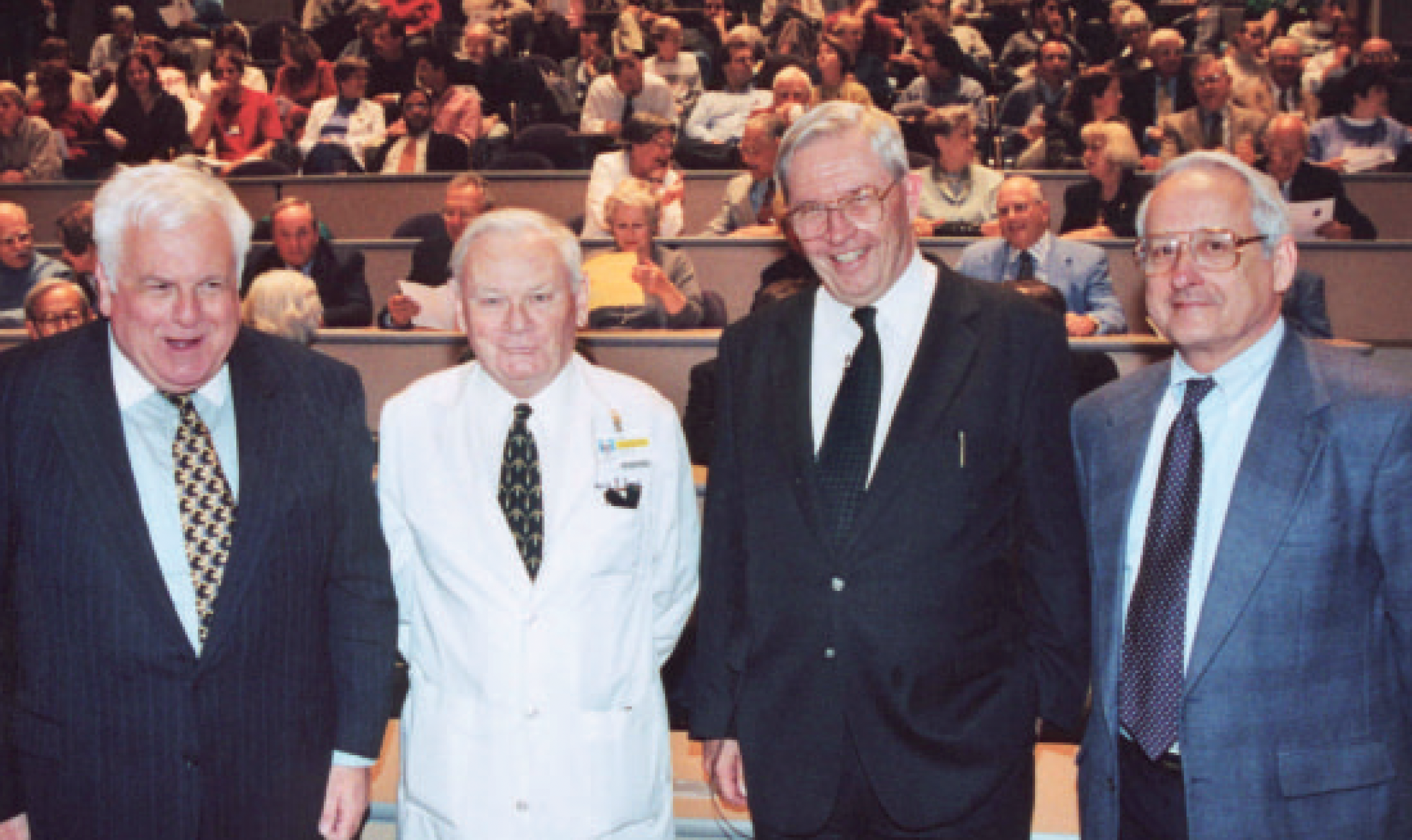
A handful of experts did understand the problem. In fact, Frank Young, M.D., Ph.D., former dean of the University of Rochester School of Medicine and Dentistry, was talking about bioterrorism as early as 1979.
“I spoke to the State Department and said the potential to cause havoc is very high,” says Young, who served as the commissioner of the FDA from 1984 to 1989. Yet there was widespread complacency, in part because of a feeling that no one would cross the moral barrier of inflicting these weapons on civilians.
By the late ’90s, Henderson had become a founding director of the Johns Hopkins University Center for Civilian Biodefense Studies. In essence, he was trying to sound the alarm. NATO had established a list of 30 potential biological agents, with smallpox at the top and anthrax not far behind. Henderson started the biodefense center to talk about the dangers.
He spent years trying to convert skeptics. Then, practically overnight—after the September 11 attacks and subsequent anthrax mailing—Henderson went from alarmist to visionary. The Department of Health and Human Services quickly tapped him to lead the newly formed Office of Public Health Preparedness—a position with great responsibility, but requiring cooperation among a staggering number of government departments. In the words of Jerome Donlon, M.D. (M ’72, Ph.D. 68, R ’73), who is on detail assignment to the Office of Public Health Preparedness, “A lot of what D. A. does is referee and negotiate.”
Those negotiations are crucial to the overall homeland-security efforts. So Henderson assembled a small, dedicated staff of people mostly on assignment from other government departments. Within two months, his office was disseminating roughly $1 billion to hospitals and state and local health departments to help get them prepared. He arranged for the purchase and development of vaccines and drugs while beefing up the capabilities of diagnostic labs to enable quick identification of biological agents.
Just as important, his team began detailing a response plan against a potential attack. A network of 81 laboratories has been established and hundreds of lab workers trained. And his team is assessing how prepared each state is to handle a bioterrorism attack, asking the states to submit details of the plans they have in place.
Some observers have wondered how Henderson—a man who likes to get the job done—will fare amid the thick layers of Washington bureaucracy. But Henderson himself doesn’t seem too concerned. Whether he’s maneuvering around the globe to fight smallpox or around Washington to fight bioterrorism, Henderson says there’s an old lesson from his Rochester days that serves him well.
“One of the most important pieces of what I learned was the Engel and Romano model in ‘Introduction to Diagnosis,’ ” says Henderson of Rochester’s biopsychosocial philosophy. “Take time, question the patient thoroughly, listen carefully. More often than you can imagine, the patient has a remarkably keen insight and understanding of his problem and will effectively provide you the diagnosis before you do the physical examination or obtain a laboratory study.”
He says it worked in far-flung countries when he tried to find out where an outbreak originated. Against popular wisdom, he would ask patients, “Where do you think you got the disease?” Surprisingly often, this led straight to the source.
A similar approach worked just as well at the White House. When he arrived, Henderson was faced with a long agenda of problems that, for him, were new and complicated.
“It was all too apparent that there were many talented and knowledgeable people who had given many of the problems a great deal of thought, who understood the problems well and who had imaginative ideas as to what might be done,” he says. “One simply had to take the time to question them thoroughly and to listen carefully. It sounds simple and obvious, but all too few people seem to understand this very simple precept that came straight from that introductory course in diagnosis at Rochester.”
Luckily, Henderson knows when to talk, too. Henderson appeared before the U.S. Senate Foreign Relations Committee and cautioned that terrorists would not be above attacking innocent civilians, with anthrax or other biological weapons.
The date of his warning? September 5, 2001.
Author
