

Team Science Showcase: Cracking the Code of Chronic Pain
The path to discovery knows no walls. Labs must be nimble, intuitive, and creative to make advancements that will lead to a better understanding of the human body and treatments for disease.
When tackling a complex problem like chronic pain, which the Centers for Disease Control and Prevention estimates affects more than 50 million adults in the United States, researchers from a myriad of specialties need to join forces to ask questions and piece together answers. At the University of Rochester, dentists, neuroscientists, surgeons, psychiatrists, anesthesiologists, nurse practitioners, and others are partnering to gain knowledge and insights that could transform treatment, care, and outcomes.
“I’ve never had any collaborative environment like here. Not everyone can work with you, but everybody will listen and try to find connections.”
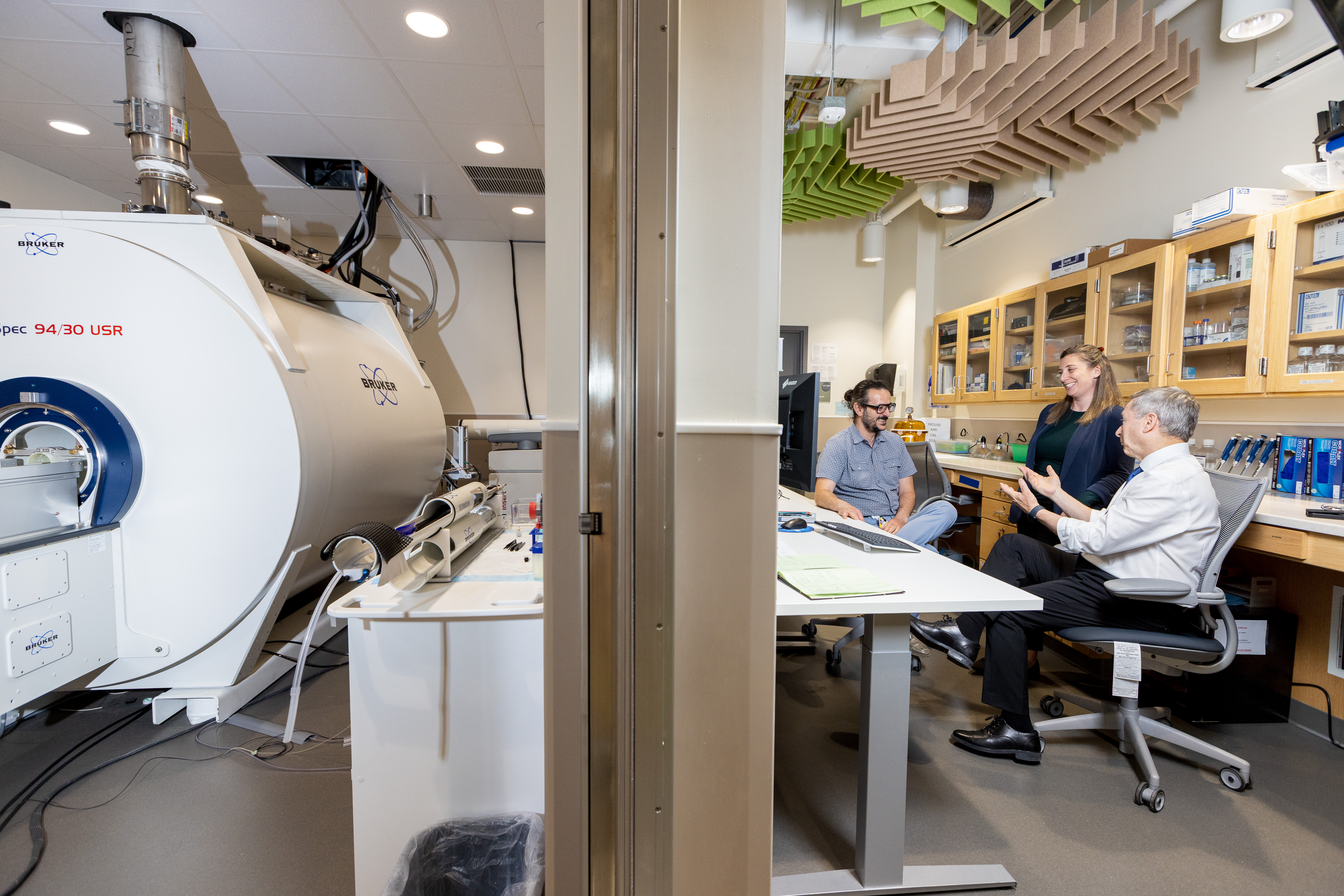

“I’ve never had any collaborative environment like here. Not everyone can work with you, but everybody will listen and try to find connections,” said Eli Eliav, DMD, PhD, MBA, director of the Eastman Institute for Oral Health at the University of Rochester. “To conduct pain research, a multidisciplinary approach is key. There will never be one molecule or one drug that will solve all the pain problems in the world."
The Team(s)
At the Neuromedicine Pain Center at the University of Rochester Medical Center, neurosurgeons, neurologists, and anesthesiologists partner to create the best care and treatment plans for patients. They also work with neuroscientists like Paul Geha, MD, associate professor of Psychiatry and Neuroscience and a member of the Del Monte Institute for Neuroscience.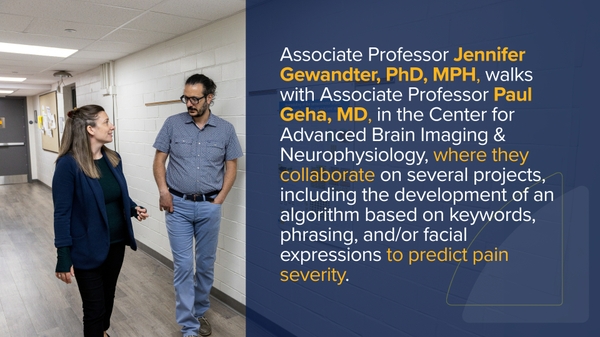
He and Jennifer Gewandter, PhD, MPH, associate professor of Anesthesiology and Perioperative Medicine, along with neurosurgeon Steven Soler, MD, recruit people living with pain who are undergoing spinal cord stimulation—a surgery with an average success rate of 50 percent. Prior to implantation of a spinal cord stimulator, patients must undergo psychological testing to make sure important diagnoses, like PTSD or substance abuse, aren’t missed. Their research aims to add outcome prediction to the psychological clearance step with a more comprehensive test.
“Being able to work with Jennifer, who is an expert in clinical trials, helps us maintain that connection between the more mechanistic work we do on the research side with the actual applications in treatment,” Geha said.
Reverse Translation
When the University was looking to recruit Geha, Eliav was put on the committee. At first glance, a dentist recruiting a psychiatrist may seem like an unusual pairing. But, in addition to providing care for patients with chronic orofacial pain, Eliav leads a research program dedicated to uncovering the mechanisms and risk factors that contribute to the development of chronic pain, which aligns with Geha’s work.
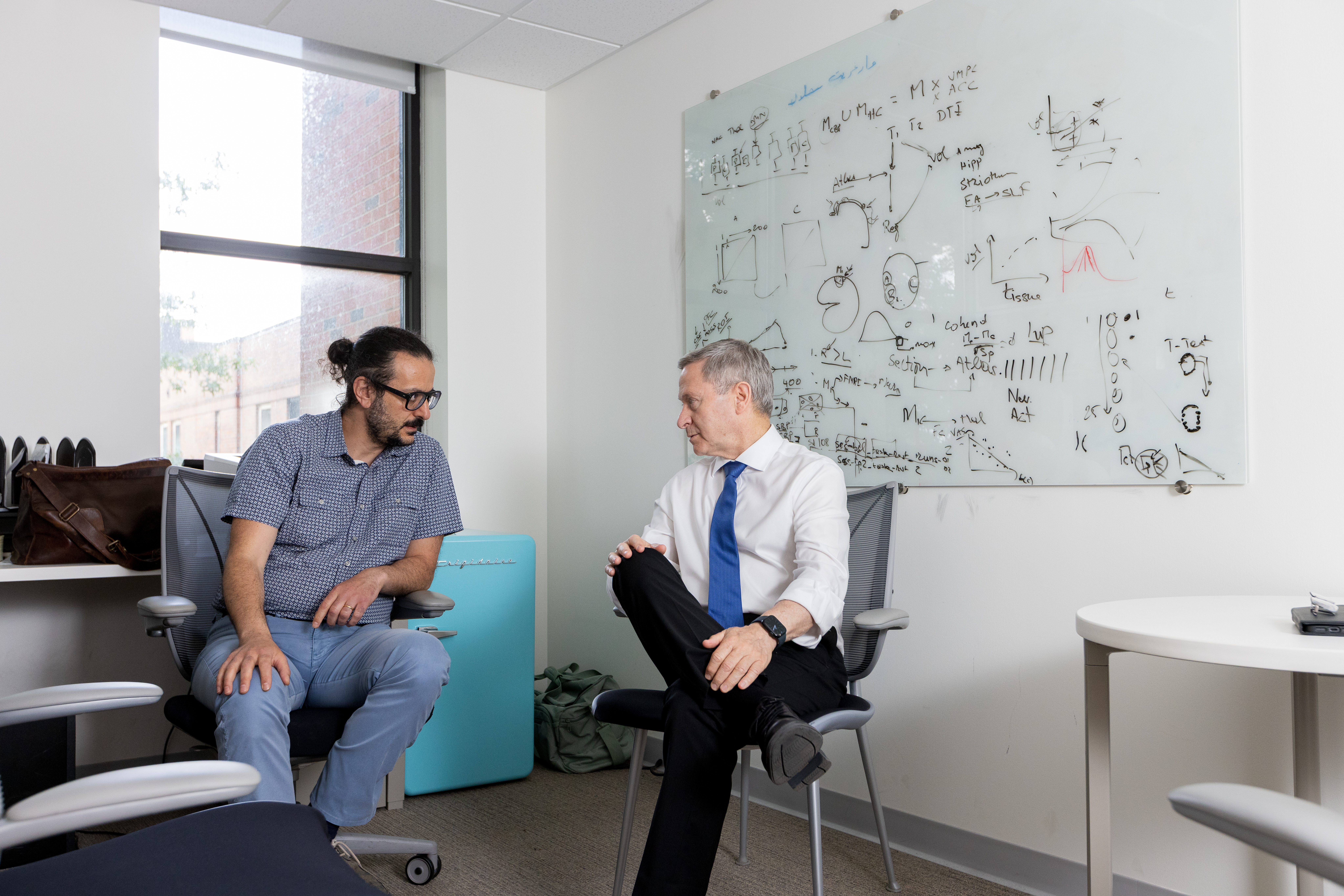
Today, their labs are collaborating on translating Geha’s human research into an animal model developed by Eliav. This reverse translation allows researchers to ask more specific questions about the brain and look at mechanisms, genes, proteins, and cells—anything that may be involved in causing, predicting, or preventing chronic pain.
Qian Wang, PhD, leads the basic science efforts in Eliav’s lab along with collaborators from other institutions. They study conditioned pain modulation in humans, where one painful stimulus reduces the perception of another, and exercise-induced hypoalgesia—a decrease in pain sensitivity after exercise—in both humans and animal models. These approaches have revealed fundamental differences between individuals with effective and less effective pain modulation and may lead to new therapeutic targets that strengthen the body’s pain regulation systems.
Clinical Trials
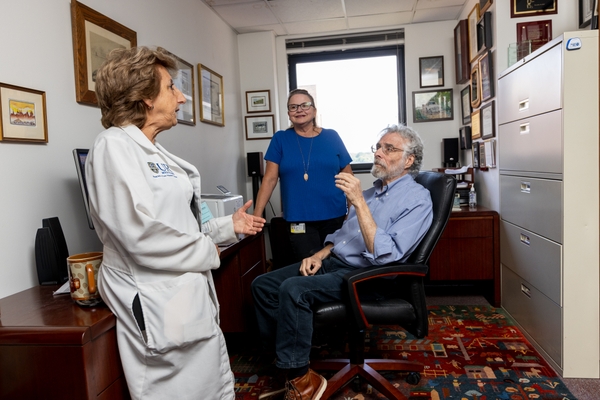
Robert Dworkin, PhD, professor of Anesthesiology and Perioperative Medicine, began working in the field in 1982. He and his team, including Janet Pennella-Vaughan, MS, NP, senior nurse practitioner, Pain Services, and Tammy Ortiz, senior grants management specialist, and colleagues Rajbala Thakur, MD, and Mark Williams, MD, in Anesthesiology and Perioperative Medicine, have led dozens of clinical trials for chronic pain treatments over the last three decades. Enrolling patients from the URMC Pain Treatment Center and collaborating with Michael McDermott, PhD, professor of Biostatistics, they’ve contributed to the increase in evidence-based pharmacological treatments and interventions intended to prevent the development of chronic pain in patients with acute pain.
Dworkin points out that a clinical approach developed in the 1970s at the Medical Center is an essential factor in pain research and care. “The one very important consistency over all these years is that state-of-the-art treatment for chronic pain is multidisciplinary, typically including physicians, nurse practitioners, physician assistants, psychologists, physical therapists, and others. This treatment approach reflects the fact that chronic pain is almost always a truly biopsychosocial condition.”
The Right Roots to Study Pain
Since the 1970s, the biopsychosocial model has been a cornerstone of care and education at the Medical Center and School of Medicine & Dentistry. Conceptualized by George Engel, MD, internist and psychiatrist, he suggested that to understand a person’s medical condition, biological, along with psychological and social factors, must be considered.
“I think Rochester is well placed to study pain. Psychiatry is not traditionally involved in patients with chronic pain, but our department has a tradition that comes from Dr. Engel, and our department chair, Hochang B. Lee, MD, has long been interested in getting involved in understanding patients in pain and delivering care to those patients,” said Geha. “There is a very good intermixing between preclinical or clinical research and the hospital itself. You've got anesthesia, Eastman Dental, neuroscience, psychiatry, orthopedics, neurosurgery, and neurology. All these departments have been talking for a long time about collaborating and promoting research at the University. That’s important because if they don't do that, it's very hard for researchers like us to flourish.”
And flourishing is how science continues to move forward.
