

A Smarter Map for the Brain: Surgeons Pioneer Next-Generation Navigation
The University of Rochester Medical Center (URMC) has begun using a new surgical decision-support technology called MindTrace, marking a significant advance in how brain surgeons plan and perform complex tumor operations.
Developed from decades of neuroscience and neurosurgical research, MindTrace helps surgical teams predict how different surgical approaches might affect speech, movement, and other vital functions, helping preserve quality of life after surgery.
“This technology will allow us to see, in real time, how different surgical decisions may impact a patient’s future brain function,” said URMC neurosurgeon Tyler Schmidt, DO, surgical director of the Metastatic Brain and Spinal Tumor Program within the Wilmot Cancer Institute.
“It consolidates multiple types of data that are already being collected about these patients, and provides immediate feedback during surgery, so our decisions are informed by the best possible evidence.”
From Rochester Research to Global Innovation
MindTrace’s roots trace back to the University of Rochester, where cognitive neuroscientist Brad Mahon, PhD, and Webster H. Pilcher, MD, PhD, chair of the Department of Neurosurgery, established the Translational Brain Mapping Program. Their collaborative research, supported by the National Institutes of Health (NIH) and the National Science Foundation (NSF), focused on using state-of-the-art tools from the cognitive and brain sciences to support and enhance complex neurosurgical procedures.
“Every brain surgery is an opportunity to learn something new about how the mind is organized,” said Pilcher, chair of Neurosurgery at URMC. “MindTrace grew directly out of that philosophy. It turns what we’ve learned in the lab into practical tools that improve patient care in the OR.”
Working with Max Sims, then an MBA student at the University of Rochester’s Simon School of Business and now MindTrace’s CEO, Mahon and Pilcher developed early prototypes that integrated neuroimaging and behavioral data within a unified platform. Those efforts continued after Mahon relocated to Carnegie Mellon University in 2018. The goal was to build a scalable technology that could be deployed at other hospitals, and following URMC’s lead, MindTrace is now being used at six major medical centers in the U.S.
Enhancing Precision and Patient Confidence
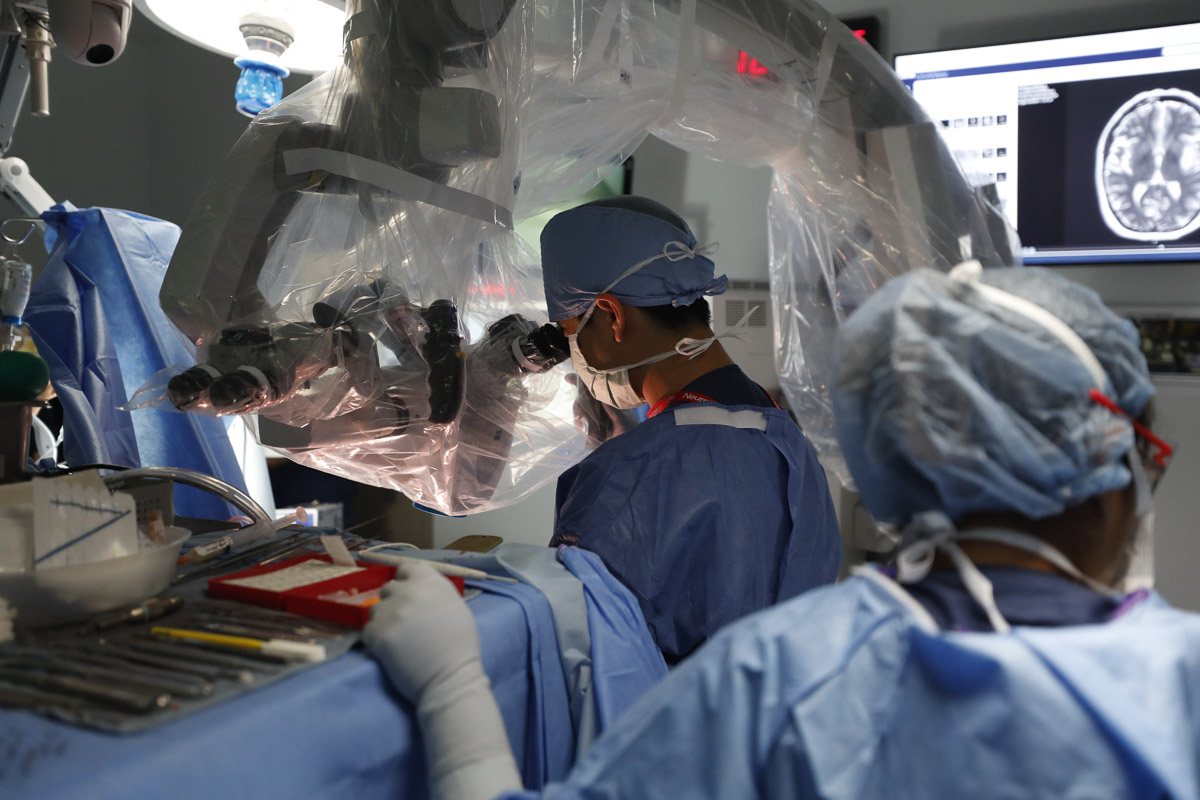
By combining multiple streams of information—functional MRI, brain stimulation mapping, and neuropsychological testing, URMC surgical teams can visualize brain function in real time. Surgeons can replay stimulation trials, verify brain mapping locations, and quickly assess the potential consequences of removing additional tissue. New research published in Science Advances by the team shows how fine-grained measures of patient performance during surgery could be harnessed to improve brain surgery.
The technology helps clinicians optimize their care decisions and helps patients better understand their surgeries and what to expect from their post-operative recovery. “We can walk them through what the data mean for their individual situation,” Schmidt explained. “That transparency helps reduce fear and creates a true partnership in decision-making. This is particularly important for awake surgeries in brain tumor patients, as those patients’ ability to collaborate in their own brain mapping represents a critical step for ensuring the best outcome from a very complex procedure.”
A Comprehensive Model of Brain Care
MindTrace is part of URMC’s broader, multidisciplinary approach to brain tumor and epilepsy treatment. Through close collaboration among Neurosurgery, Neuro-Oncology, and Neuropsychology, the Translational Brain Mapping Program, which is now led by Frank Garcea, PhD, combines advanced imaging, precision surgery, and access to cutting-edge clinical trials within a single coordinated system.
“It’s not just about removing a tumor,” Pilcher said. “It’s about preserving who that patient is—their language, movement, and personality. MindTrace helps increase the level of precision and confidence with which we can define surgical plans for each patient.”
Looking Ahead
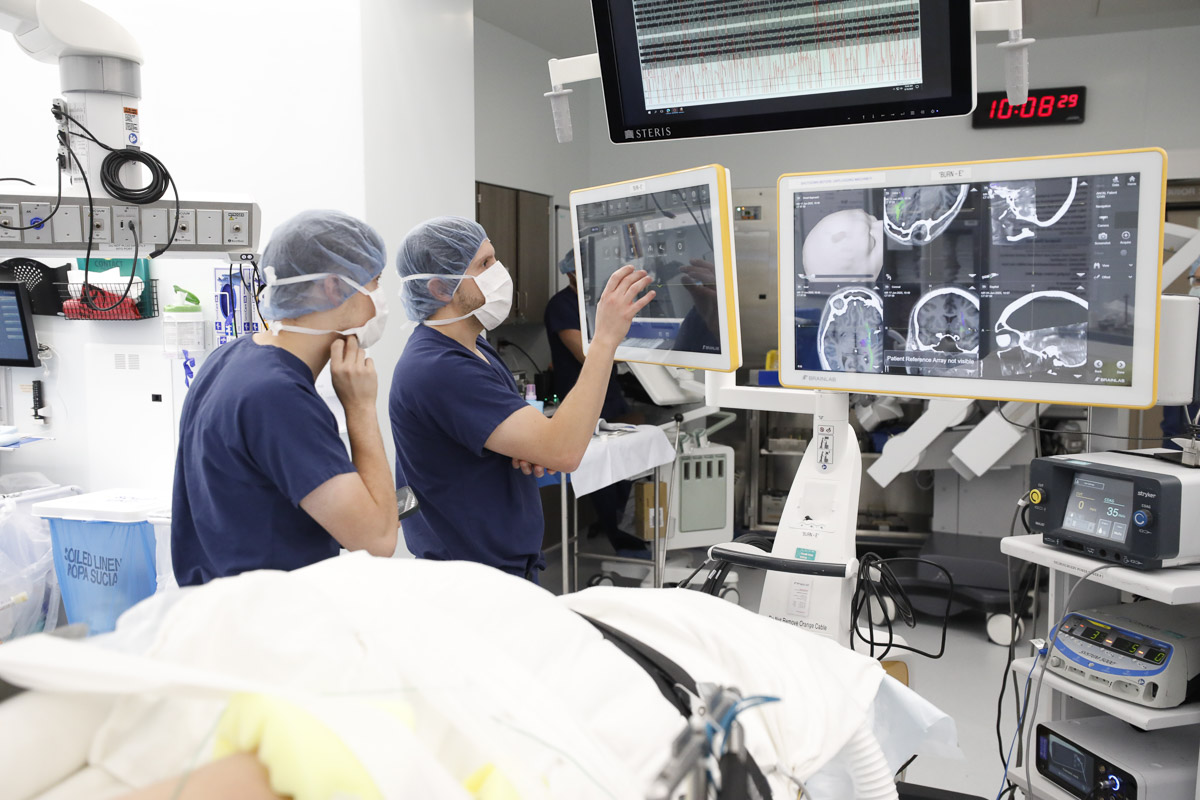
With additional support from the NIH and the NSF, URMC teams are now working with MindTrace to further integrate machine learning capabilities that can provide real-time risk assessment and predictive modeling during surgery. Future iterations of this technology may be able to alert surgeons when they approach critical regions of the brain involved in speech or cognition, further enhancing patient safety.
“The goal is not to replace human expertise, but to strengthen it,” Schmidt said. “MindTrace gives us another layer of confidence that we’re taking the safest and most effective path forward.”
As one of the institutions that helped develop this technology and the first to perform more than a dozen surgeries with it, the University of Rochester continues to shape the future of precision neurosurgery, transforming the way surgeons navigate the brain and redefining what’s possible for patients facing complex brain cancer.
Author
