

A Multidisciplinary Approach to Kidney Cancer Care
Patients suffering from kidney cancer benefit from the University of Rochester Medical Center’s (URMC) unique, multidisciplinary approach to their care. Not only do they receive the quality care provided by their urologist, but they also gain the expertise of an entire team.
This Wilmot Cancer Institute team of urologists, pathologists, and medical, radiation, and surgical oncologists design a treatment plan customized to them based on their type of kidney cancer and their health status.
“We believe, and our experience has shown, that multidisciplinary care is the best kind of patient care for kidney cancer,” said URMC Department of Urology Chair Jean Joseph, MD. “Through our approach, our comprehensive team works together to create the best treatment options for our patients.”
One of the deadliest forms of cancer, kidney cancer, is incredibly heterogeneous and has as many as 10 different types. Because of its complexity and variability, URMC offers a wide range of treatments customized to the individual patient, including surgical removal, active surveillance, ablation therapies, and radiation.
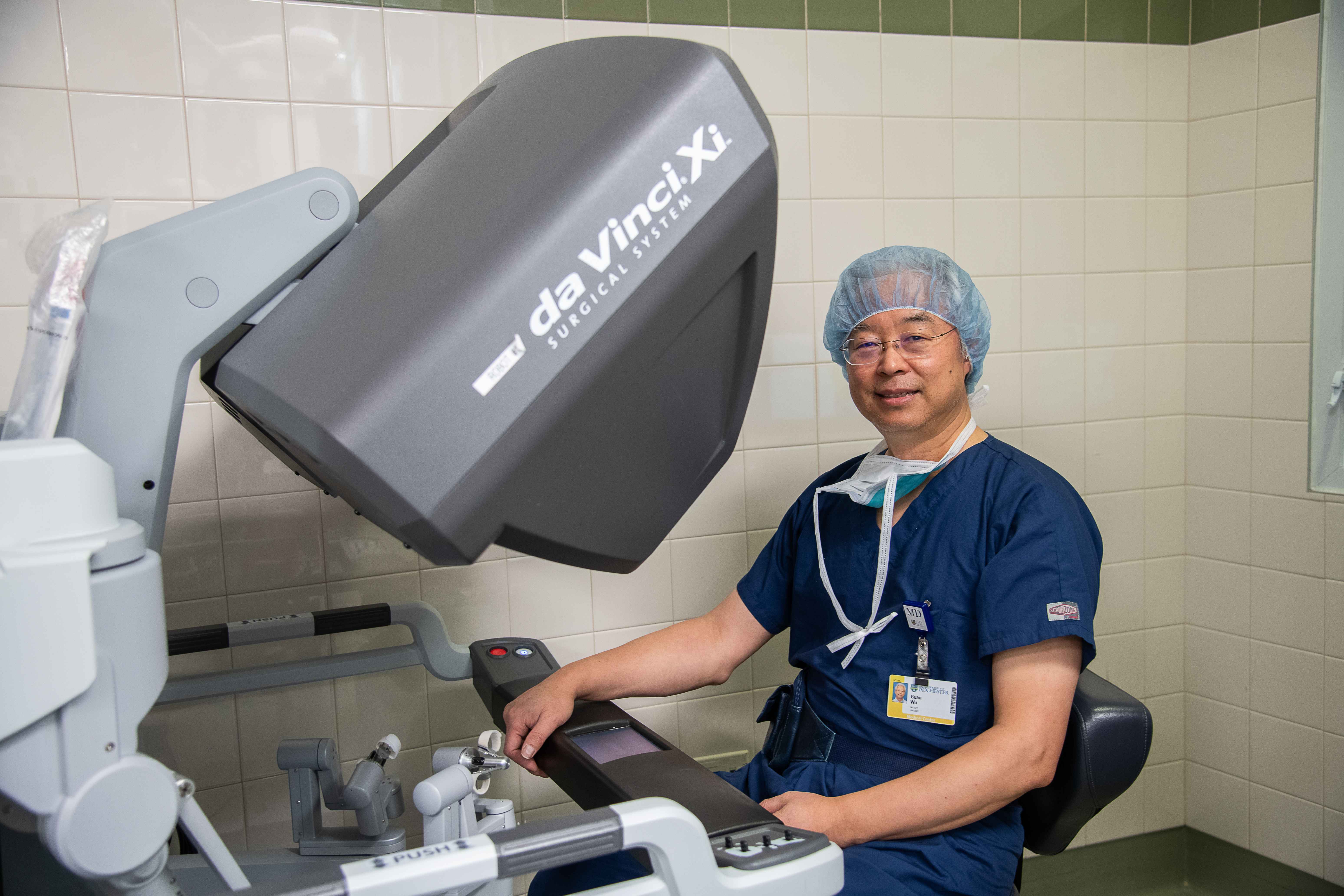
“From small tumors to metastatic disease, we provide the best care for our patients,” said Guan Wu, MD, PhD, professor, URMC Department of Urology. “Surgery remains the most dominant treatment because recurrence of the disease is very low following kidney removal in early-stage cases.”
“We offer the full spectrum of management options for patients with kidney cancer at URMC, ranging from surveillance, percutaneous ablation, surgical resection, and radiation to the latest systemic therapies,” said Phillip M. Rappold, MD, PhD, assistant professor, Department of Urology. “The treatment decision-making process can be very complex, but we have expertise and resources not found at all institutions that enable us to create a plan tailored to each patient’s unique situation.”
Advancing research for future treatments
In addition to providing a wide gamut of treatments, therapies, and robotic surgeries, URMC Urology participates in clinical trials to develop emerging technologies to address advanced kidney cancers.
URMC is part of a multi-center trial on a new technology for non-invasive ablation of kidney tumors. Histotripsy involves an ultrasound probe placed on the skin to localize the tumor, followed by the generation of small cavitation bubbles within the tissue to disrupt and kill the tumor cells mechanically.
Already FDA-approved for and demonstrating success in liver-tumor ablation, histotripsy is likely to be adopted in the future for routine use in kidney tumors. “Given our involvement in this trial, we hope to gain early access to, and experience in, this technology for use in our patients with kidney cancer,” Rappold added.
Rappold, who joined the Department in 2022 after a fellowship at Memorial Sloan Kettering, began his research investigating strategies to overcome treatment resistance in advanced kidney cancer.
Currently, Rappold, along with Brendan J. Guercio, MD, assistant professor in the Department of Medicine, Hematology/Oncology, and Michael Andrew Cummings, MD, MS, associate professor in the Department of Radiation Oncology, are part of a national trial utilizing stereotactic body radiation therapy (SBRT) to target localized, advanced kidney-cancer disease.
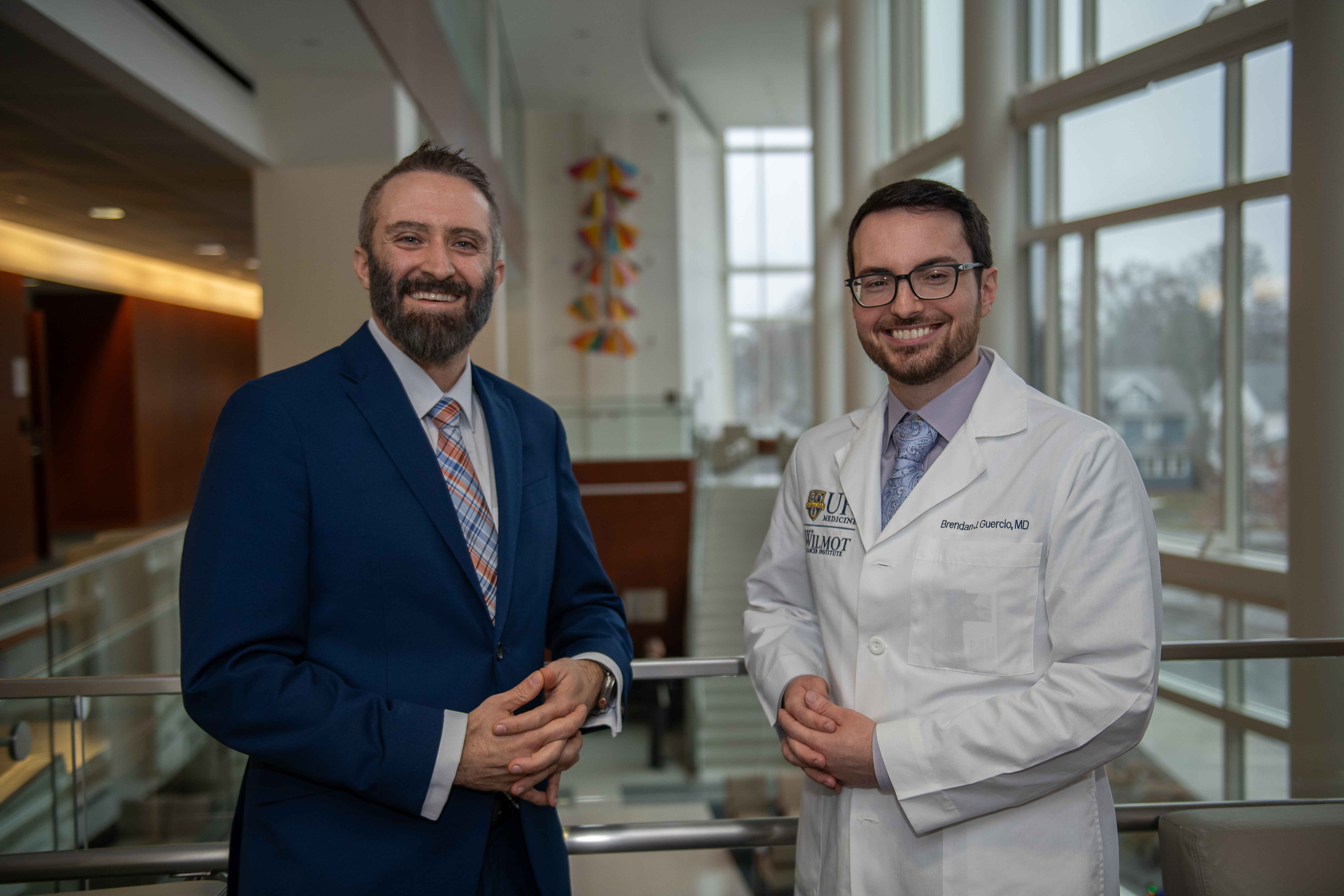
Focused on patients with renal cell carcinoma, the SOAR Trial is exploring the role of radiation in combination with medicine for cancer control. This trial compares the effect of stereotactic ablative radiotherapy followed by standard-of-care systemic therapy to the standard-of-care systemic therapy alone. URMC’s Strong Memorial Hospital is currently one of the only places in the region where SBRT for kidney cancer can be administered.
URMC is also participating in the national PROBE Trial, a Phase III study exploring whether surgical removal of the kidney helps immunotherapy work better in patients with advanced renal cancer.
Researchers at URMC are looking at other alternatives to surgery, such as ways to combine immunotherapy and radiation in the treatment of advanced kidney cancer.
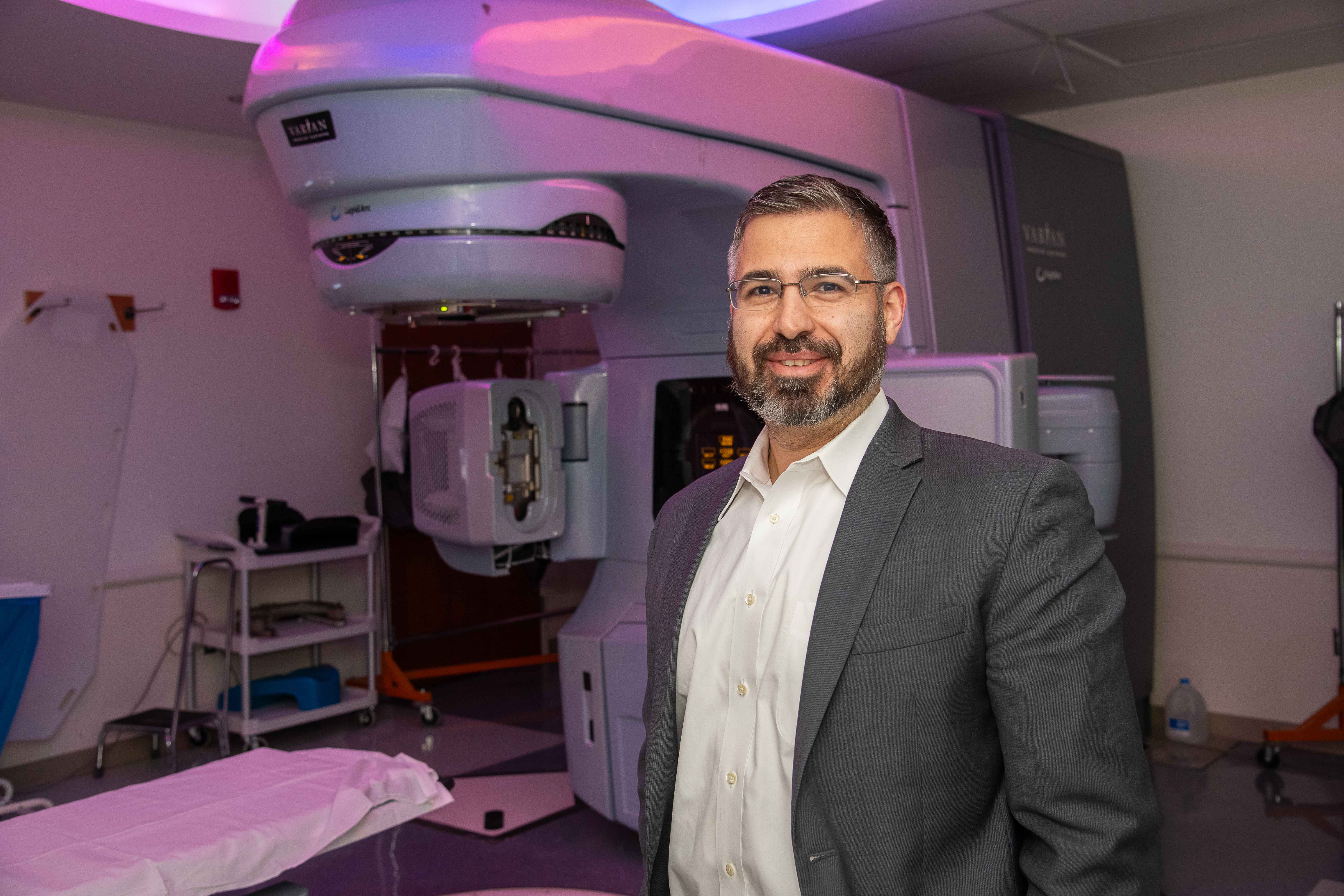
Cummings said, “Instead of a ‘whack-a-mole’ approach to treatment, we are working to find more targeted solutions to treat the disease. Historically, radiation was not a good option for kidney cancer because the cancer was resistant. While many kidney cancers respond to medications, other tumors can be zapped and destroyed with radiation, so the use of targeted radiation is increasing.”
“Twenty to 30 years ago, there were not many treatment options for kidney cancer,” Guercio said. “Today, we are seeing rapid advances in treatments. Between giving patients access to clinical trials, trying new medications, and offering radiation services that are not readily available anywhere else, we are dramatically improving kidney-cancer care.”
A multidisciplinary team
A collaborative team focused on the individual patient is central to URMC’s multidisciplinary approach to kidney cancer care.
“Because there are so many treatment options for kidney cancer, it is important to be in a center that specializes in kidney cancer,” Guercio said. “We work closely as a team across all disciplines, from surgery to medical oncology.”
Guercio noted that kidney cancer does not typically respond to chemotherapy, so surgery is often the primary treatment, but other treatments like immunotherapy and radiation therapy are used for more complex cases.
The most complex cases are analyzed through a Tumor Board to develop the best course of treatment. During weekly, hour-long conferences, a board composed of urologists, oncologists, and pathologists assesses a patient’s cancer, discusses treatment options and possible clinical trials, and creates a care plan. The Tumor Board provides an open forum where everyone on the care team has a role in helping determine treatment options.
“The Tumor Board allows all specialists to review radiation scans and pathology slides, discuss the pros and cons of each option, and offer the best treatment for that patient’s kidney cancer that will also minimize side effects,” Guercio added.
“A common discussion topic during board consultations is the appropriateness of radiation versus other treatment methods,” Cummings said. “After consultation with all team members, we decide the right approach as a group.”
Studies have shown that multidisciplinary tumor boards correlate with better treatment results. “In managing complex cancer cases, studies have shown that multidisciplinary tumor boards seem to result in better outcomes, such as a United Kingdom study of patients with breast cancer,” Rappold said. “There is also evidence that a patient is more likely to accept a treatment recommendation knowing that their cancer has been discussed by a team of experts.”
Geriatric oncology unit
Team collaboration extends to care for older adults who are dealing with kidney cancer along with other complex medical issues. The Geriatric Oncology Clinic housed at URMC’s Wilmot Cancer Institute is one of the few programs in the nation specializing in providing highly customized care to older patients with cancer.
Gerontologists, geriatric oncologists, dieticians, and physical and occupational therapists strategize treatment options, physical therapies, and nutritional plans to help minimize side effects and maintain a patient’s quality of life.
“More people are living longer, and, as a result, more people are dealing with highly complex medical issues,” Guercio said. “Our geriatric clinic accommodates for the fact that the treatment option for a person in their nineties suffering from kidney cancer may not be the same as someone in their fifties.”
Whether through the Tumor Board or the Geriatric Oncology Clinic, the goal of the multidisciplinary approach is to create and pursue the best treatment path for each patient.