

The Nobel Couple: How the Kornbergs Helped Shape the Future of Medicine
Their journey began at the University of Rochester, and their discoveries in DNA replication changed how the world understands life itself.
In the early 1940s, two brilliant young scientists met in a University of Rochester lab. Over the next half-century, Arthur and Sylvia (Sylvy) Kornberg would transform our understanding of genetics, earn the highest honors in science, and raise a family steeped in discovery. Their story is just one example of how lives and legacies are shaped at URMC. As we celebrate a century of care, education, and research, we honor those who made medicine better — and those who carry that mission forward.
From URMC to the Nobel Prize
Arthur Kornberg arrived at the University of Rochester School of Medicine and Dentistry at a time when antisemitism limited opportunities for even the most promising Jewish students (despite graduating top of his class, Arthur was not offered a fellowship). He found a place at URMC, where he launched a career that would change the trajectory of biomedical research.
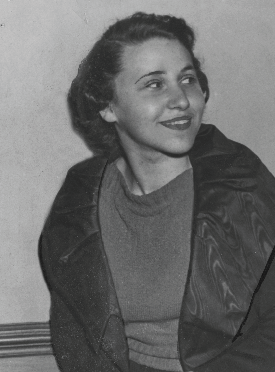
Sylvy Levy was pursuing science as an undergraduate at the University of Rochester when she met Arthur. When Arthur boasted that he had earned a perfect score in chemistry on the New York Regents Exam, Sylvy quietly replied that she had done the same — in chemistry, algebra, and geometry.
The Kornbergs married and soon moved on to research positions at the National Institutes of Health, and later to Severo Ochoa’s lab at NYU, where Arthur first focused on enzymes. Sylvy paused her lab work while raising their three sons but stayed connected to science by editing academic manuscripts.
The Blueprints of Life
It was at Washington University, after Sylvy returned to the lab once their sons were grown, that Arthur and Sylvy made their most transformative contribution to science. At the time, biologists were just beginning to uncover how genetic material worked at the molecular level. Arthur focused his research on one of the most fundamental questions in biology: how DNA—the blueprint of life—is accurately copied when cells divide.
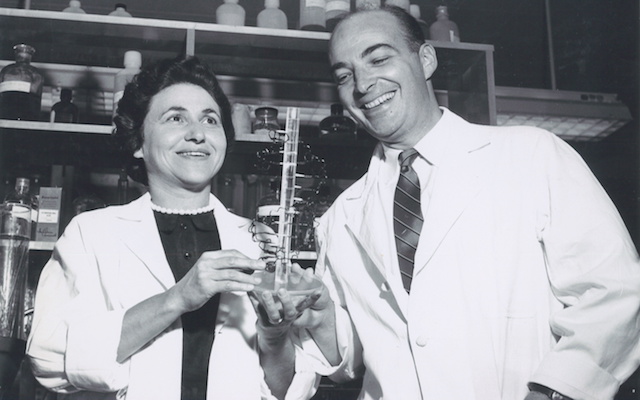
Working side by side, the couple isolated and identified DNA polymerase, the enzyme responsible for assembling new DNA strands using existing ones as a template. This was the first time scientists had shown how cells replicate genetic information with such precision.
Their discovery provided the first clear look at the mechanics of DNA replication, and it became a cornerstone of molecular biology. It not only revolutionized how we understand genetics, but also made possible entire fields of research, including genetic engineering, forensic science, and modern biotechnology.
Arthur received the Nobel Prize in Physiology or Medicine in 1959. Sylvy, who contributed significantly to the discovery, told a reporter with a smile: “I was robbed.” Her scientific contributions are documented in multiple published studies, including discoveries about enzymes that affect DNA replication and protection inside cells. In his memoir “For the Love of Enzymes,” Arthur wrote that Sylvy “contributed significantly to the science surrounding the discovery of DNA polymerase.”
Science as a Family Legacy
The Kornbergs’ passion for discovery didn’t stop with Arthur and Sylvy. Two of their three sons became prominent scientists, and Roger Kornberg — who followed his parents into the study of DNA and RNA — won a Nobel Prize of his own in 2006 for his work on the molecular basis of gene transcription.
The Kornbergs’ work helped unlock the very code of life, opening new frontiers in understanding how cells function, how diseases develop, and how medical science could harness the power of genes.
A Lasting Tribute to Discovery
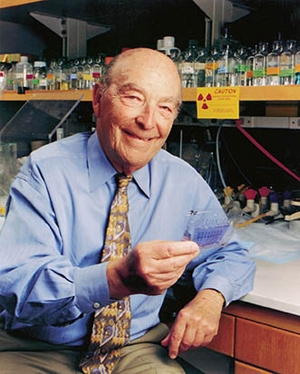
When Stein proposed that a new URMC building be named after Arthur, Stein recalled, “He was so thrilled that he reached into his drawer and handed me his Nobel medal [and] asked us to put the medal in a nice place for the public to see.”
Today, the Kornberg Medical Research Building stands as a symbol of discovery, integrity, and possibility. Inside, visitors can view the medal that marked a historic scientific breakthrough and, if they know the full story, feel the legacy of both Arthur and Sylvy.
100 Years of Discovery and Dedication
From its founding in 1925, the School of Medicine and Dentistry has pushed the boundaries of health science and medical education. Join us as we celebrate a century’s worth of progress and the future it inspires.
Connect with us!



