

How Ketamine-Assisted Psychotherapy Is Bringing Peace to Patients
A little over two years ago, Rob Horowitz, MD, set in motion an idea whose time had quietly come. The vision was a palliative care program that harnesses not only conventional medical, psychological, and spiritual therapies, but something deeper—a guided psychedelic journey—to help people with serious illness find relief from their psychospiritual distress.
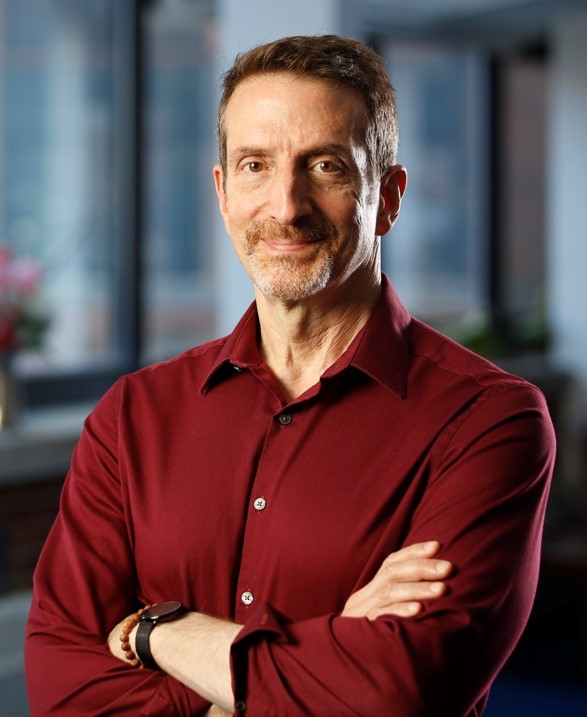
That first patient, treated in June 2023, marked the birth of the University of Rochester Medical Center’s Palliative Care Ketamine-Assisted Psychotherapy (Pal-KAP) clinic, a first-in-the-nation program that has set in motion a paradigm shift in palliative care.
“People with serious illness struggle with psychological or spiritual uncertainty, from mild anxiety to overwhelming despair,” says Horowitz, the Georgia and Thomas Gosnell Distinguished Professor in Palliative Care at the University of Rochester Medical Center (URMC). “Conventional treatments can help, but resources are limited, and suffering is profound. Ketamine-assisted psychotherapy is potentially a powerful additional resource. In the context of a trusting human relationship, it can catalyze profound exploration and relief.”
Meeting a Desperate Need
Every year, thousands of adults with advanced cancer, heart failure, or neurological disease endure not only pain but what clinicians call psychospiritual distress—the anxiety, despair, and existential dread that can make each day feel like a burden. Traditional tools—antidepressants, counseling, chaplain visits—offer relief for some, but many patients continue to suffer in silence.
For these individuals, Horowitz and his colleagues saw another path: ketamine-assisted psychotherapy. An anesthetic long used in operating rooms, in lower doses, ketamine can unlock profound shifts in consciousness.
Patients who participate in the Pal-KAP clinic embark on a three-phase journey:
Innovation Driving Impact
After overcoming cancer treatment, Peggy's anxiety of recurrence was overwhelming.With compassionate support throughout the process, Peggy was able to release fears that once felt inescapable — and reconnect with joy, clarity, and purpose.
How Pal-KAP Works
- Preparation: In a calm, art-filled room, facilitators build trust, explain what the ketamine experience can feel like, and help patients set intentions—perhaps to find peace with dying, to reconnect with loved ones, or to reclaim a sense of self beyond the body’s decline.
- Ketamine Session: A dose of ketamine is administered, and for the subsequent 45-60 minute ketamine-induced non-ordinary state of consciousness, patients lie back, wear an eyeshade, and listen to a curated playlist through headphones. Facilitators sit nearby, offering a mostly supportive, quiet presence and occasionally gentle reassurance.
- Integration: In follow-up meetings, patients and facilitators unpack what unfolded—disembodied sensations, spiritual insights, shifts in identity. These sessions help translate the experience into lasting emotional and relational change.
Transformative Outcomes
While the team initially tracked standard measures (anxiety, depression, fear of death), they soon found that patients’ own stories better captured the program’s impact. Emerging themes include:
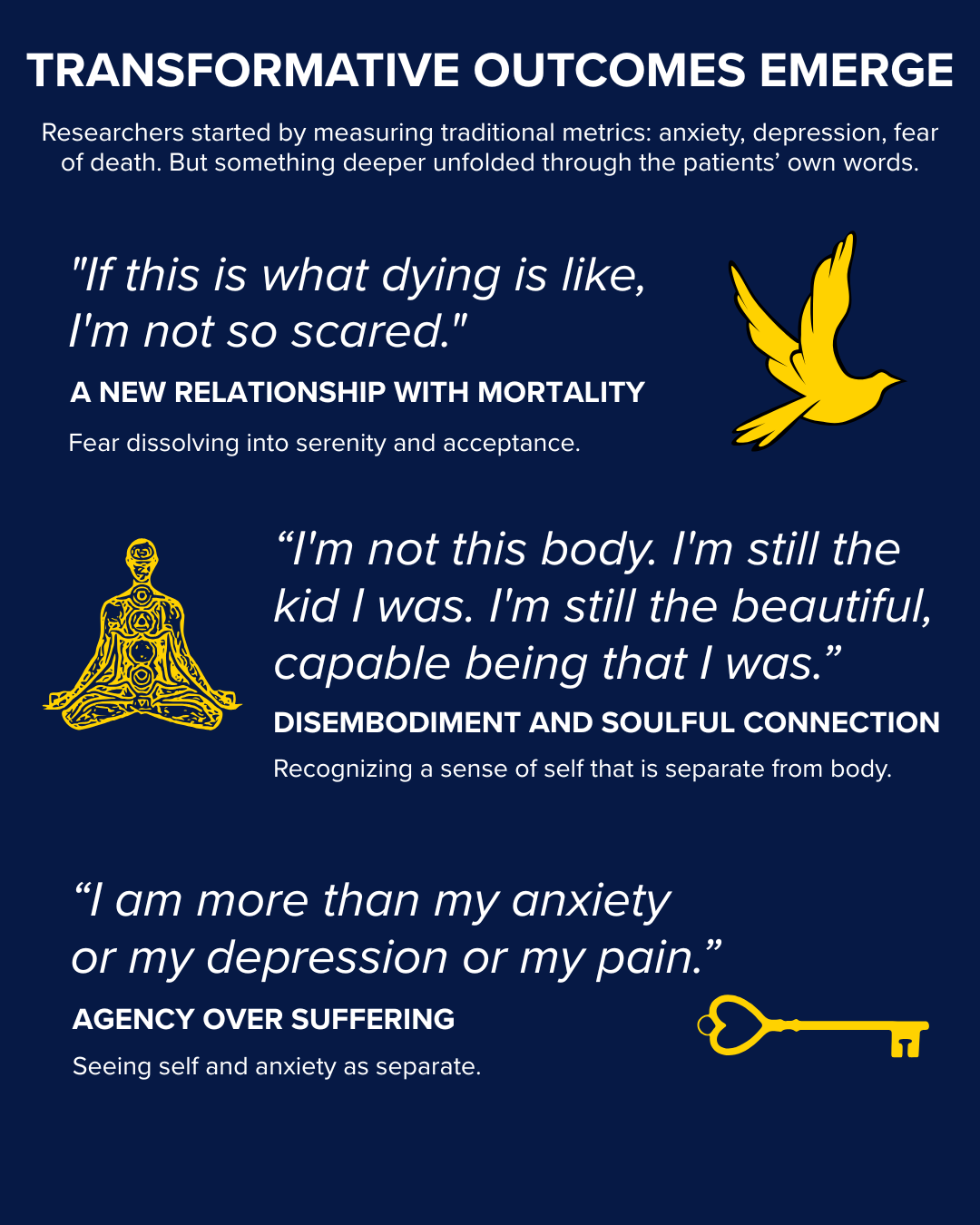
- A New Relationship with Mortality: Patients speak of fear dissolving into serenity. One described looking at a photograph of their grandchildren and feeling only warmth, not dread.
- Disembodiment and Soulful Connection: Many describe floating outside their bodies, as if observing life through a wider lens—a sensation often described in spiritual language.
- Agency over Suffering: By separating “self” from symptoms like pain or panic, patients regain the sense that they can choose how to respond, rather than be consumed by distress.
One patient with terminal cancer arrived terrified of death. After three sessions, they told facilitators they no longer dreaded dying—they’d “done the work” needed to say goodbye on their own terms.
Building Toward Tomorrow
Sustainability rests on two pillars: philanthropy and rigorous research. A generous donor seeded $1 million—split between patient care and research—allowing the program to remain true to its mission.

On the academic side, Marc Swogger, PhD, an associate professor of Psychiatry and Palliative Care at URMC, is leading a four-year study cataloging ketamine-assisted psychotherapy practices—everything from low-dose nasal sprays with no therapy to Pal-KAP’s full integration model. He and his team will compare outcomes across settings, measure shifts in openness and psychological flexibility, with the goal of getting Food and Drug Administration approval to broaden trials into other life-threatening and psychiatric conditions.
Meanwhile, Pal-KAP is training the trainers. A recent workshop focused on serving deaf patients—an often-overlooked group. In September, another immersive facilitator course will welcome clinicians from across disciplines, spreading the model.
A Quiet Revolution in Care
The program’s modest patient volume, with 25 patients seen to date, reflects a deliberate pace—one month, one person, one life transformed at a time. Yet with every story of eased suffering, every fear of death softened, the program’s founders—and the patients themselves—are writing a new chapter in how we care for those with serious illness.
Ketamine may be the spark, but it is the human connection—the shared journey into the unknown—that makes Pal-KAP a testament to hope and purpose when needed most.
If you or a loved one is interested in learning more about the University of Rochester Medical Center’s Palliative Care Ketamine-Assisted Psychotherapy (Pal-KAP) clinic, reach out to your primary care physician. They can help determine if getting in touch with Dr. Horowitz is the best next step.
Connect with us!




Author
