

He Listened When Others Didn't: How One Patient Launched Ralph 'Lin' Saunders Career
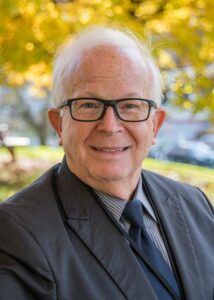
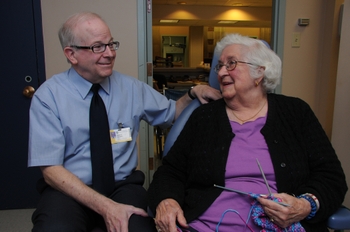
Ralph “Lin” Saunders, Jr., DDS, MS still remembers the patient who changed the course of his life — an elderly woman, soft-spoken yet worn down. She had seen several dentists before him, searching for someone who would listen — someone who would not rush, dismiss, or patronize her concerns about her ill-fitting dentures. She had been told she was “too particular.” But Dr. Saunders felt something different: she was right.
“I was thrilled to be able to make her comfortable,” he recalled.
That moment was the beginning of what felt like a calling for Dr. Saunders. He treated other patients with special needs and felt much compassion for them. In cases when treating this patient population was difficult for his colleagues, it was easy for Dr. Saunders. “It was a very satisfying feeling to be able to understand and meet their needs,” he said.
Long before special care and geriatric dentistry became common terms, Dr. Saunders sensed that the patients most often overlooked were the ones who needed the most thoughtful care.
He became, instinctively and without fanfare, their advocate.
In 1975, a year after earning his dental degree from Ohio State University, he loaded all his belongings into his original Volkswagen Beetle and drove to Rochester — unsure if he was making a wise move, but certain that something was pulling him forward. Perhaps the pull was that Eastman Institute for Oral Health was one of only a few places in the country offering advanced training in what would eventually become special care dentistry.
“I thought the value for me would be immense,” he said. “I had many doubts — it felt risky. But I took the chance.”
From that leap came two completed residencies and a master’s degree. He began a notable career of care, teaching, leadership, and national impact. One of Dr. Saunders’ greatest academic achievements was helping secure one of the nation’s first-ever NIDCR Academic Awards in Geriatric Dentistry, a turning point in his career. This grant supported his work in developing educational curriculum, expanding clinical services for older adults and leading early research in the emerging field. His master’s thesis examined the effects of medications on saliva flow and dental caries in nursing home populations, and his research extended to include behavioral health, oral pathology, and cultural perceptions of dental esthetics.
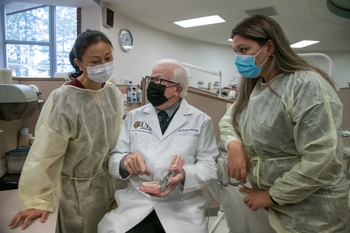
He served as director of Dentistry at Monroe Community Hospital from 1977 until 2016, during which time he trained more than 300 residents in special care dentistry. His commitment to providing comprehensive care to older adults transformed the model of dental services at MCH. He championed the idea that nursing home residents deserved more than basic extractions and dentures – they deserved access to full-spectrum dental care, including preventive and restorative services that supported their dignity and quality of life.
Today, the field looks vastly different — more recognized, better resourced, and more clinically sophisticated than it was when he began. But Saunders isn’t done looking forward.
“My hope,” he said, “is that in 10 to 20 years, fewer than five percent of older adults will be completely without teeth. Dentures can never truly replace full dentition. I hope periodontal disease will be managed medically. And I hope dental options through Medicare and similar programs will be far more available to those who need them most.”
Before dentistry, Saunders was a high school biology teacher — a foundation that shaped his philosophy for life.
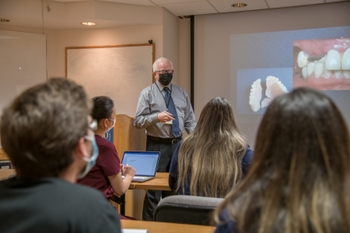
“It’s most fulfilling when I learn something deeply enough to teach it,” he said. It’s a principle that he takes into every classroom, lecture and clinic, and the reward has never wavered. “I also treasure the acquaintance with colleagues at EIOH and elsewhere who are also involved in teaching.”
He credits his greatest role model without hesitation: Dr. Stanley Handelman, the legendary former director of General Dentistry at Eastman Institute, often called “the father of general dentistry.”
Dr. Saunders was a founding member of a geriatric task force at Eastman Institute for Oral health, that brought together leaders from across departments to explore the connection between oral health, nutrition, aging and dignity. Their early findings helped establish dental geriatrics as a credible and necessary area of study and care.
Much of his work was key in EIOH being named the first in the U.S. to be named an Age Friendly Health System Participant.
“Lin is highly regarded on national and international levels due to his active involvement with many professional organizations in the field of geriatric dentistry,” said Hans Malmstrom, DDS, MS, PhD, professor and chair, EIOH General Dentistry. “He has contributed significantly in so many ways to the General Dentistry department, including resident education, faculty development and patient care.”
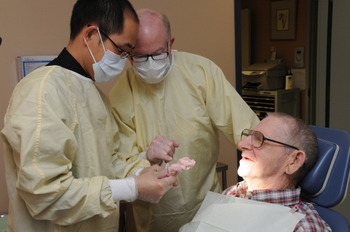
Saunders served as course director for EIOH Geriatric Dentistry/Special Needs core courses and has mentored multiple residents for their research projects.
“He’s always had a gentle approach to both his patients and residents,” Malmstrom added. “He also established good working relationships with the specialties in geriatric medicine at URMC.”
“We’re grateful for Dr. Saunders’ influence on our residents and patients,” said EIOH Director Eli Eliav, DMD, PhD, MBA. “His passion and strengths have always been directed toward advancing care for our geriatric patients, ensuring that some of the most vulnerable members of our community received high quality, compassionate treatment.”
In 2019, he was recognized by the American Academy of Developmental Medicine and Dentistry with a Local Hero Award for his lifetime of service to individuals with disabilities.
When asked about his advice to young dentists — after 50 years, countless patients, and influence that will echo well into the future — his answer isn’t technical. It’s human.
“Listen,” he said. “Listen carefully to what patients are actually seeking. Before expertise, before treatment planning — they need to feel heard.”
Author
