

‘This Has to Change’ — A Mother’s Quest on Behalf of People with Disabilities
Kathy Caruso still remembers the day her son Nicholas lost five teeth — teeth that never should have been lost.
“If he had been able to get regular x-rays, cleanings and fillings under sedation in an operating room setting, it wouldn’t have happened,” she said. “But because of his special needs, we have struggled his whole life to find good dental care for him.”
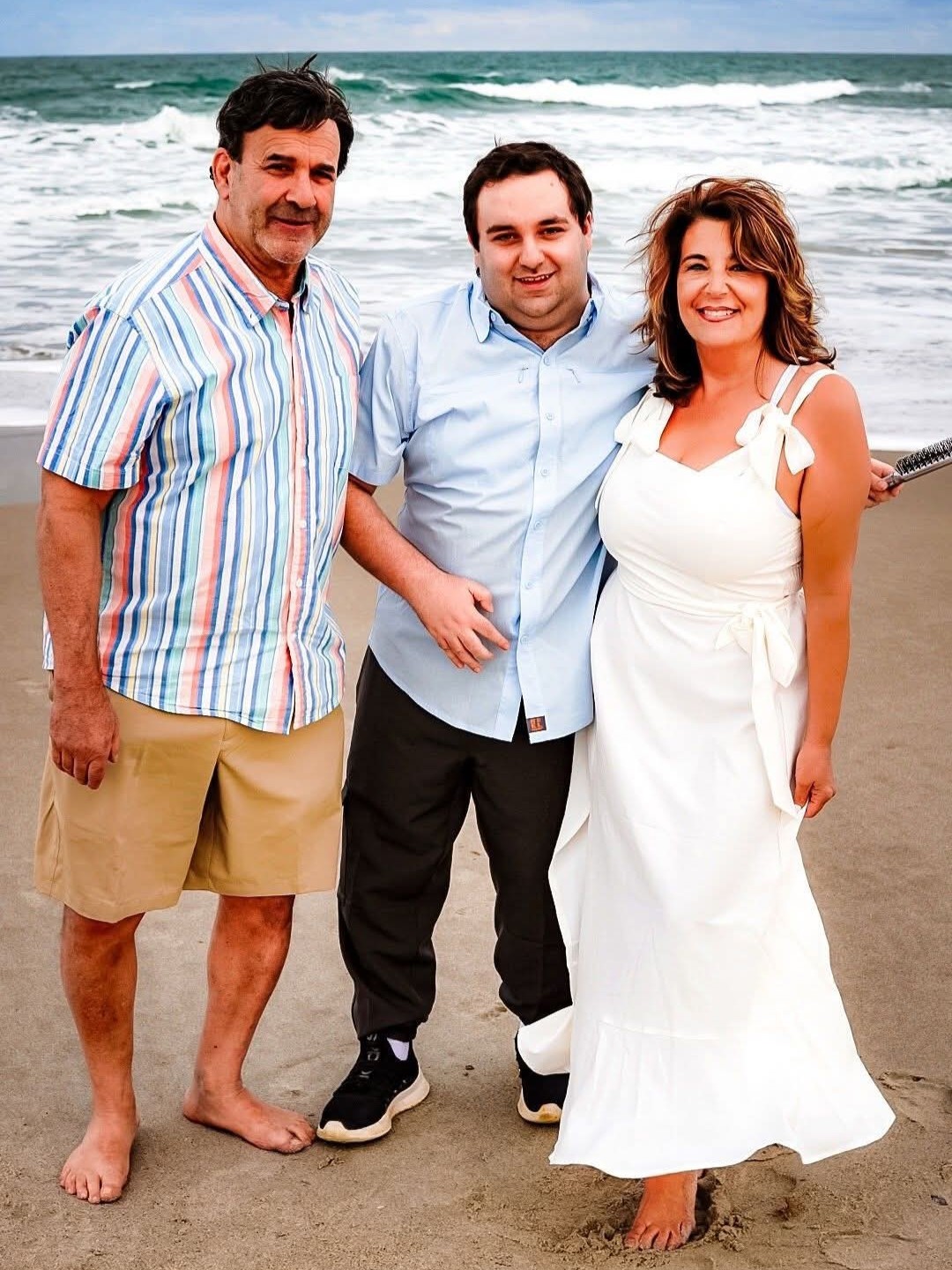
Kathy describes her 30-year-old son as an incredible man with developmental disabilities and autism. He can say many words but is not fully communicative.
Fear, anxiety and sensory issues can make the sights, sounds, smells and touch of necessary dental visits overwhelming for people with IDD and autism.
“I brush my son's teeth daily,” Kathy said. “And even though I have been one of the few able to find a local and compassionate dentist, she does not have access to an operating room or an anesthesiologist. Even a checkup with x-rays is not possible due to Nick's resistance and anxiety, so a thorough exam and procedure is not possible.”
As a result, basic dental care that most take for granted is out of reach for Nicholas and thousands like him.
“Can you imagine having five rotting teeth and having to wait months or years to be seen?” Kathy said about her son’s experience, as well as families across New York. “Someone you love is in crisis — and there is nothing you can do about it.”
“Families have told us the same thing for decades— that many dentists simply don’t have the capacity to care for someone with moderate to severe IDD who is non-verbal, or in a wheelchair, or who may have sensory or behavioral challenges,” said Wayne Lipschitz, DDS, MS, Eastman Institute for Oral Health professor who has treated patients with severe disabilities in the operating room for more than 25 years. “Families are traveling hours to seek treatment from us at Eastman Institute and the University of Rochester Medical Center.”
The Carusos know this all too well.
“We’ve traveled extensively throughout the state and, frankly, were not treated well,” said Kathy, who lives in Utica, NY, with Nicholas and her husband.
Things finally changed when a provider at Nick’s school referred them to Eastman Dental — one of the few places equipped to safely treat patients with complex needs under general anesthesia.
After Nick’s initial treatment from Dr. Lipschitz, he was placed on a waiting list for follow-up care. Then the pandemic hit. A two-year wait became more than five.
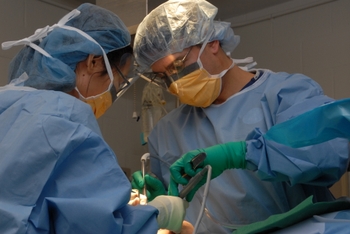
“I had no idea Nick had cavities because of his sensory issues and his very high pain threshold,” Kathy said. “By the time we finally got back in, he needed more fillings and another extraction.”
Determined to support other families, Kathy founded Better Together — a Christ-centered monthly support group for parents and providers to strategize, collaborate, and push for change.
“Having a child who cannot tell you that his tooth hurts is unbelievably hard,” Kathy said. “Eastman and Strong Memorial have shown up for this population. They see their value. They have every crucial piece in place for complete, professional and essential care.”
“We believe high quality essential oral health care should be available to whoever needs it, without compromise,” Dr. Lipschitz said.
Kathy also launched Listen and Learn events, bringing together providers, families, law enforcement, and legislators for candid, solution-focused dialogue.
“We’re educating everyone — parents about their options, first responders on communication, and legislators on the real human impact of this crisis,” she said. “These have been incredible sessions.”
And yet — the situation has only gotten worse.
In recent months, the limited number of dentists accepting Medicaid has dropped. Clinics have had to cut services or close entirely.
As a result, more than 30,000 people — including 1,000 patients with intellectual and developmental disabilities from 51 New York counties — are now on the waiting list for care at Eastman Institute for Oral Health. Oral health and systemic health are intrinsically linked, and medical complications can occur from untreated cavities, gum disease and subsequent infections.
For more than four decades, Eastman Institute for Oral Health (EIOH) and the University of Rochester Medical Center (URMC) have been recognized leaders in care for people with intellectual and developmental disabilities, combining specialized clinical services, education, and advocacy.
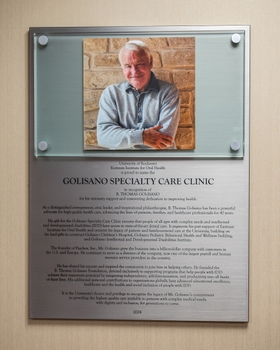
Announced last year, the new Golisano Intellectual and Developmental Disabilities Institute and the naming of EIOH’s Golisano Specialty Clinic expands capacity and cements URMC/EIOH’s national leadership.
EIOH is cited as the region’s largest dental provider for people with special needs, treating more than 2,000 IDD patients annually. EIOH’s leadership also extends to the field’s professional community, with faculty service on the Special Care Dentistry Association’s board and committees, underscoring a sustained commitment to training and advocacy that improves access and quality of care for people with IDD.
“This situation has to change. Without Eastman, where would these families be?” asked Kathy. “My family is completely indebted to Eastman, Strong Memorial Hospital, and Dr. Lipschitz. They’re doing everything they can against enormous odds. There is nothing greater on earth than to change a life, and good oral health is life changing.”
Author
