

Can Virtual Urgent Care Treat STIs?
Taking care of your sexual health is an important part of well-being. Convenient access to guidance and testing for sexually transmitted infections (STIs) plays a vital role in that. According to the Centers for Disease Control and Prevention, in 2023 alone, 2.4 million STIs were reported. Managing your infection takes a team of knowledgeable experts. Thanks to the discreet and streamlined services through Virtual Urgent Care, you can be even more empowered to make informed decisions.

Launched in the fall of 2022, UR Medicine’s Virtual Urgent Care gives you real-time access to our team of medical experts—at home, at work, or on the go.
“Offering this convenient access to STI evaluation and treatment is vital,” said Marque-Ann Mattle, P.A.C., physician assistant and lead APP for the UR Medicine Medical Center Digital Health Team. “It helps people feel comfortable seeking evaluation and care for these conditions.”
Why Virtual Urgent Care for STIs
Since its inception, our Virtual Care for STIs has grown to evaluate and treat more conditions. Currently, we provide virtual care for the following conditions:
- Chlamydia (males and females)
- Genital herpes (with previous diagnosis)
- Gonorrhea (males and females)
- Syphilis
The benefits of Virtual Urgent Care for STIs include:
- Anonymity. All medical professionals protect your privacy, and virtual care gives an extra layer of confidentiality. You don’t bump into neighbors in the waiting room, walk through a parking lot, or interact with anyone besides your medical provider.
- Speed. From the comfort of your own space, you can undergo evaluation and receive treatment from a medical expert. Because you don’t need an appointment, you can get care sooner. Prompt care helps you start treatment more quickly, so you can feel better and prevent your symptoms from getting worse.
- Protection. In addition to helping you heal, immediate care protects others. By treating your sexually transmitted infection, you help prevent the continued spread of infection in the community.
Accessing Virtual Urgent Care for STIs
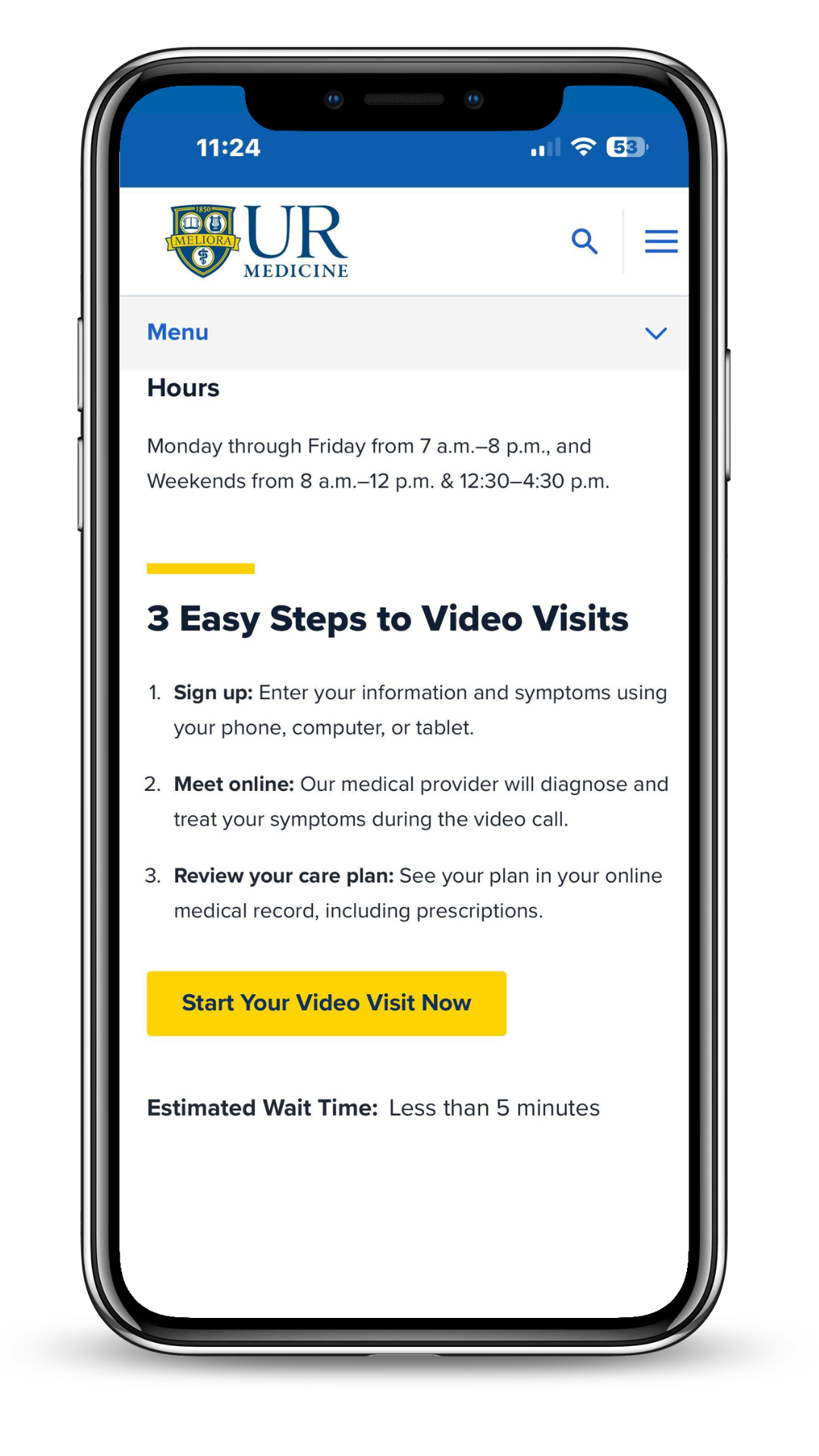
Virtual Urgent Care for STIs is available wherever you are. All you have to do is visit the UR Medicine Virtual Urgent Care website on your smartphone, computer, or tablet. Once there, follow the instructions. Within a few minutes, you get connected with a medical professional who specializes in STIs.
During your virtual urgent care visit, your provider will ask questions about the following:
- Medical history
- Sexual health history
- STI symptoms
This conversation begins your journey toward getting diagnosed and treated. The next steps may include one or both of the following:
- Lab testing. Diagnosing HIV, hepatitis B and C, and syphilis requires a blood test. Urine tests detect other STIs, such as gonorrhea, chlamydia, and trichomonas. If your virtual care provider suspects you have one of these conditions, you visit a UR Medicine laboratory. They take a blood draw or urine sample and forward your test results to your virtual provider.
- Prescribing treatment. For flare-ups of a diagnosed case of herpes, your virtual provider can prescribe medication on the spot. If you require laboratory testing to confirm a diagnosis, we prescribe medication after receiving your lab results. When treatment involves a shot, you must visit your primary care provider, OB-GYN, or an urgent care clinic.
When to Seek Face-to-Face Care
Virtual Urgent Care for STIs provides quality, quick care with maximum privacy. However, we do not view your genital area via virtual medicine, and we cannot perform imaging tests. So, if you require a genital exam or imaging test for diagnosis, in-person care is necessary. You should also turn to in-person care if you are immunocompromised or pregnant.
Here are a few other reasons to skip virtual care and seek in-person care:
- The condition is accompanied with abdominal pain and flu-like symptoms (fevers, chills, nausea, or vomiting) in females
- A new genital rash develops
- Previously diagnosed herpes rash looks different than past flare-ups
- Symptoms involve the testicles (pain, redness, or swelling) in men
“These symptoms may indicate your infection is getting worse instead of better,” Mattle said. “You may require imaging tests, emergency care, antibiotics, or other treatment options, but we can’t know that without seeing you in person. Don’t miss these red flags. Contact your care provider or head to your local emergency department.”
Get Care Now
If you suspect you have an STI, start a Virtual Urgent Care visit today. Experiencing some of the red flags of a worsening infection? Make an appointment with your UR Medicine primary care provider.
Connect with us!



