

Dr. Marc Lande: A Record of Building Pediatric Nephrology at GCH
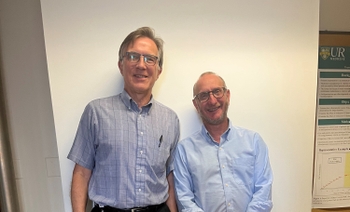
During the course of his 30-year career, Marc Lande, MD, has seen tremendous growth in the field of Nephrology, both nationally and at Golisano Children’s Hospital (GCH).
“The level of medical complexity in our patients has increased dramatically. Kids who wouldn’t have survived 20 years ago are living—and thriving—thanks to advances in technology and coordinated care,” he said.
Lande, who has served as Chief of Nephrology at GCH since 2019, stepped back this past spring into part-time work. He leaves behind a legacy helping the Division of Nephrology develop into a nationally renowned operation.
After completing his residency at the URMC Department of Pediatrics in the late 1980s, Lande earned his fellowship in Nephrology at Boston Children’s Hospital from 1991–1994.
“What drew me to nephrology was the combination of care—you get long-term relationships with families, but also the challenge and rewards of helping children who have critical acute needs. Not many specialties offer that mix.”
When Lande returned to URMC in 2001, there were only a few pediatric nephrologists at the institution. Over several decades, he helped grow the division’s capacity, including enhancing the kidney transplant program and partnering with schools to monitor and treat hypertension.
“We now perform 8 to 10 kidney transplants a year,” Lande said. “We have a great relationship with the adult program, and overall—here and nationally—outcomes have improved significantly over time due to advancements in immunosuppressant regimens.”
Advances in dialysis technology have also played a critical role in improving outcomes. Under Lande’s leadership, GCH was one of the first children’s hospitals in the country to acquire a CARPEDIEM machine, a state-of-the-art dialysis system designed for the smallest neonates.
These developments are essential, because children with complex illnesses often need specialized kidney care to survive and enjoy a better quality of life. “Kidney disease often arises secondarily in kids treated for cancer, heart disease, or organ transplants, so the progression of the field has been critical to improving quality of life,” he said.
Lande’s tenure also included accomplishments in multiple areas, including having added: a part-time child psychology position within the nephrology clinic; a nursing renal care team within the PICU to optimize continuous dialysis care, organized in conjunction with Dr. Jill Cholette, PICU Division Chief; a robust ambulatory blood pressure monitoring and pediatric hypertension clinic; and an annual visiting professor program. Dr. Lande also secured NIH research funding for 18 consecutive years and recruited new faculty and team members.
During this period, the Nephrology division was also ranked in the top 50 pediatric programs by U.S. News and World Report.
“I credit the amazing clinicians and staff we have available,” he said. “Pediatric nephrology requires a team-based approach—nurses, social workers, nutritionists, administrators, and providers all play important roles.”
William Varade, MD, has stepped in as interim chief while a national search is conducted for a permanent leader. Like Lande, Varade brings decades of clinical and leadership experience, including roles as fellowship director and former residency program director.
“What’s always drawn me to nephrology is how central the kidneys are to every system in the body,” Varade said. “We care for children with kidney diseases from birth through adolescence, managing not only dialysis and transplant but complex cases tied to cancer, heart disease, genetic conditions, and metabolic disorders.”
In addition to transplants and dialysis, the division has seen growing demand for pediatric hypertension care, as national guidelines call for routine blood pressure screening starting at age 3. “High blood pressure can be one of the early signs of cardiovascular risk or underlying conditions,” said Lande. “Our ability to screen and manage these children early is critical for their long-term health.”
Varade said his primary goal as interim chief is to maintain the division’s collaborative strength while continuing to improve care for children across Rochester and the region.
“We’ve built a strong team of faculty, nurses, dietitians, social workers, and surgeons who collaborate seamlessly to deliver outstanding care, and we’re recognized for that work both locally and nationally,” he said. “My job is to maintain that momentum, look after the team’s wellbeing, and make sure we’re continually improving for children and families.”
