

From Discovery to Bedside: Incoming Neonatology Leader Outlines Vision to Advance Care
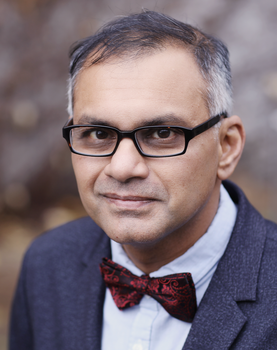
Hitesh S. Deshmukh, MD, PhD, is a leading expert in Neonatology with a career spanning multiple continents. He earned his medical degree at the University of Mumbai, completed fellowships at the Children’s Hospital of Philadelphia and Duke University, and currently serves as the Director of the Center for Perinatal Immunity at the University of Cincinnati—one of the nation’s top pediatric institutions.
Throughout most of his distinguished career, however, Deshmukh has maintained a close connection to both Golisano Children’s Hospital and the region at large, which ultimately drove his decision to join GCH as the incoming chief of the Division of Neonatology, a role he will assume in July. Years of collaboration with pediatrics researchers at GCH—particularly in lung development—left a lasting impression on him.
“I’ve always appreciated URMC’s strong research emphasis, which is rare among institutions,” Deshmukh said. “And I’m inspired by Dr. Jill Halterman’s vision for expanding research in pediatrics.”
Upstate and Western New York also hold personal significance. During his residency at the State University of New York at Buffalo, he met his wife—who was pursuing her MBA—and proposed to her on Seneca Lake.
“As an immigrant, there are only so many places where you truly feel at home,” he said. “This region helped me find my footing.”
Deshmukh discovered his passion for Neonatology in his third year of medical school. Initially considering a surgical career, his perspective changed after attending a session on surfactant therapy led by neonatologists from across the country.
Surfactant, a substance derived from lung secretions, expands the lungs and helps premature babies breathe. Developed at the University of Rochester, along with several other institutions, it was introduced in the 1990s and has saved countless lives.
“Witnessing the impact of surfactant shaped my identity,” he said. “I decided then to become a physician-scientist.”
To date, he has published 58 papers, with 1,561 citations. His research has frequently involved collaborations with GCH faculty, including Kristin Scheible, MD; Gloria Pryhuber, MD; and Thomas Mariani, PhD.
“Hitesh has been at the forefront of translational research in neonatal microbiome-immunologic interactions,” said Scheible. “This is a challenging and competitive field, and he’s made groundbreaking contributions in both human and nonhuman primate models.”
These collaborations reinforced his interest in joining URMC, and Deshmukh is looking forward to building upon the strong foundation that outgoing chief Carl D’Angio, MD, grew during his nearly 10 years leading the division.
“Rochester has a history of producing distinguished leaders in the field,” Deshmukh said. “I thank Dr. D’Angio for positioning this division to help shape the future of neonatal research and clinical excellence.”
As chief of Neonatology, Deshmukh—in collaboration with Colby Day, MD, the GCH Neonatal Intensive Care Unit (NICU) Medical Director—will oversee clinical operations at GCH’s 68-bed Level IV NICU and Rochester General Hospital’s 14-bed Level II Special Care Nursery. The university serves as the perinatal center for the Finger Lakes Region, with a catchment area of 1.2 million and an annual NICU admission of 1,200 newborns. The division has been ranked among the nation’s best by U.S. News & World Report for five of the past seven years.
His goals include expanding the division’s clinical research footprint, reestablishing its National Institutes of Health Neonatal Research Network Center designation, and developing a training program in neonatal immunology for physician-scientists. Clinically, he aims to reduce Rochester’s infant mortality rate to align with national averages—an ambitious goal requiring efforts to address regional social determinants of health.
“This effort will need community engagement,” he said. “We’ll extend beyond the neonatal unit to partner with local organizations.”
For Deshmukh, clinical care and research are deeply connected. Advances in Neonatology have been rapid, with survival rates and outcomes for preterm infants improving decade after decade, despite the field’s relative youth.
“It’s easy to forget that 20 years ago, the primary goal was simply keeping preterm infants alive,” he said. “We’ve since learned that some early treatments—like steroids and antibiotics—can have unintended long-term consequences. The goal now is to move beyond general clinical tools and embrace precision medicine, understanding the genetic factors that influence treatment responses.”
Deshmukh’s current research includes examining the impact of antibiotics on the microbiome and investigating whether probiotics could serve as an alternative.
“Antibiotics are necessary but disrupt the microbiome,” he explained. “We’ve found evidence in mice that probiotics can prevent infections and offer long-term benefits.”
Additionally, he plans to lead studies on the long-term outcomes of preterm infants, particularly concerning conditions like COPD and asthma.
“Dr. Deshmukh’s expertise, vision, and commitment to translational research make him an ideal leader for our division, and our community of researchers is excited to collaborate with him,” said Jill Halterman, MD, MPH, Chair of the Department of Pediatrics and Physician-in-Chief of GCH. “His work will not only advance neonatal care at GCH but also drive meaningful change in the field at large.”
