

A CDC Guideline Went Viral on Social Media. Here’s Why.
Whose pain matters?
It's a simple question, and it should have a simple answer.
Everybody's pain matters.
But the history of medicine reveals an ugly truth: the pain felt by the powerful has often been prioritized over the pain of the disenfranchised.

In fact, the history of Western medicine's approach to pain mirrors society's struggles with sexism, racism, ableism, classism, and other forms of discrimination.
Consider the term "hysteria," derived from the Greek word hystera, meaning uterus. In ancient Greece, women's physical and emotional ailments were attributed to a "wandering uterus". This misguided belief laid the foundation for centuries of medical misunderstanding and trivialization of women's health concerns.
Similarly, lies about the thickness of Black skin were used to justify slavery, horrific experimentation on enslaved people, and surgery performed without anesthetic. And yet those same lies continue to permeate the modern medical literature. Evidence suggests that these persistent race-based biases have real-world impact. Multiple studies have shown that Black patients receive less pain medication than white patients in the exact same scenarios.
This history and ongoing disparity help explain why a routine interim update to clinical guidelines captured public attention in August, when the Centers for Disease Control and Prevention (CDC) released the 2024 version of the U.S. Selected Practice Recommendations for Contraceptive Use.
The updated clinical guidance builds upon the 2016 version, adding new contraceptive methods, warnings about testosterone use during pregnancy, and information about common side effects.
However, the portion that made headlines was a relatively brief section about pain management during intrauterine device (IUD) insertion.
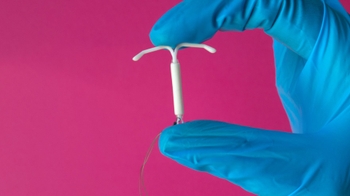
The IUD: A Quick Refresher
Several IUDs contain the hormone progestin and prevent pregnancy through multiple mechanisms, primarily by thickening cervical mucus and sometimes by disrupting ovulation. They may also thin the uterine lining.
There is also a non-hormonal copper IUD that works by creating an environment toxic to sperm and inducing a local inflammatory response in the uterus.
IUDs are popular for several compelling reasons, despite the need for insertion by a clinician. They do not require the daily maintenance of a birth control pill, and can offer beneficial side effects, such as reducing menstrual bleeding and cramps, depending on the type. In addition, Hormonal IUDs can be effective for 3-8 years, while the copper IUD can last up to 10-12 years, providing long-term contraception. Importantly, IUDs are reversible, allowing for removal at any time if pregnancy is desired. Both hormonal and copper IUDs can be used as emergency contraception.
Pain Associated with IUD Insertion
Unfortunately, IUD insertion is painful for many. Dr. Stacy Sun, an assistant professor of Obstetrics and Gynecology, says:
I always tell my patients that regardless of what you hear, an IUD insertion without any pain meds is momentarily painful and almost never pain-free
IUD insertion first requires placement of a speculum, which can be painful for some patients, and may be particularly so for those who have experienced sexual trauma in the past.
Following speculum placement, there are three parts of the procedure that can cause discomfort, cramping, or pain, according to Dr. Sun:
-
-
- Steadying the cervix: The clinician locates the cervix and steadies it with a tenaculum.
- Measuring the length of the uterus: The clinician uses a sound to measure the length of the uterus.
-
IUD insertion: The clinician inserts the IUD through the cervix using an instrument calibrated with the measurement from the previous step.
-
The Contraception Guideline Update Makes the News
NBC News’ Hallie Jackson reported on the updated recommendations on August 9th, saying:
The CDC telling doctors they've gotta do better after a big outcry online and a ton of viral videos of women reporting really intense pain while getting an IUD inserted.

This isn’t exactly an accurate description of the updated guidelines. The document does not contain an admonishment, and the portion of the guidelines about pain management for IUD insertion is only a few lines long. However, the tenor of this statement reflects the significance of the update for many.
For the first time, the 2024 guidance emphasizes that all patients should receive counseling about pain management prior to IUD insertion and that a person-centered pain management plan should be co-created by the patient and the clinician. Specifically, it notes that administering the numbing medicine lidocaine may reduce pain during IUD placement.
Many people felt vindicated by this update. As Jackson stated, advocates and people who experienced pain with IUD insertion have used social media to raise awareness about pain with many office-based gynecological procedures, including IUD insertion. Clearly, their advocacy worked.

@revulvaution

@reductress

@mamamiaaus

@washingtonpost
Studying this Phenomenon
Dr. Elisabeth Sulger is the inaugural fellow in the University of Rochester Complex Family Planning Fellowship Program. She is interested in understanding how, and to what extent, content shared on social media impacts individual patients’ decisions.
“There has been a huge raise in social media content related to healthcare and patient experiences, especially negative perspectives with pain and IUD insertion. Social media offers a platform for people to share their own stories and influence the medical decision making of others. That is one reason why we are developing a new study that will examine the relationship between someone’s social media exposure and what they ultimately choose for pain control at the time of their IUD insertion. How much is social media actually impacting our choices when it comes to our health? More people are being heard and our medical systems must adapt to address these needs.”