

Faculty Q&A: Tanzil Arefin, PhD
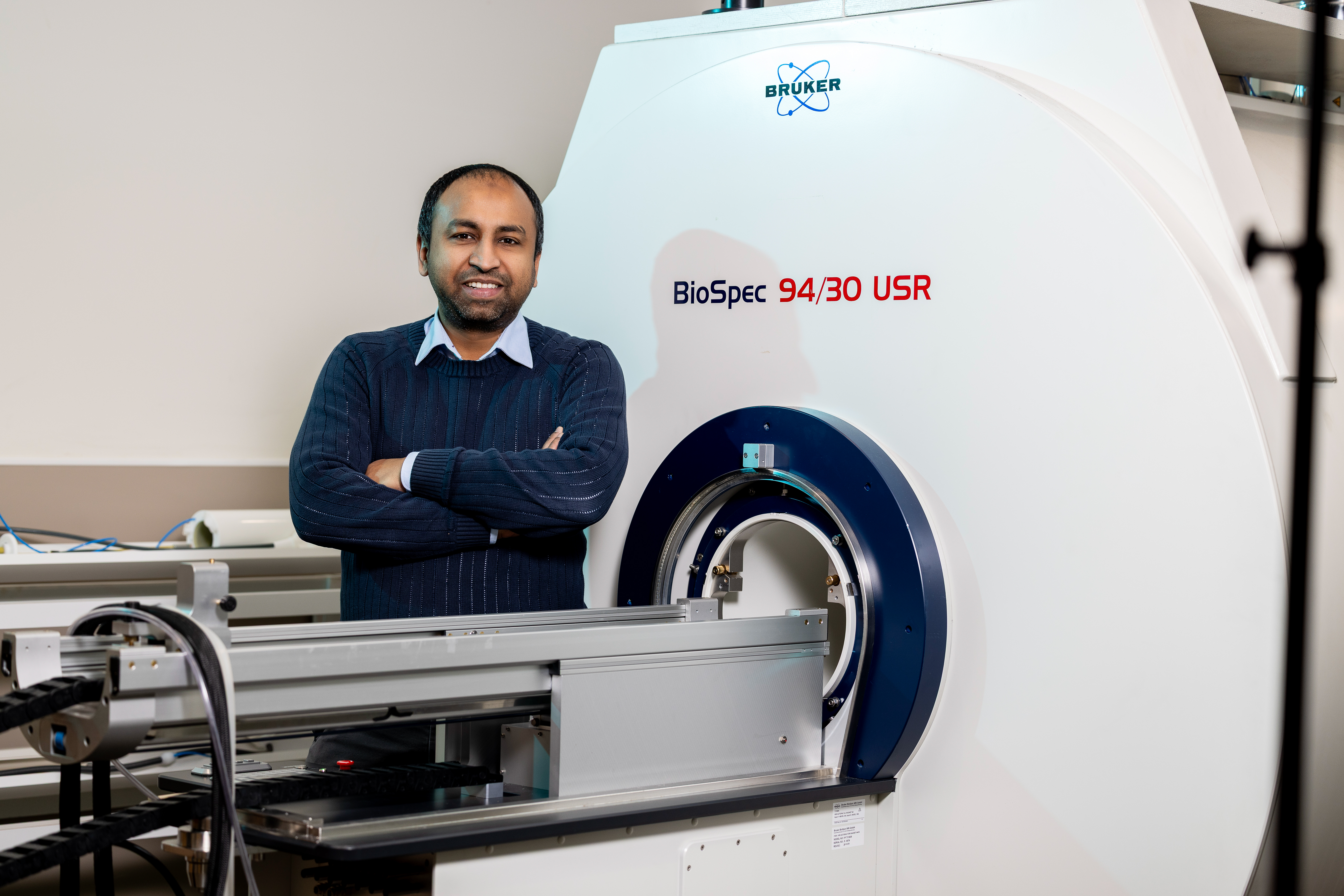
Tanzil Arefin, PhD, is an assistant professor of Neuroscience. He completed his postdoctoral training in Biomedical imaging at NYU Langone Medical Center and studied Neuroscience in graduate school at the University of Freiburg, Germany and the University of Strasbourg, France. He has two Master’s in biomedical engineering from The Czech Technical University, Czech Republic, and University of Groningen, The Netherlands, and completed his undergraduate degree in Electrical and Electronic Engineering at the Islamic University of Technology in Bangladesh.
Please summarize your research.
“My research focuses on the development of imaging biomarkers and computational tools to unravel the complexities of brain disorders in animal models. To be more specific, I combine multimodal MRI-based techniques with microscopy and transcriptomics and trace the molecular mechanisms to rescue alcohol-related damage in the brain. The goal is to translate these discoveries into actionable clinical insights, contributing to the broader scientific community's understanding of alcohol addiction.”
How did you become interested in your field?
“My interest in addiction research stems from a desire to understand the biological mechanisms that turn voluntary actions into compulsive, life-altering behaviors. During my Master’s, I worked in a lab that uses imaging biomarkers to understand the link between the addicted brain and behavior. Learning that addiction is a chronic disease that hijacks the brain’s so-called “reward system”—rather than a failure of willpower—sparked a fascination with how drugs and behavioral addictions rewire brain circuitry.
I became compelled by the potential to bridge the gap between molecular neurobiology and clinical treatment, specifically by understanding how neurotransmitters and neural pathways change over time. Ultimately, I am driven by the hope that decoding these brain alterations can lead to more effective, evidence-based treatments and reduce the stigma for individuals struggling with recovery.”
What brought you to the University of Rochester?
“The University of Rochester provides a consolidated research environment that aligns perfectly with the facilities I have always sought. I am collaborating with Dr. M. Kerry O’Banion, whose expertise in neuroinflammation and Alzheimer’s disease aligns with my research theme. I am also collaborating with Drs. Gail Johnson, Paul Geha, and Jinjiang Pang. In the future, I look forward to collaborating with Dr. Krishnan Padmanabhan.”
What is your favorite piece of advice?
Commit to daily growth, no matter how small. To me, a day without learning is a day wasted.
