

Wyatte Hall Named to Forbes’ Accessibility 100
Wyatte Hall, PhD, an expert in language deprivation as a social public health epidemic in deaf communities, and assistant professor of Public Health Sciences at the University of Rochester Medical Center (URMC), was named to Forbes’ inaugural Accessibility 100 list. Announced today, the list recognizes the “100 top innovators and impact-makers in the field of accessibility.”
“When a child is born deaf or hard of hearing, their access to and understanding of language can be severely limited during these crucial [early] years, causing lifelong consequences,” Hall’s profile states, appearing under the Education category. “(Any learning of American Sign Language often comes much later.) Hall’s Visual Language Access and Acquisition Lab is a leader in researching those adverse effects and possible solutions.”
Lacking Early Language
Hall, who is also an assistant professor of Pediatrics, Obstetrics and Gynecology, and in the Center for Community Health and Prevention, has overcome many accessibility challenges in his life and has worked to smooth the path for others. However, it wasn’t until he started studying language deprivation in his early career that he began to understand the disadvantages of his early life.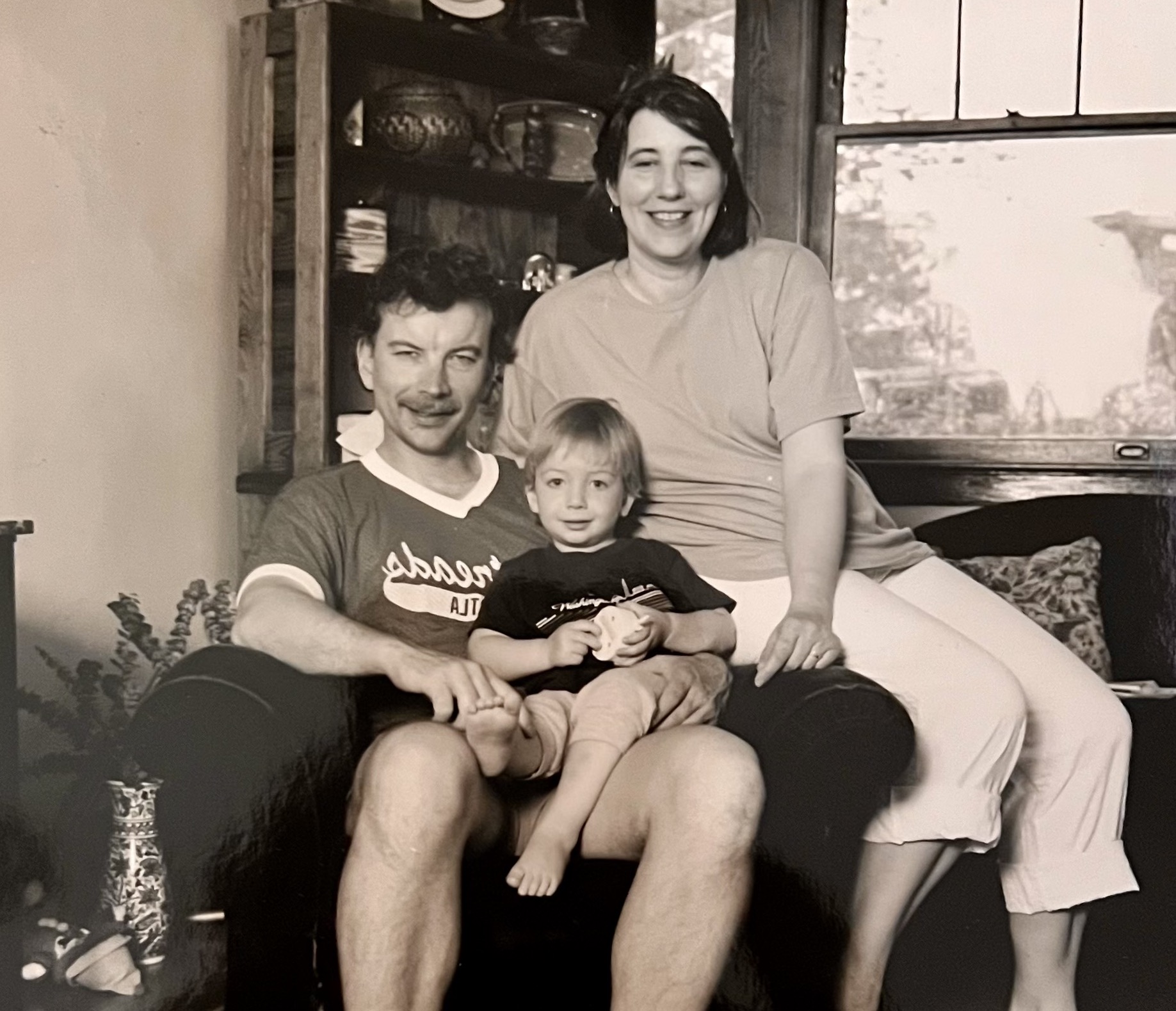
Born to a hearing family before the days of newborn hearing screening, Hall wasn’t diagnosed as deaf until he was two years old. Like most hearing parents of deaf children, his parents were bewildered. Following the predominant advice that persists even today, they tried to give their son access to the hearing world through only spoken language.
“I had hearing aids, I did not know sign language, and I was falling further and further behind,” Hall recalled. “At the beginning of kindergarten, the story is that I was still functioning as a three-year-old.”
While hearing children have access to language from birth, Hall only began to access sign language when he was five years old. Luckily, he quickly caught up and continued to perform at grade level through high school and beyond.
During his formative years, he recalls many deaf peers continuing to fall behind—reading elementary-level books and doing elementary math in middle school and even into high school—while others progressed like their hearing peers. From a young age, this apparent disparity bothered him.
“I felt like I was one of the lucky ones, but it shouldn’t be like that,” said Hall. “I wanted all my deaf friends to be doing as well as I was in school.”
Later, as a newly practicing clinical psychologist, Hall noticed a troubling trend in the Deaf community. Most of the adults who came to him for mental health services had not had adequate access to sign language, much less a first language, when they were young, which seemed to impact their mental health and everyday quality of life. Seeing these individuals reminded Hall of his school peers who struggled academically.
Broadening the Vocabulary
At the time, “language deprivation” was a fairly new term being discussed in deaf education and community circles. Hall came across it during his doctoral training in the Deaf Wellness Center at URMC, and “it was like a light bulb turned on. I now had words to describe the clinical symptoms I was seeing, some of which my friends and community experience, and some even I personally experienced early in my life,” he said.
That was when he decided to shift away from clinical work to study the impact of language deprivation on deaf populations. After receiving his doctorate in clinical psychology from Gallaudet University and completing a clinical fellowship at the University of Massachusetts Medical School, he returned to URMC as the first trainee in the Rochester Postdoc Partnership, the only postdoctoral program in the world designed to advance the research and academic careers of deaf scientists.
Over a decade later, Hall continues to empirically demonstrate the trends he noticed early in his life: language deprivation, especially a lack of early access to sign language, is linked to poor mental health, physical health, and education outcomes in deaf populations.
Hall’s work has been cited in clinical guidelines from the American Academy of Pediatrics recognizing risks associated with language deprivation for deaf children, and in a recent policy statement from the American Civil Liberties Union identifying language deprivation as the greatest threat to the civil rights of deaf and hard of hearing individuals.
Hall has also contributed to language deprivation being continually named a legislative priority of the National Association of the Deaf and co-authored several position papers regarding language rights for deaf people for the World Federation of the Deaf, a United Nations affiliate. Many deaf communities around the world have used these papers to advocate for national sign language rights in their countries.
Writing a New Playbook
Hall is one of a very small minority of deaf or hard of hearing trainees who have navigated societal barriers to earn a PhD in the sciences. Of 30,000 people surveyed in 2019 who have doctorates in a science, technology, engineering, or math field, only 1.4% reported being deaf or hard of hearing.
He admits the journey was lonely at times, which is just one of many reasons he is dedicated to smoothing the way for other deaf and hard of hearing scientists. During his time at the University of Rochester, Hall established a Deaf Academic Group as an informal peer mentoring group to support deaf trainees at all levels. He also worked towards improving Deaf Professional Interpreting Services at the University to ensure deaf and hard of hearing academic professionals and trainees have access to highly trained ASL interpreters.
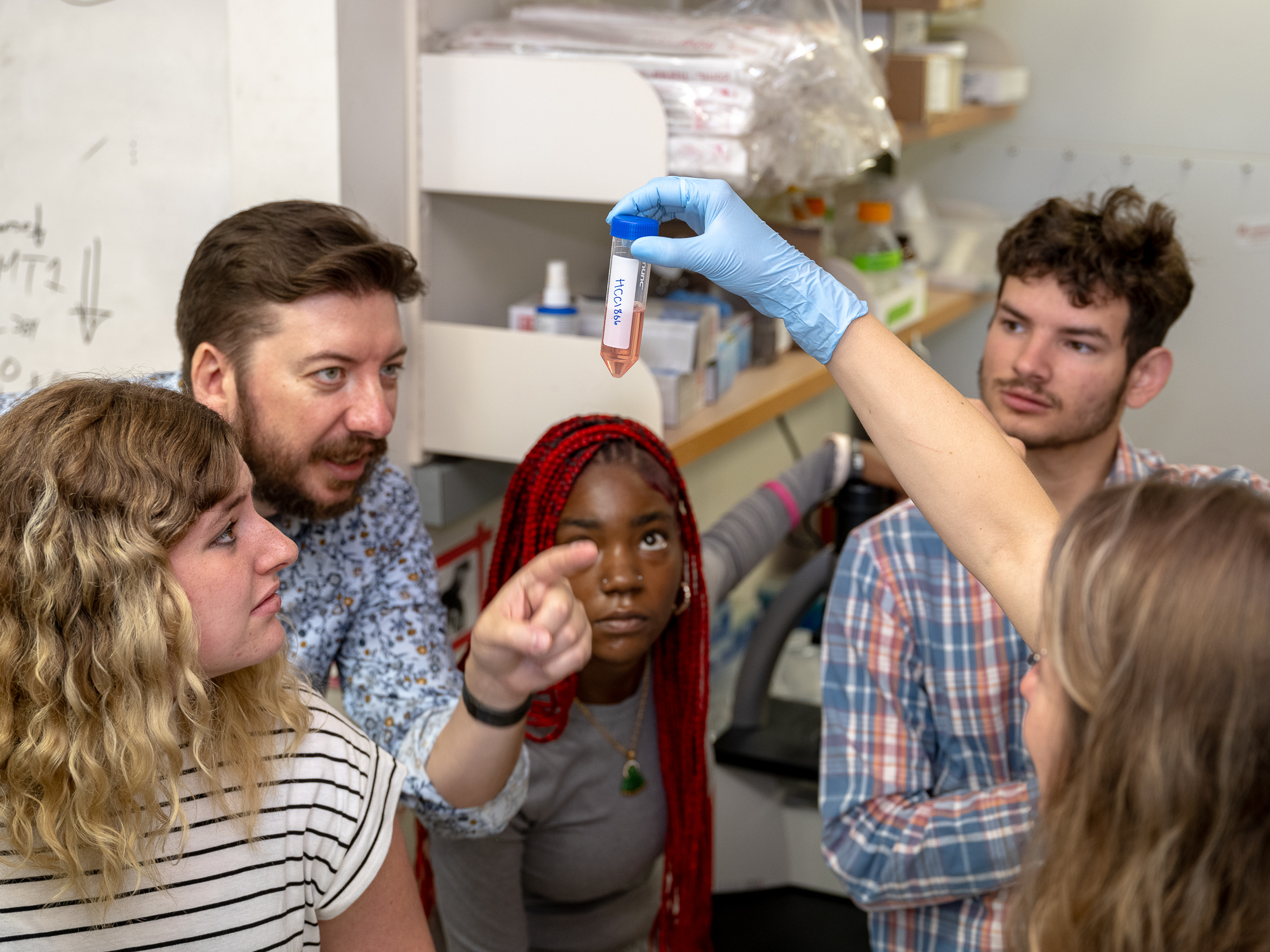
Hall also co-created an educational program to introduce deaf high school students to the world of science and medicine, with a focus on cancer research. The Wilmot Future Deaf Scientists Program started as a collaboration between the Wilmot Cancer Institute and the Rochester School for the Deaf in 2021 and expanded to four other schools for the Deaf situated near academic cancer centers in 2024.
“As I continue to work through these barriers, there's a level of responsibility to help create the way for other people,” Hall said. “I’m very aware of my privilege of being able to earn a PhD and work at the University of Rochester. If I can help create space for deaf people to join me or join the greater community of scientists and researchers in academia, then that lifts us all up.”Author
