

UR Medicine Among Elite Group of Leaders in Heart Failure Care
UR Medicine Strong Memorial Hospital recently provided its 1,000th heart pump, a lifesaving therapy for patients with advanced heart failure. This milestone has been attained by only a handful of elite programs in the United States.
“As a leader in heart failure care, our team works to restore our patients’ health and quality of life with the highest quality, specialized care,” said Leway Chen, MD, MPH, director of UR Medicine’s Advanced Heart Failure Program.
University of Rochester Medical Center joins a small group, including Duke, Emory, Texas Heart Institute, Columbia, and Cleveland Clinic, who have reached that number.
UR Medicine has a long history of using mechanical pumps, called left ventricular assist devices, or LVADs, to supplement the heart’s pumping action to send oxygen-rich blood through the body. These high-tech pumps help patients waiting for a heart transplant, and serve as a permanent solution for patients ineligible for transplant.
The American Heart Association estimates more than 6 million people are living with heart failure in the U.S. and about 10 percent have advanced disease. Those figures are expected to rise.
“Our patients’ successes stem from our depth of experience, collaboration, and commitment to excellence. As an institution, we have protocols and seamless processes to enhance recovery in the short- and long-term,” said Peter Knight, MD, chief of Cardiac Surgery.
The Medical Center is one of the highest-volume centers for LVAD use in the nation because the devices are a consistent option to save lives as organ donation rates fall short of demand.
‘Happy to be alive’
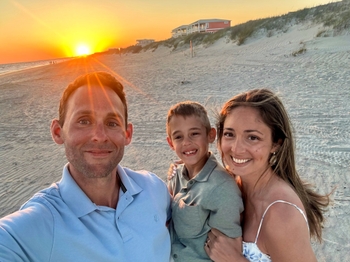
Stay-at-home mom Jessica Driffill first experienced heart trouble during her pregnancy. After a C-section in the Cardiac Catheterization Lab, where doctors closely monitored her heart, the couple welcomed Jackson, earlier than expected.
Doctors provided Driffill a pacemaker, but over time, it wasn’t enough support. Climbing the stairs was difficult and fatigue was overwhelming. Her failing heart brought her to the “brink of death” and the heart team placed the LVAD, with the expectation that she’ll someday need a heart transplant.
The Penfield mom embraces the heart pump because it gives her the time and energy to raise Jack. “It’s the little things I'm able to do now, like take care of the house, our pets, and be with my son and my husband,” Driffill said.
“The LVAD really changed my life physically, being able to be here, but also mentally and that means I can enjoy every moment. I'm happy to be alive and want to grow older with my husband.”
Leaders in field
UR Medicine’s Cardiac Care team introduced LVADs to Upstate New York in 2001. Initially offered through early studies to extend survival while awaiting a heart transplant, our clinicians’ research and insights supported manufacturers’ ability to improve the pump design and efficacy. LVADs are now standard therapy along with medication and transplantation for heart failure, said Jeffrey Alexis, MD, medical director of the LVAD program.
The evolution of LVADs over the past two decades has dramatically improved patient outcomes, Alexis said. When he joined URMC in 2003, patients received the HeartMate XVE as a “bridge to transplant.” It was large and weighed several pounds, and survival was less than two years.
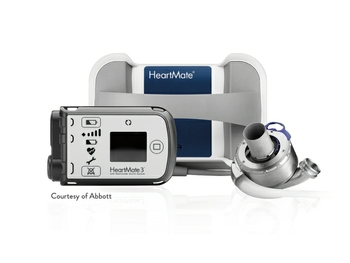
The HeartMate II and HeartMate 3 pumps, made by Abbott, are significantly smaller and lighter, and they lengthen survival time and improve quality of life. With 24 years of experience, UR Medicine’s team determines which patients will benefit from an LVAD, versus medications and transplant. Today they applaud a patient who has lived with the pump nearly 14 years.
In 2018, UR Medicine cardiac surgeons pioneered a less-invasive technique for implanting the HeartMate 3 LVAD. Using this alternate approach, surgeons can affix the device to the heart using two small incisions, eliminating the need to open the sternum, or “crack the chest.” Research has shown this “sternal sparing” method leads to faster healing and recovery. A year later, their innovation led to FDA approval of the game-changing procedure.
“Our national leadership in this sternal-sparing surgery put the spotlight on our LVAD program and our successes,” said cardiac surgeon Bartholomew Simon, MD, surgical director of Heart Transplantation and LVAD.
Care close to home
Cardiac transplant surgeon Rajasekhar Malyala, MD, associate professor of Surgery, has extensive experience in LVADs and heart transplantation. He joined the team in February and performed the 1,000th milestone surgery. He was previously at University of Kentucky, Baylor University Hospital in Dallas, and Rush Medical Center in Chicago.
The Advanced Heart Failure team supports the Medical Center’s commitment to provide the full-complement of heart care for residents of the Finger Lakes, Western and Upstate New York regions. Strong Memorial Hospital is the only heart transplant center in the state outside of the New York City region.
“Many live in rural or underserved areas and access to state-of-the-art heart failure care is essential,” Simon said. “For them, traveling to a large city for an LVAD or heart transplant is not an option. We are providing this needed care close home.”
Over the last two years, the Cardiac Care team expanded the number of heart failure clinics throughout the Finger Lakes and Southern Tier regions, including Geneva, Geneseo, Hornell, Big Flats, Olean, and Anthony Jordan Health Center.
“Some patients travel long distances for this advanced care,” Chen said. “Offering this care throughout the region in combination with remote video visits reduces that burden.”
Connect with us!




Author
