

RNA Biologist Eric Wagner Named 2024 AAAS Fellow
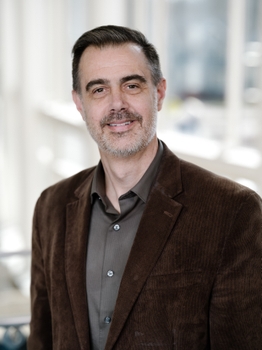
Eric J. Wagner, PhD, professor of Biochemistry and Biophysics at the University of Rochester School of Medicine and Dentistry, was elected a fellow of the American Association for the Advancement of Science (AAAS), the world’s largest general scientific society and publisher of the journal Science. Wagner was selected for his contributions to the fields of molecular biology and biochemistry, particularly his research uncovering how human cells regulate the production of RNA from genes and how disruptions in this process lead to cancer and intellectual and developmental disabilities.
Election as an AAAS Fellow is a lifetime honor within the scientific community. Wagner, co-director of the University of Rochester Center for RNA Biology, is one of 471 scientists, engineers, and innovators who were selected for the 2024 Fellow class for their scientifically and socially distinguished achievements throughout their careers.
“Eric is a card-carrying RNA biologist and powerhouse of technological developments whose work is increasing our understanding of the causes of neuroblastoma and other devastating brain disorders in children,” said Lynne E. Maquat, PhD, founding director of the University of Rochester Center for RNA Biology and the J. Lowell Orbison Endowed Chair and Professor of Biochemistry and Biophysics at the School of Medicine and Dentistry. “We’re extremely fortunate that we were able to recruit Eric back to Rochester as a co-director of both our RNA Center and our newly acquired NYS Center of Excellence in RNA Research and Therapeutics. I couldn’t ask for a more competent and engaged colleague to help further grow our strength in RNA research.”
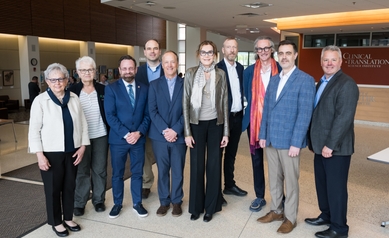
Wagner received his undergraduate degree from the University of Rochester, followed by a PhD degree from Duke University. He conducted his postdoctoral work at the University of North Carolina, went on to run his own lab at the University of Texas-Houston and then the University of Texas Medical Branch-Galveston, and returned to the University of Rochester in 2021 to join the Center for RNA Biology.
Among Wagner’s most well-known research is his work on the Integrator complex, which regulates gene expression in all our cells by helping to manage RNA production. When Integrator was discovered in 2005, Wagner’s lab was one of very few to study it. But things changed in 2014 when he published a paper showing that Integrator is all over the genome; people began to realize how fundamental the complex is to gene expression and many other labs started to work on it.
Over the past decade Wagner’s team has found that changes to Integrator impact cancer cell growth and neurological development, making it a promising treatment target for neuroblastoma and rare conditions like BRAT-associated brain disorders, which can cause cognitive impairment and seizures in children. His lab is beginning to work with other groups at Rochester to study Integrator function in brain organoids—microscopic multicellular model systems of the brain—to gain a better understanding of how it influences cell function and communication.
Also a member of the UR Medicine Wilmot Cancer Institute’s Genetics, Epigenetics and Metabolism (GEM) research program, Wagner was among a small group of scientists who found that the length of RNA is critically important to cancer cells’ ability to divide. Long RNAs are easier for cells to regulate, ensuring steady cell proliferation. Short RNAs are more difficult for cells to manage, and many aggressive cancers actively shorten the length of RNAs to create an unregulated environment where they can spread unchecked. Although Wagner and others are still conducting fundamental research to understand all the mechanisms at play, this work is making its way into the field of diagnostics, as scientists begin to look at the length of RNAs in tumors to determine where they fall on the spectrum of benign to malignant.
Eric is a wonderful mentor to many young scientists training in biochemistry, molecular and cellular biology, and cancer.
“In addition to being a leader in the ever-expanding field of RNA biology, Eric is also a wonderful mentor to many young scientists training in biochemistry, molecular and cellular biology, and cancer,” said Steve Dewhurst, PhD, vice president for Research at the University of Rochester. “His knowledge, passion for his work, and dedication to promoting science and the promise it holds for patients and society as a whole make him extremely deserving of this honor.”
Starting his scientific career as an undergraduate at the University of Rochester and now receiving this award as a faculty member gives it extra special meaning for Wagner.
“I’m honored to be elected as an AAAS fellow, but this is far from an individual accomplishment,” he said. “It reflects the aggregate work of all the talented and committed students and postdocs who I’ve had the privilege of working with over the past 17 years. Their research, and the research that’s being done across the broader scientific community is so important and has a real impact on people’s lives. I’m excited to see the positive changes that our work—and the work of all the 2024 AAAS fellows—brings in the future.”
Author
