

Newborn Screening Expansion Sparks Research on Early Duchenne Intervention
New therapies are transforming care for childhood muscular dystrophies by slowing disease progression. However, many of these advances are most effective when initiated early in life, often before symptoms even appear.
In response to the recent approval of gene therapies for Duchenne muscular dystrophy (DMD), New York, Minnesota, and Ohio have all added DMD to their newborn screening panels, creating a unique opportunity for researchers to study earlier diagnosis and intervention.

A new study led by University of Rochester Medical Center (URMC) and Golisano Children’s Hospital pediatric neurologist Bo Lee, MD, and funded by the Department of Defense, will establish a clinical research network spanning multiple sites across the three states. The project aims to characterize the early natural history of DMD in infants and toddlers (ages 0-3) and provide important insight into disease progression in the early stages.
Prospectively enrolling newborns and toddlers identified through state screening programs, the study will conduct longitudinal developmental and functional assessments. Researchers will evaluate cognitive, language, motor, social-emotional, and behavioral development, build a biorepository of specimens, and explore how genetic variations impact early motor milestones.
“While outcome measures and progression rates for children over age four are well understood, there remains a major gap in trial readiness and evidence-based care for younger boys and infants,” said Dr. Lee. “This project will not only advance our understanding of early DMD progression but also provide the infrastructure necessary for clinical trials of emerging treatments and help shape newborn screening expansion and clinical care guidelines nationwide.”
URMC Duchenne Muscular Dystrophy Research
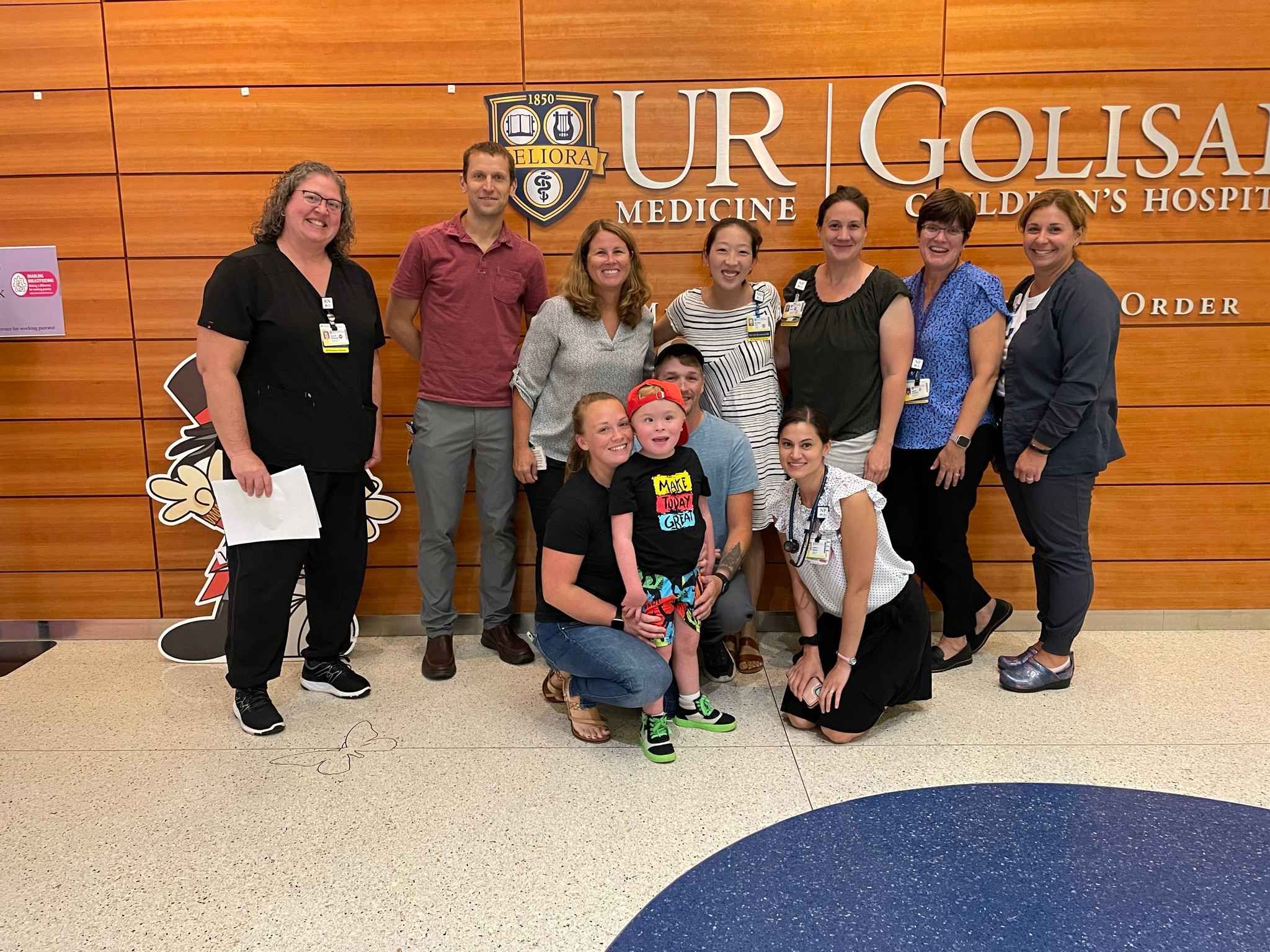
URMC neuromuscular researchers have been studying DMD for more than 50 years. In 1991, Robert Griggs, MD, and Richard Moxley, MD, were among the first to establish prednisone as an effective treatment for the disease. In 2016, URMC researchers showed that another steroid, deflazacort, was also effective, which later became the first drug approved by the US Food and Drug Administration (FDA) to treat Duchenne. In 2022, Griggs led an international study demonstrating the safety and efficacy of a daily steroid regimen for the disease.
More recently, URMC pediatric neuromuscular specialists, including Emma Ciafaloni, MD, played a leading role in the clinical trials for gene therapies for Duchenne, including one developed by Sarepta, which is now FDA-approved for children over four years old. In 2023, Ciafaloni joined other advocacy groups to successfully convince New York State to add Duchenne muscular dystrophy to its newborn screening panel, which is expected to be implemented later this year.
Author
