

New York Consortium Aims to Improve Gene and Cellular Treatment for Cancer
The University of Rochester and its Wilmot Cancer Institute joined with four other research centers in New York state to launch a new consortium focused on expanding early advances in gene and cellular therapy for cancer.
Members of the Empire State Cellular Therapy Consortium will share resources, expertise, and collaborate on clinical trials, with the goal of opening more trials within two years and improving patient access to these innovative treatments. Consortium members will have the opportunity to participate in studies originating from any of the five member sites.
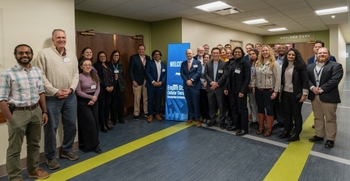
In addition to Wilmot, the consortium includes the Roswell Park Comprehensive Cancer Center in Buffalo and three institutions in New York City: The Icahn School of Medicine at Mount Sinai, NYU Langone Health, and Weill Cornell Medicine.
Cell and gene therapy is part of a class of cancer treatments known as immunotherapies. They work by harnessing a person’s own immune system to fight cancer, thereby personalizing cancer treatment.
It’s a fast-moving field of research: In the past two years, the U.S. Food and Drug Administration has approved more than 15 cellular and gene-based immunotherapies. Most are for blood cancers such as leukemia, lymphomas, and multiple myeloma. The consortium plans to expand this type of treatment for solid tumors such as breast, lung, and pancreas cancer. Empire consortium partners will share data and research strengths to speed up progress, and Roswell Park is offering their 20-clean-room GMP Engineering & Cell Manufacturing Facility to the consortium as a shared resource.
Wilmot has been a regional leader in one of the most advanced types of cellular therapy — a ‘living drug” known as CAR T-cell treatment. In 2017, Wilmot was one of the first sites in the world to offer the treatment to adults with an aggressive type of lymphoma. Since then, Wilmot has expanded its CAR T-cell clinical treatments, and researchers have received grants to study how to steer the immune cells more effectively toward cancer cells.
Patrick Reagan, MD, associate professor of Hematology/Oncology at the UR and director of Wilmot’s Stem Cell Transplant and Cellular Therapy program, applauded the statewide group and looks forward to participating in groundbreaking research.
“Collaboration on this level is so important because it will bring about efficiency as we make faster progress toward new, innovative treatments to benefit our patients,” he said. “The consortium also provides a lot of opportunity for basic scientists and junior investigators and trainees to learn by having access to this cutting-edge facility and a large team.”
Read the full news release at Roswell Park Cancer Institute.
Author
