

Lifesaving Care, Specialized Rehabilitation Help Rebuild a Life
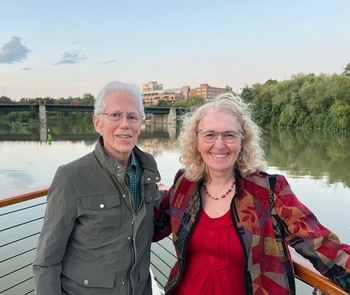
For George Scharr and his wife, Linda Rice, a pleasant June evening spent at the Rochester Jazz Festival quickly turned into a serious medical emergency.
Leaving a music venue that night in 2024 and heading back to their car, the then 77-year-old lost his footing on a flight of stairs inside a nearby parking garage. He tumbled down several stairs, hitting his head on the cement and sustaining what they would soon discover were fractures to his ribs, upper right arm, and skull, in addition to multiple brain bleeds.
His wife, a retired general practice physician, rushed to his aid while calling 911, then they waited for an ambulance. Firefighters arrived first to the deserted stairwell to begin assessing Mr. Scharr’s injuries, followed by passersby who turned out to be a local oncologist and his wife.
Transported by EMS to UR Medicine’s Strong Memorial Hospital, Mr. Scharr was quickly triaged through the Emergency Department to the adjacent Trauma ED for evaluation.
“The care was good right from the start,” Dr. Rice said, recalling the Trauma team’s expertise and compassion for her husband, as well as for her. From the ED, to Trauma, to the Neuro specialists who were immediately consulted about Mr. Scharr’s brain bleeds, the collaboration among departments was evident.
It is that expertise, which includes URMC’s Kessler Trauma Center with its designation as a Level 1 Trauma Center, that provides world-class care, right here at home.
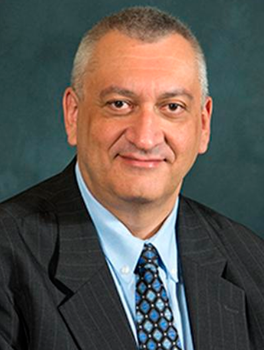
“Comprehensive trauma care requires constant collaboration with many clinical partners,” said Mark L. Gestring, MD, chief of the Division of Acute Care Surgery. “At the University of Rochester, we are blessed to have excellent support from a multitude of subspecialists. This commitment allows us to provide outstanding trauma care from the time of injury through the rehabilitation process.”
Mr. Scharr has no memory of the two weeks following his fall. The first days after being admitted were spent in the acute ICU, followed by several days on a step-down unit.
He was then transferred to the new Acute Brain Injury NeuroRehabilitation Unit, a specialized floor that meets the complex needs of adult and pediatric patients from throughout the region recovering from brain tumors, strokes, or other acquired brain injuries. Its services are integrated into the hospital’s leading trauma, surgical, and intensive care programs, providing a continuum of care designed to help patients recover function and independence.
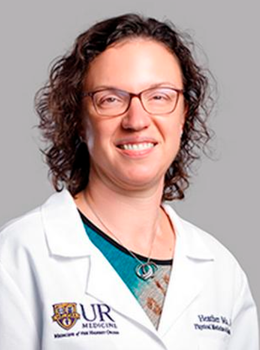
Mr. Scharr spent three weeks on the unit, being cared for by a multidisciplinary team that included rehabilitation physicians and nurses, as well as physical, occupational, and speech therapists, in addition to music and recreational therapists. Dr. Rice visited every day and witnessed the impact of the continuum of care the medical center provides its patients. During the rehab stay, Mr. Scharr worked closely with Heather M. Ma, MD, division chief and medical director of Acute Inpatient Rehabilitation and chief of Brain injury Rehabilitation Medicine. He and Dr. Rice were particularly impressed by what the URMC Brain Injury Rehabilitation program provides.
“Mr. Scharr and patients just like him are the reason we created this unique unit and the system of care that supports them,” Dr. Ma said. “By collaborating with multiple specialties and focusing on each patient’s unique needs, we work together to help patients achieve as full a recovery as possible. Together, we are helping patients rebuild their lives, starting with a time when they are most in need of our medical care, and supporting both patients and families through their return home and integration back to their communities.”
Since being discharged, Mr. Scharr has continued with outpatient physical, occupational, and speech therapies, and he continues to see Dr. Ma. “We are appreciative of the services provided by URMC,” Mr. Scharr said, “and we’re grateful the Finger Lakes Region has access to such renowned healthcare.”