

International Expert, URMC Fellows Highlight Annual Wellbeing Symposium
Tait Shanafelt, MD, Stanford University’s chief wellbeing officer, provided that praise and plenty of inspiration Nov. 13 when he delivered the keynote at the URMC’s Wellbeing Symposium.
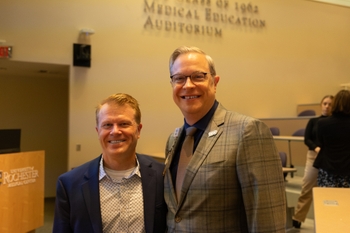
“He felt the same thing we do, that there is something special about this place and the people who work here,” said Craig Rooney, PhD, URMC’s chief wellbeing officer. “That doesn’t minimize the work ahead or the very real needs of our faculty, staff, and learners, but it reflects the wonderful foundation we have to build on.”
In his keynote, Shanafelt stressed the need for distributed ownership of wellbeing rather than a one-size-fits all approach. He believes about 80 percent of the responsibility for reducing occupational distress falls on an organization and its component parts, but he also discussed the value and importance of individuals cultivating greater resilience through connection with meaning and self-care.
"As Dr. Shanafelt's visit shows, we are fully committed to faculty, staff, and learner wellbeing, to working with national experts, and to implementing robust programs through our Office of Wellbeing," said URMC CEO and SMD Dean David Linehan, MD. "I was happy to join Dr. Rooney and his team in welcoming Dr. Shanafelt, and I share their passion for making URMC the best place to work and learn."
Shanafelt was named one of the 50 most influential people in health care by TIME Magazine in 2018 and is internationally known for his research and expertise on clinician wellbeing. He focuses on shifting the wellbeing conversation from increasing individual resiliency to implementing organizational, systemic, and cultural changes to improve conditions for health care professionals.
URMC’s wellbeing model is based on the tripartite model Shanafelt and colleagues developed at Stanford. It focuses on improving how we work, and advancing wellbeing culture, and promoting personal wellbeing.
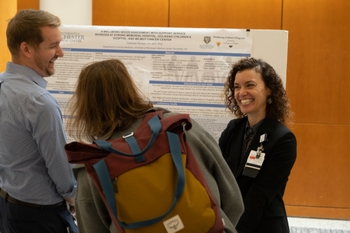
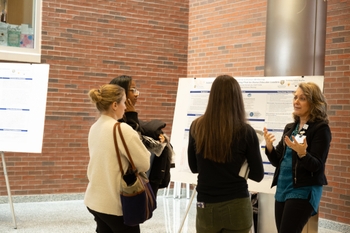
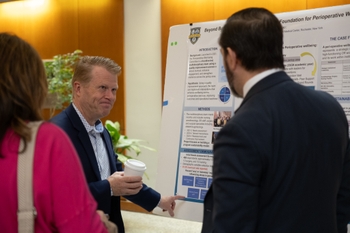
The daylong symposium also featured poster presentations by URMC’s inaugural wellbeing fellows. Their projects, which ranged from individual coaching to department-level interventions, won praise from attendees.
“That’s huge!” said one.
“We need to scale this up,” another added.
“It was so meaningful to see all of the Wellbeing Fellows’ hard work represented in the posters they presented at the Symposium and immensely gratifying to watch Tait view the posters and interact with our Fellows,” Rooney said. “I am deeply grateful to every member of the Office of Wellbeing team and for the support of senior leadership in getting us to this important event.”
Symposium attendees also joined breakout sessions. Led by Amber Rivera, SMD director of learner life and wellness, one was geared specifically toward researchers. Jessica Shand, MD, associate chief wellbeing officer partnered with Gregg Nicandri, MD and CMIO, and Rosemary Ventura, DNP and CNIO, to discuss informatics and clinical sustainability. And Rooney led another with Toni Sexton, MEd, focused on an intervention called “Moment of Why” in which participants build connections among their team by explaining their purpose.
Next year’s symposium is scheduled for Nov. 12, 2026.