

Back in Tune: The Rochester Medical Orchestra Finds Its Rhythm Again
In a world of pagers, pressures, and patient rounds, it’s not often that you find a piccolo solo, a Borodin medley, or the laughter of flutists echoing through a hospital corridor. But at the University of Rochester Medical Center, a growing number of healthcare professionals, students, and staff are tuning up—not for another shift, but for something entirely different.
“It just wasn’t on my bingo card,” says violinist Laura Finger, a medical editor in Radiation Oncology at Wilmot Cancer Institute. “I saw the email in December and thought, ‘Wait, it’s really back?’”
Finger played for nearly a decade with the original ensemble before it quietly dissolved. She’s one of several longtime members returning to the stage in what feels like a full-circle moment. “It’s a beautiful opportunity,” she says. “I love that I was part of the first part… and now it’s back again.”
At the heart of the revival is Isabella Cantor, a third-year medical student and lifelong violinist who couldn’t stand to see such a unique institution disappear.
"As a first-year student, I was disappointed to find the orchestra wasn't active anymore,” she says. “I kept hearing from people I met at URMC that they used to play an instrument but hadn't picked it up in a while. After hearing this over and over again, I decided I wanted to bring the orchestra back and give people the opportunity to play together again."
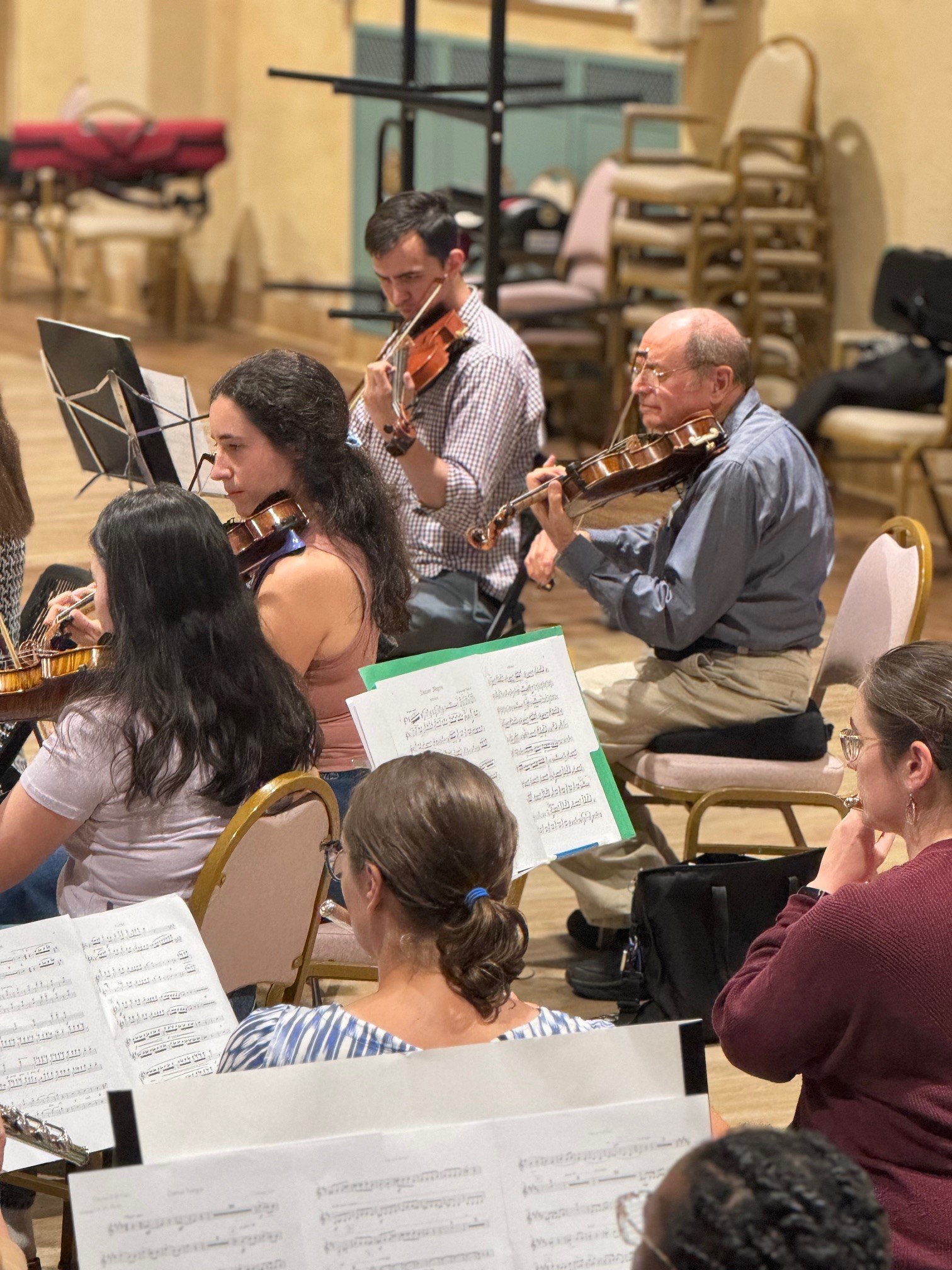
After nearly nine years of silence, the Rochester Medical Orchestra (RMO) is back, striking a chord with musicians and medical professionals alike.
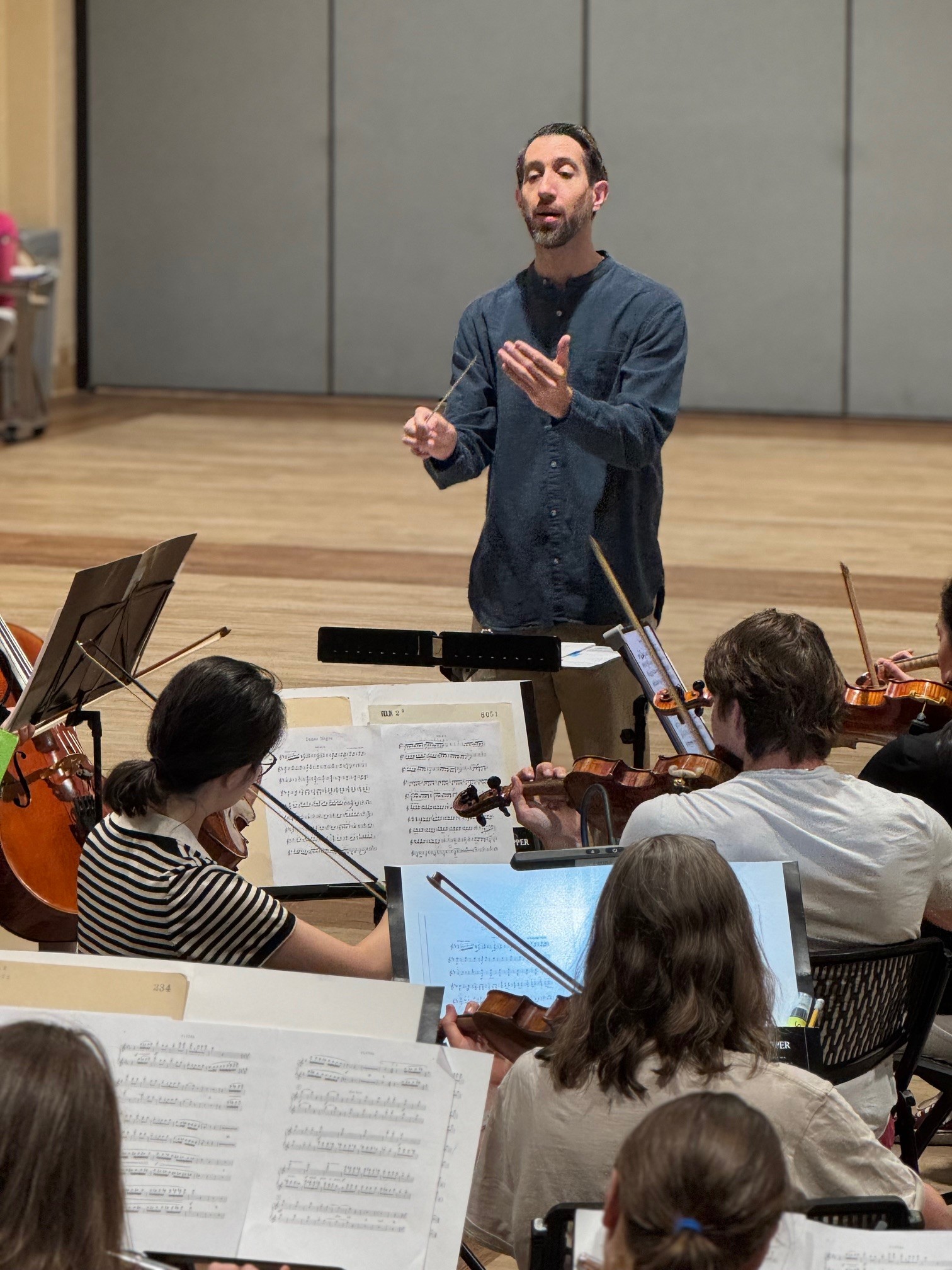
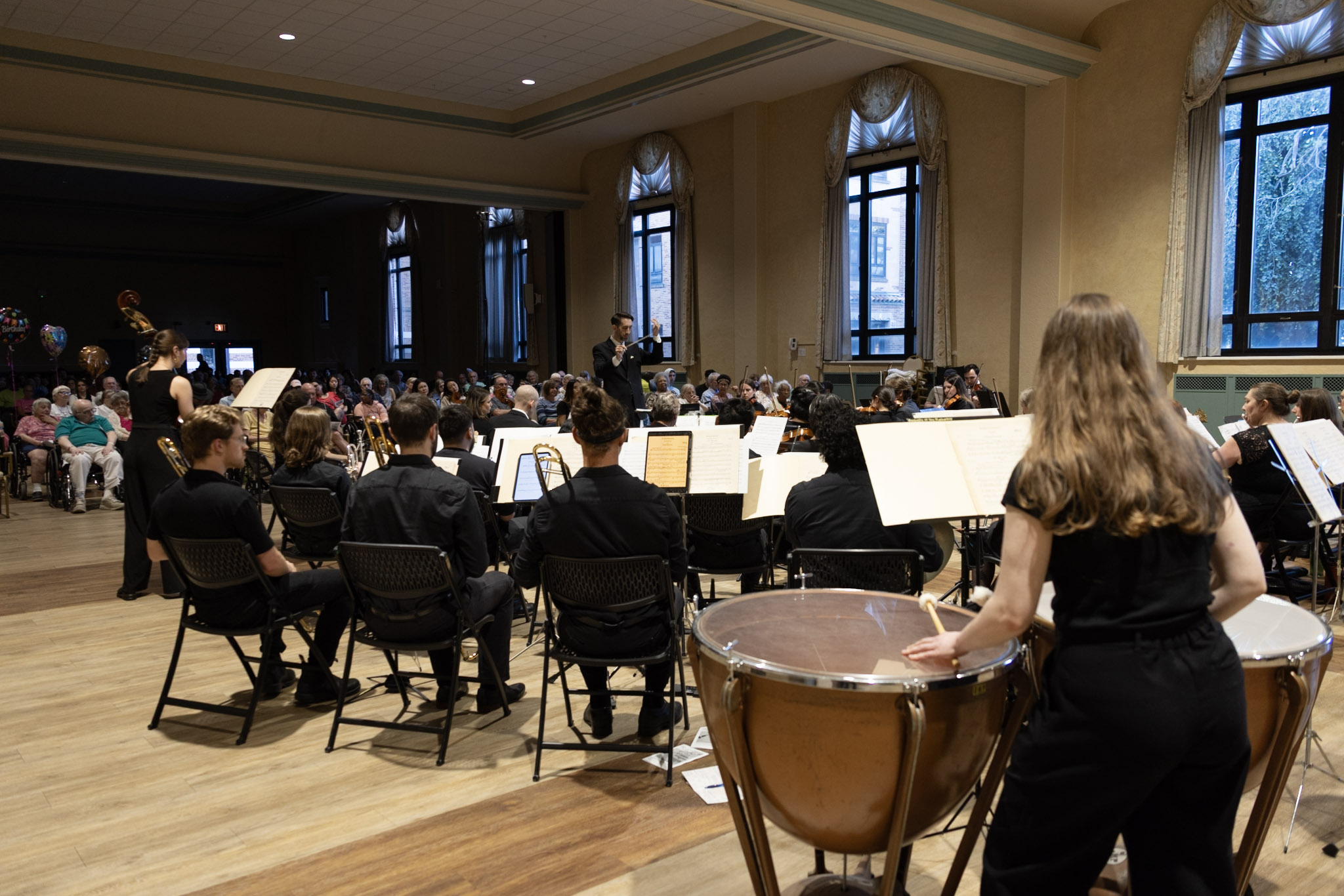
With support from the original RMO founder, Stephen Lurie, MD, Gaelen McCormick, the director of the Eastman Performing Arts Medicine (EPAM) Center, and conductor Evan Meccarello, artistic director of Cordancia Chamber Orchestra, Cantor re-formed the group and slowly built momentum. By summer 2025, 42 musicians and one conductor were rehearsing in preparation for their first concert on Aug. 1 at Monroe Community Hospital. Cantor said this orchestral iteration has drawn the interest of more than 100 medical musicians who hope to play in future concerts.
“The community that has formed around the orchestra is incredibly special,” Cantor says. “We’re people who are so often caught up in care and crisis. Here, we get to collaborate in a totally different way, by listening, supporting, and just making something beautiful together.”
Medicine Meets Music
Though its members wear many different hats—from researchers, doctors, students, archivists, to parents—what unites them is the music. For many, rehearsals provide a creative release and a chance to reconnect with a part of themselves that often gets lost in the daily demands of healthcare.
“It’s healthy to get away from work once in a while,” says Finger, who now balances violin practice with raising three young children and working remotely. “Some days we’re feeling like it’s a great day, and other days… we can hash it out here. It’s going to be OK.”
Sarah McConnell, PhD, associate professor of Neuroscience, agrees. She first joined the orchestra’s chorus as a graduate student years ago but returned as a flutist-turned-piccolo player after a chance encounter with Cantor. “I so took for granted being in ensembles like this,” says McConnell, who also happened to be Cantor’s anatomy professor.
A Legacy Reimagined
The orchestra’s return isn’t just about the future; it’s deeply rooted in the past. David Stern, MD, a semi-retired anesthesiologist, has played violin (and occasionally viola) with the RMO since its founding in 2007. Back then, he says, the group was inspired by a similar ensemble in Massachusetts and driven by a desire to make music and do good.
“We started raising money for medical charities after the first couple of concerts,” Stern recalls. “It was just enjoyable playing with other medical professionals. It’s surprising how many physicians have musical backgrounds.”
Stern, who took up the violin later in life after decades as a pianist, joined after watching his wife join a community band. “I was fascinated,” he says. “I wanted to play with a group.” Now, nearly 20 years later, he’s still going strong and excited about the orchestra’s new chapter.
“It’s really a stress relief,” he says. “And being in an orchestra, you feel the music kind of swell around you. You feel like you’re in the middle of it.”
The revived group hopes to recapture some of that original mission, with future concerts benefiting local health-related nonprofits. Performances are open to the public.
While the ensemble is still growing and finding its footing, the Aug. 1 concert featured full orchestral works by Bizet, Grieg, and Coleridge-Taylor, as well as chamber music.
“We’re hoping for a bigger fall concert,” Finger says. “Maybe October or November, definitely before the holidays.”
The Sound of Something More
What’s striking about the RMO is how little ego fills the room. Despite being full of highly accomplished professionals, the orchestra is grounded in camaraderie and curiosity, not competition.
“It’s been one of the most meaningful parts of my time in medical school,” says Cantor. “Music helps us stay grounded, and more human, in a field that can consume a large proportion of our mental real estate.”
For Finger, the music and work are intertwined. “Music is emotional, and so is any of the jobs any of us hold here,” she says. “It helps us process that.”
Gibson agrees. “This is a group of people who are skilled and ambitious in their daily work, and it shows. But the energy is also relaxed. People are kind, welcoming, and genuinely happy to be here.”
And that environment, Cantor hopes, will draw even more members out of the woodwork.
“You don’t have to be a music major or a concertmaster to be a part of this,” she says. “You just have to love playing and want to connect.”
That welcoming spirit is already rippling outward. McConnell has invited her entire anatomy teaching team to the next concert. “One of my students saw a flyer on my door and said, ‘Dr. McConnell, I can’t wait to go!’” she says, laughing. “There’s something really energizing about being part of it.”
A Place for Everyone
Whether it's someone's first time picking up an instrument in decades or just the next rehearsal in a lifelong musical journey, the RMO offers something rare: a shared space to be present, creative, and joyful together.
As Gibson puts it simply, “That’s the goal. From what we can hear, it’s sounding really good.”
Connect with us!



