

Student Spotlight: Emma Strawderman
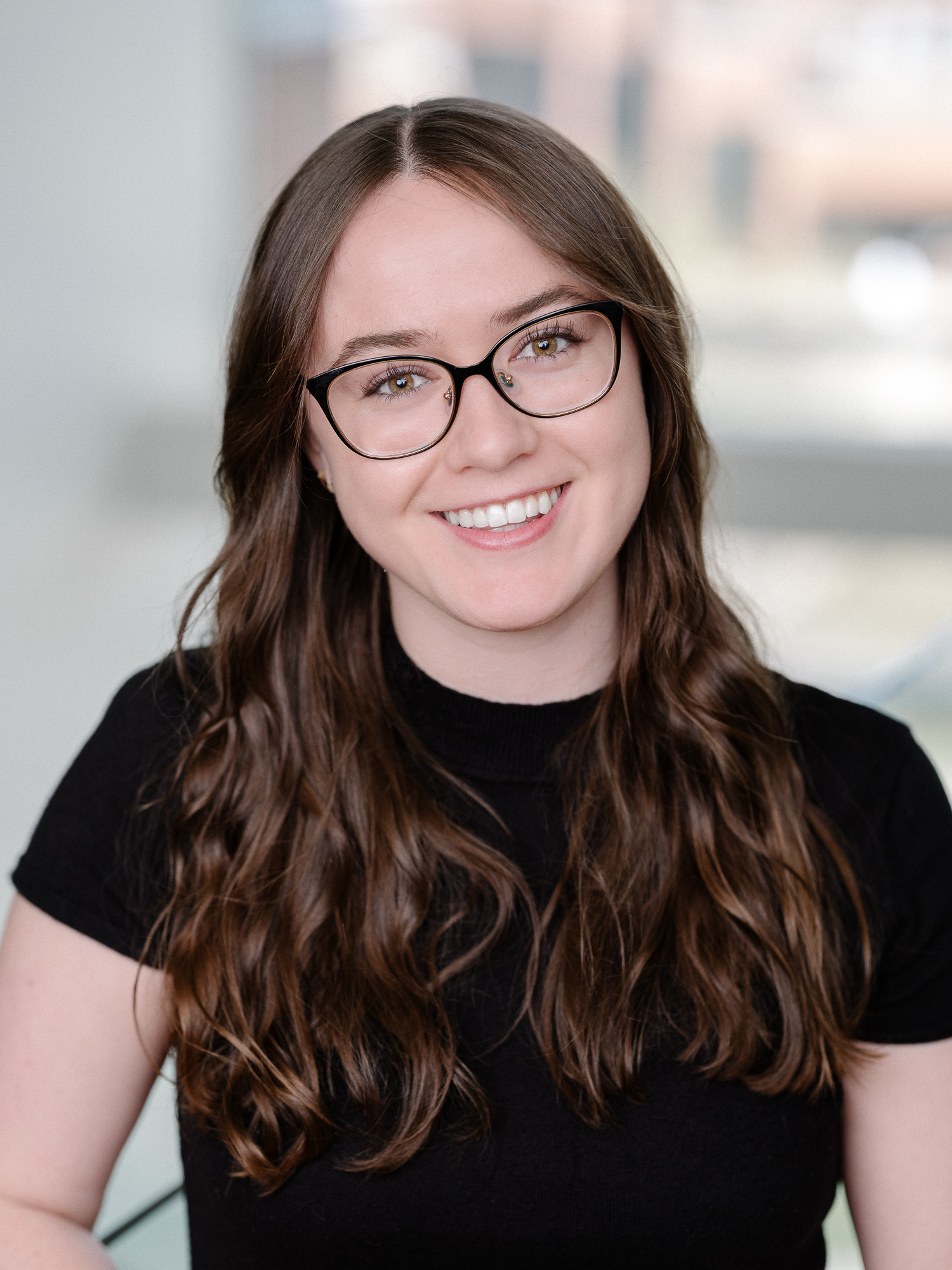
Emma Strawderman, an MD/PhD candidate in the Medical Science Training Program, works in the Program for Translational Brain Mapping. She completed her undergraduate studies at the University of Rochester, majoring in Brain and Cognitive Science with minors in Biology and Statistics. Her research investigates how the most common type of brain tumor in adults can rewire the brain as it grows and integrates into neural circuits.
“Some gliomas grow slowly, so the brain often has time to shift important functions from the affected area to healthier tissue, helping patients maintain abilities like speech or movement,” said Strawderman. “This “functional reorganization” is a striking example of how adaptable the brain can be. Interestingly, the opposite hemisphere is often recruited to help, though we don’t fully understand how or when this happens.”
Recently, Strawderman’s research showed that tumors on the left side of the brain caused rewiring in the right hemisphere. The study, published in Brain Communications, used MRI scans from patients and healthy participants and found that neural connectivity in the right hemisphere could distinguish patients from the healthy controls with 90 percent accuracy. And the patterns of the right hemisphere connectivity directly correlated with where the tumor was located and the type of cancer. “This study advanced our knowledge on how gliomas drive functional reorganization distal to the tumor site, which has implications for understanding variability across patients in cognitive outcomes, disease progression, and survival. I am now building on this research in my PhD project, linking changes in neural connectivity to specific outcomes (like language recovery after surgery) and investigating the biological mechanisms driving this reorganization using patient tissue samples.”
She was the 2023 recipient of the Rusyniak Memorial Medical Student Research Fellowship, which helped support this research project. George Rusyniak, MD, spent his career dedicated to education. This fellowship allows medical students to engage in clinical and translational research with Neurosurgery faculty at the Medical Center.
Strawderman first became interested in neuroscience in high school when she participated in the University’s Mini Medical School. “I had the opportunity to hold a human brain specimen and was completely awestruck that this gray lump of tissue once held every thought, memory, and emotion of a person’s life. I became very curious about how neurons worked together during cognition, and how that can go awry in pathology.” This sent her on the trajectory to find ways to preserve cognitive function in brain tumor patients.
Originally published in NEUROSCIENCE Volume 27.
