

Faculty Q&A: John Onukwufor, PhD
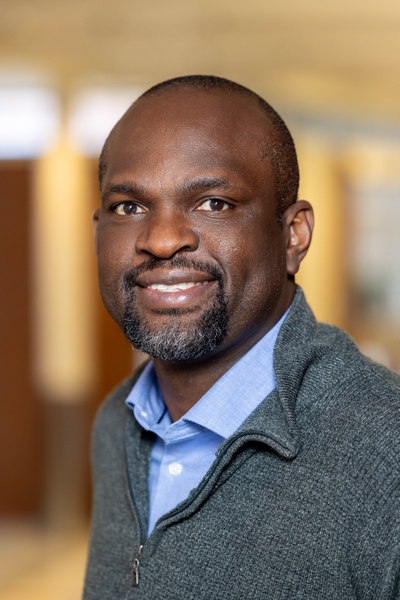
John Onukwufor, PhD, is an assistant professor of Pharmacology and Physiology and Environmental Medicine. He received his undergraduate degree in animal science from the Faculty of Agriculture at the University of Nigeria Nsukka and continued to study animal reproduction and physiology for his master's. He studied Toxicology at the University of Prince Edward Island Charlottetown for his PhD. He completed a postdoc at the University of British Columbia (UBC) Vancouver in a comparative physiology laboratory to study stress adaptation in fish. He came to the University of Rochester in 2018 for his second postdoc position in the lab of Andrew Wojtovich, PhD, studying stress signaling at the molecular level using C. elegans. He was eventually hired as a research assistant professor. In 2021, he received the inaugural University of Rochester Transition to Independence Award, supporting his independent research project investigating the role of metal neurotoxicity and mitochondrial dysfunction in Alzheimer’s disease pathogenesis.
Please summarize your research.
The Onukwufor laboratory is studying the role that metals, such as iron, play in neurotoxicity and mitochondrial dysfunction in the development of Alzheimer’s disease. My laboratory is also interested in understanding how genetic and environmental variables, such as temperature, metal, and hypoxia, interact to modulate cellular adaptation to stress. We use complementary approaches in transgenic overexpression C. elegans and mouse models of Alzheimer’s disease. In addition, we blend neuropharmacology, molecular biology, optogenetics, biochemistry, toxicology, and comparative physiology techniques. Our goal is to identify specific biological processes of the disease to develop novel therapeutic targets for Alzheimer’s disease and other neurodegenerative disorders.
How did you become interested in your field?
I have always been curious about how things work. This curiosity drove me to pursue a career in science. Growing up in Nigeria, I attended the University of Nigeria Nsukka with the goal of building an efficient farm on minimal land. After college, I had a poultry farm for about three years. However, I was still curious about science and found the opportunity to pursue my PhD at the University of Prince Edward Island Charlottetown, Canada. There, my research interests shifted from producing livestock for consumption to looking at their health and the environment. I was working with fish and looking at them at the mitochondrial level. This research led me to Andrew Wojtovich, and ultimately to Rochester.
What brought you to the University of Rochester?
Dr. Andrew Wojtovich recruited me to the University of Rochester as a Postdoctoral Fellow in his laboratory, where I used optogenetic approaches to gain mechanistic insights into mitochondrial ROS production and its role in stress signaling. Once I got to Rochester, I discovered the opportunities for early career researchers to grow—and the colloquial nature of the environment between colleagues and their trainees. This has made Rochester feel like home.
Is there anyone you are collaborating with or look forward to collaborating with and why?
I am collaborating with Dr. M. Kerry O’Banion in Neuroscience and Dr. B. Paige Lawrence from Environmental Medicine. They have been incredible mentors to me as an early career investigator. I see future collaboration opportunities with Dr. Marissa Sobolewski from Environmental Medicine, Dr. Ania Majewska from Neuroscience, and Drs. Scott Early and Houhi Xia from Pharmacology and Physiology.
What is your favorite piece of advice?
During my postdoctoral training at UBC, one of my mentors, Dr. Jeffrey Richards, said, “John, you have one shot, so make it count.” This has been my guiding principle to make every opportunity count. I also do my best to pass the one-shot statement to my trainees and mentees to see every opportunity as their last shot. By so doing, they are motivated to give their very best in whatever they do.
Originally appeared in NEUROSCIENCE | Volume 25
