

Faculty Q&A: Elise Piazza, PhD
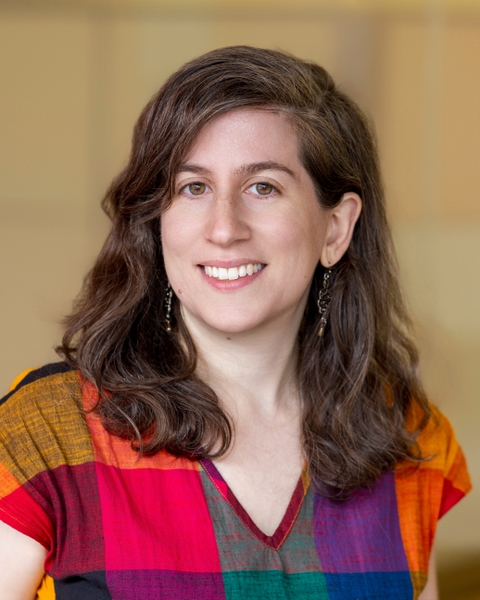
Elise Piazza, PhD, is an assistant professor of Brain and Cognitive Sciences and Neuroscience at the University of Rochester. She completed her undergraduate degree in Cognitive Science and Music at Williams College, her PhD at the University of California, Berkeley, and her postdoctoral training as a C. V. Starr Fellow at the Princeton Neuroscience Institute. Today, her research aims to understand how the brain organizes natural sounds, including speech and music, and how multiple people’s brains and behaviors align to support interpersonal communication.
Summarize your research
My research focuses on the cognitive and neural mechanisms of human auditory perception and communication. More specifically, a few active projects investigate how neural and behavioral alignment between people support successful real-life dialogue, how listeners track the statistics of others’ voices to infer identity, emotional tone, and social traits, and how expertise shapes the hierarchical processing of music, i.e., features like notes, chords, and phrases. I use a combination of behavioral and computational approaches as well as fMRI, EEG, and functional near-infrared spectroscopy (fNIRS), a non-invasive neuroimaging technique that uses near-infrared light to measure changes in blood oxygenation in the brain, which are associated with neural activity.
How did you become interested in your field?
In high school, I was debating whether to pursue clarinet performance at a conservatory or a more well-rounded liberal arts education. I chose Williams College, where I majored in both Cognitive Science and Music. I had opportunities to conduct research in several labs and perform with some really innovative ensembles. I soon became aware of the field of music cognition, including one pivotal moment that involved hearing Diana Deutsch discuss her auditory illusions on a podcast, and I conducted a senior thesis on the influence of expertise on musical memory. Over the years, my interests have migrated to multisensory integration, speech, and communication, but I have maintained a thread of music cognition research throughout, and it is a major component of my lab today.
What brought you to the University of Rochester?
I was drawn to UR for several reasons. First, its interdisciplinary Brain and Cognitive Sciences program aligned with my background better than most traditional Psychology departments. Second, the University has an incredibly rich auditory/music research community, which has only strengthened since I’ve been here, with multiple faculty hires, a world-class music cognition symposium, and the new SoundSpace Institute. Last but not least, I actually grew up in Rochester and have a large extended family here.
Is there anyone you are collaborating with at the University?
I have found it quite easy to make connections within and across departments at the University and Medical Center and have benefited from many people’s guidance. I am actively collaborating with several faculty, including but not limited to: Ed Lalor, PhD, professor of Biomedical Engineering and Neuroscience, Emily Knight, MD, PhD, assistant professor of Neuroscience, Pediatrics, and Developmental & Behavioral Pediatrics, Coraline Iordan, PhD, assistant professor of Brain and Cognitive Sciences, Neuroscience, and Data Science, Sam Norman-Haignere, PhD, assistant professor of Biostatistics and Computational Biology, Biomedical Engineering, and Neuroscience, Aaron White, PhD, associate professor of Linguistics, and Davy Temperley, PhD, professor of Music Theory.
What is your favorite piece of advice?
I have a few pieces of advice. First, push yourself to pursue ideas and events outside of your own core area of research. I have found success in interdisciplinary research because of its immense creative potential, and I love working on teams of people with diverse perspectives and expertise. Attending talks and conferences a bit outside of my core area has stimulated some of my best ideas and collaborations. Also, lab culture has a direct impact on research. The labs in which I’ve been most productive have had very healthy, positive cultures, so I’ve tried to build a supportive community in my own lab by hiring people who are kind and generous as well as brilliant, which has been invaluable.
Originally published in NEUROSCIENCE Volume 26.
