

What is Chronic Venous Insufficiency?
The President’s diagnosis of chronic venous insufficiency, or CVI, is shining a spotlight on a common condition in aging adults.
The most visible symptoms are:
- painful swelling in the feet and ankles
- spider veins
- varicose veins
About a third of the population are diagnosed, mainly women and people 70 and over.
What causes Chronic Venous Insufficiency?
In the News
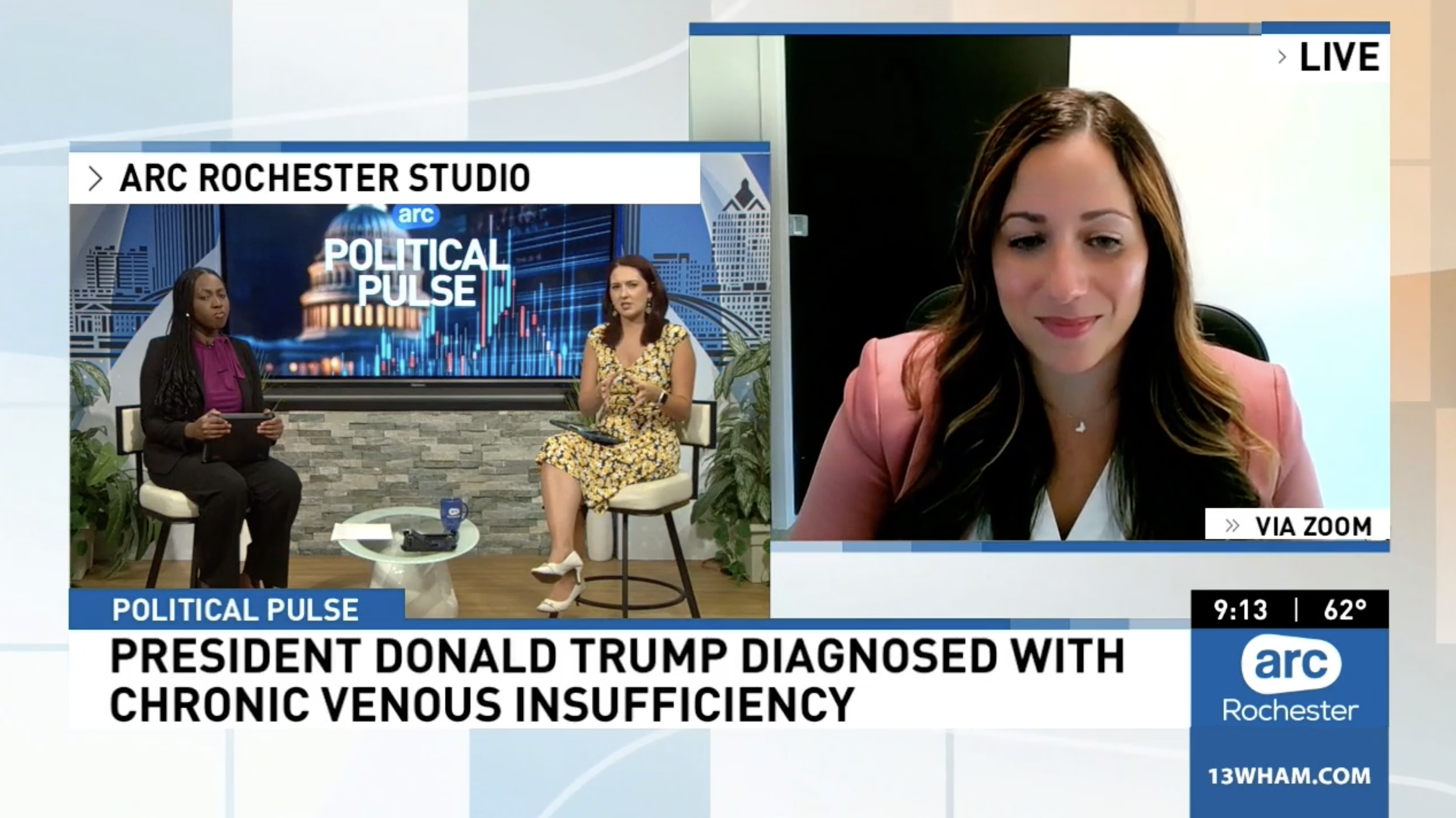
Vascular Surgeon Dr. Jennifer Ellis joined ARC Rochester to explain the diagnosis.
How is CVI Treated?
Chronic venous insufficiency is treatable, and early intervention can prevent complications. Both lifestyle changes and medical treatments can help relieve symptoms of the condition.
Lifestyle Changes
- Move more: Regular exercise improves blood flow in the legs.
- Elevate your legs: Raising your legs above heart level helps reduce swelling.
- Avoid long periods of sitting or standing: Change positions frequently.
- Wear compression socks: This helps support vein function and decrease swelling. See a medical professional to get fitted properly.
Medical Treatments
Your provider may recommend medical treatment. While many people are hesitant to seek treatment for this condition, modern treatments are usually one-day procedures in an office (not at the hospital), minimally invasive, and done under local anesthesia. The reatments are usually quick, and patients can return to normal activity within a day.
Treatment plans depend on the severity of your symptoms, overall health, and goals for comfort and appearance.
When to Seek Care
CVI symptoms can worsen over time. See a vein specialist if you notice:
- Persistent leg swelling or heaviness
- Pain that worsens with standing
- Enlarged, bulging veins
- Skin changes or ulcers on the legs
About UR Medicine Vein Care Center
UR Medicine Vein Care offers advanced, minimally invasive treatments for varicose veins, spider veins, and chronic venous insufficiency. Our specialists use state-of-the-art technology in a comfortable outpatient setting, helping patients restore comfort, health, and confidence in their legs.
Connect with us!




