

How Common is PCOS and Why You Might Already Have It?
Did you know that roughly 1 in 10 women have polycystic ovary syndrome (PCOS)? Or that the name is misleading because there are no “cysts” in the ovaries of people who suffer from it?

PCOS is a common disorder that brings a range of symptoms, including:
- Irregular periods
- Hirsutism (excess hair on the face and body)
- Acne
- Difficulty conceiving and pregnancy complications.
But because it’s so misunderstood, it’s also underdiagnosed.
Doctors at UR Medicine’s Strong Fertility Center make a PCOS diagnosis for many patients who have had the condition for years but were unaware of how it was impacting their health, quality of life, or ability to start a family. These providers are researching better treatments, and they also want to dispel some myths surrounding this condition so patients know when and how to seek help.
Here are some of the most common questions and misconceptions about PCOS.
Can you get pregnant with PCOS?
While it won’t make it impossible to get pregnant, it may take longer for someone to get pregnant or may require hormonal treatments to conceive.
In modern times, people are much more aware of the timing of pregnancy. So if they see a delay in conception, they are going to seek out care. The higher rate of diagnoses doesn’t mean the condition is becoming more common; it appears that the fundamentals of the condition have not changed over time.
Does obesity cause PCOS?
Many but not all PCOS patients also carry excess weight, but obesity alone doesn’t cause PCOS. It is a genetic condition that some people are predisposed to have, and weight gain can make it worse. Thin patients can have PCOS, and their condition often goes undiagnosed because they aren’t obese.
There certainly are issues such as insulin resistance that are common in PCOS patients—even those of normal weight. Lifestyle choices cannot cause PCOS, but you can make symptoms worse by doing things that negatively impact your insulin resistance.
That’s true for any condition: you can make your diabetes worse, for example, with poor diet and insufficient activity.
Is PCOS nearly impossible to diagnose?
There are three criteria for a PCOS diagnosis:
- Persistent irregular menstrual cycles
- Hyperandrogenism, which is higher-than-normal male hormone levels for normal reproductive-age women
- Ultrasound findings that show a specific pattern of follicles on the ovaries—not “cysts” but small, fluid-filled sacs that secrete hormones that influence stages of the menstrual cycle.The presence of two of these three criteria is enough to confirm PCOS. When necessary, more in-depth testing such as bloodwork or ultrasound can be used to confirm a diagnosis.
Can you have PCOS without cysts?
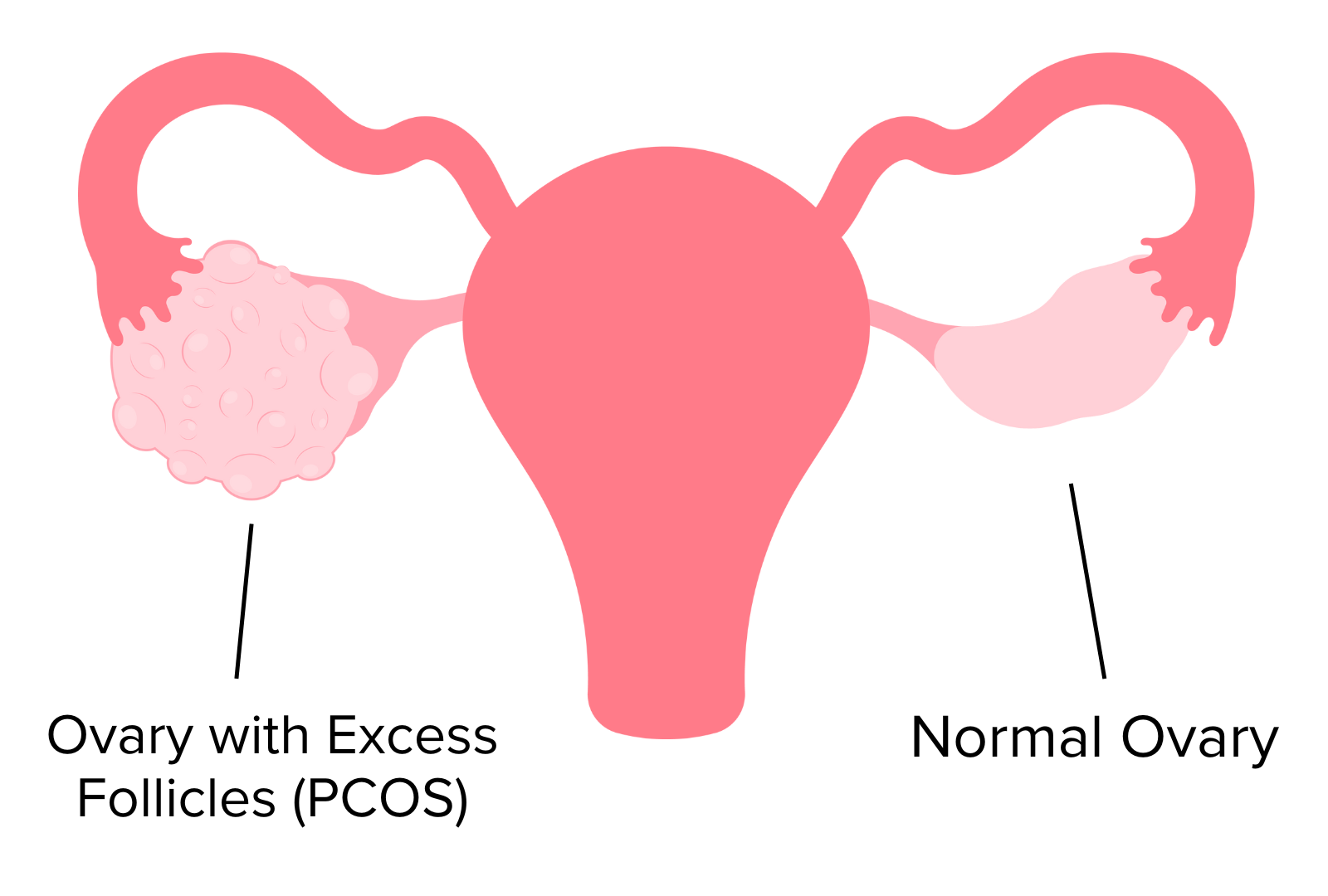
The name of PCOS is misleading. There are no “cysts”—just an excess number of the follicles normally found in the ovary.
The current name makes it sound like the problem is just related to the ovary. As a result, women who do have body-wide metabolic-endocrine signs of PCOS such as insulin resistance, hirsutism, and alopecia are not linking these to PCOS and not getting the treatment they need to improve their health and quality of life. Doctors believe the name for the condition should incorporate “metabolic” to reflect the significant consequences of the disorder.
Can a hysterectomy cure or help PCOS?

Individual treatments are used to help with PCOS symptoms, which can be very different from one patient to the next.
UR Medicine targets the approach to the patient based on lifestyle factors and main concerns.
Get Involved in Local Rochester Research
UR Medicine’s Strong Fertility Center is beginning research on a new treatment approach for people with PCOS who are trying to conceive.
Traditional fertility treatment for women with PCOS involves “drilling” the ovary to target the excess follicles; UR Medicine uses laparoscopic (minimally invasive) surgical tools to go in through the abdomen to eliminate parts of the ovary that create excess testosterone. The procedure enables women to experience spontaneous ovulation.
Now there is a new surgical device that can access the ovary via the vagina, which is less invasive and has a much quicker recovery time. The new procedure, called “ovarian rebalancing,” brings the patient’s hormones into a more normal range so women can ovulate. This could be a new option for women who want a non-medical way to stimulate ovulation.

- have 1 -2 visits to Strong Fertility Center
- have 1-2, 3-D transvaginal ultrasounds
- have a single blood draw
Get Care for Polycystic Ovary Syndrome
The PCOS Center’s multidisciplinary team includes a reproductive endocrinologist, nutritionist, and lifestyle coach. The team evaluates patients and recommends lifestyle changes that emphasize healthy behaviors, while also providing the support to make those changes last.
Connect with us!



