

Early Signs of Congenital Heart Defects in Babies: What Parents Should Watch For
Congenital heart defects (CHDs) are the most common type of birth defect. While most are minor and can be detected early, knowing what’s normal—and what needs evaluation—can help parents act quickly if something doesn’t seem right.
Early Symptoms of Congenital Heart Defects
Blue Lips or Skin (Cyanosis)
Cyanosis refers to a bluish tint to the lips, tongue, or skin caused by low oxygen levels. Parents sometimes notice blue coloring and worry immediately about the heart.
“Blue coloring of the hands and feet when a baby is cold can be normal,” explains George Porter, MD, PhD, chief of Pediatric Cardiology at UR Medicine Golisano Children’s Hospital. “But persistently blue lips or bluish coloring around the eyes should be evaluated.”
Struggles with Feeding
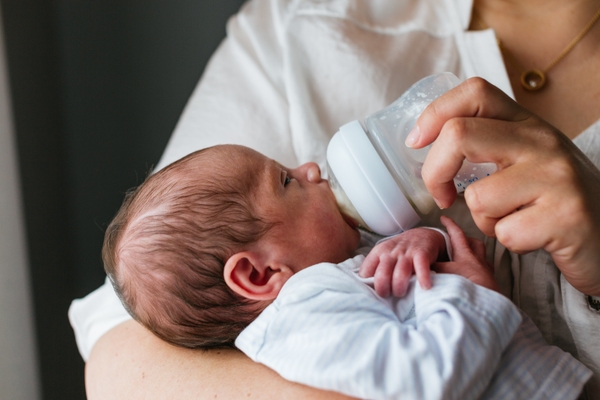
Feeding requires energy, and babies with heart defects may tire easily or sweat while taking a bottle or breastfeeding.
Alone, these signs may not indicate a heart problem, but when combined with difficulty finishing feeds, poor weight gain, or rapid breathing, they mean you should talk to your pediatrician.
Breathing Fast or Working Hard to Breathe
Some babies with congenital heart defects may breathe faster than expected or seem to struggle with each breath. Parents might notice signs such as flaring nostrils or the skin pulling in around the ribs or chest (called retractions).
Fast breathing that happens consistently, especially during feeding, can be a sign of a heart condition in infants. “If a baby has to pause feeding to catch their breath—not to look around or drift off to sleep—that’s cause for concern,” says Dr. Porter.
How Congenital Heart Defects Are Detected
CHDs can be identified at different stages, depending on the type and severity:
- Before birth: Many serious heart defects are found during routine prenatal ultrasounds. If something looks unusual, parents may be referred for a fetal echocardiogram, a specialized ultrasound of the baby’s heart.
- After birth: Every newborn undergoes pulse oximetry screening before leaving the hospital. This simple test measures oxygen levels and can help detect some heart defects early.
- Later in childhood: Many minor CHDs are detected when a heart murmur is heard during a routine exam. Most murmurs are harmless and are commonly heard in healthy children.
At any stage, if screenings or symptoms raise concerns, your pediatrician may refer your child to pediatric cardiology for further evaluation.
What to Expect at a Pediatric Cardiology Visit at Golisano Children’s Hospital
During the first visit, families can expect vital signs and an electrocardiogram (EKG) completed by clinical technicians, followed by a visit with a pediatric cardiologist, nurse practitioner, or physician assistant.
If an echocardiogram (ultrasound of the heart) is recommended, it is usually performed during the same visit. “These tests are painless and give us detailed information about how the heart is structured and how it functions,” says Dr. Porter.
After testing, the team will meet with your family to review results, answer questions, and discuss next steps.
Even when a heart defect is diagnosed, most children go on to live normal, active lives, and many conditions simply require monitoring over time. If you have concerns about your baby’s heart, your care team is here to help—early evaluation can provide clarity, reassurance, and the right next steps.
Pediatric Cardiology at Golisano Children’s Hospital
Our pediatric cardiology team provides expert, family-centered care for children with heart conditions of all types and severity. We pair advanced testing with compassionate, family-focused care to provide parents with clear answers and a personalized plan for their child’s heart health.