

Are InBody Scans More Accurate Than Weight Scales?
If you’re looking to get fit and shed some pounds, here’s something you should know: Watching your weight—that single number on the bathroom scale—is one of the worst ways to track your progress.
Since muscle weighs more than fat, getting more toned through exercise can make you gain weight, even if you’re watching what you eat. That can be discouraging and throw you off your game plan.
Registered dieticians and fitness trainers use several tools to get a more accurate, useful picture of your health and fitness. One of their favorites is the InBody scanner, a device that measures a client’s overall weight plus the percentage of muscle mass, body fat, and water.
How Accurate Is an InBody Scan?
A bathroom scale that measures pounds and/or body fat can be off by a lot, depending on how it’s calibrated, its error tolerance, time of day you use it (people tend to weigh more at night), and even the surface it sits on. But an InBody scanner, when used consistently and correctly, is considered a more accurate and thorough device for measuring body composition. In addition to giving you your total weight, it measures the muscle/fat/water content in each arm and leg and in the torso.
How Does an InBody Scan Work?
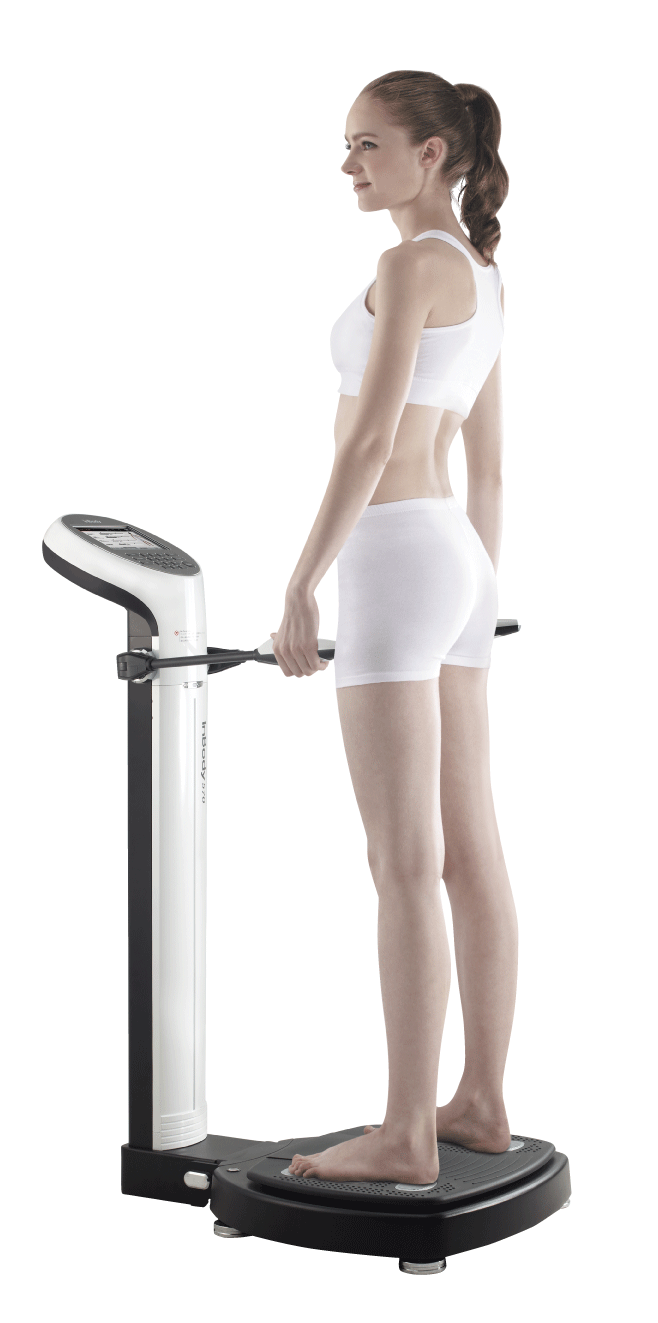
The InBody device looks like a bathroom scale with arm extensions. The base’s sensors touch the bottom of your feet; you hold the extensions in your hands, and sensors touch your fingertips.
A harmless, painless electrical current—so minimal you can’t feel it—runs from the device through your body to measure the resistance it encounters. Based on the current’s flow, the device calculates the percent of muscle, fat, and water in each limb and the torso.
The InBody scanner provides a detailed printout of body composition, obesity analysis, comparison to body weight norms, and more.
At the University of Rochester Medical Center’s Fitness Science program, the device stores your data confidentially so you and your trainer or dietician can take follow-up scans and chart the changes over time.
How an InBody Scan Can Improve Your Fitness Results
It gives you an accurate picture of your starting point.
That’s an essential first step in a fitness routine, according to Fitness Science Director of Operations Conner Lorenzo, who is also a certified fitness trainer.
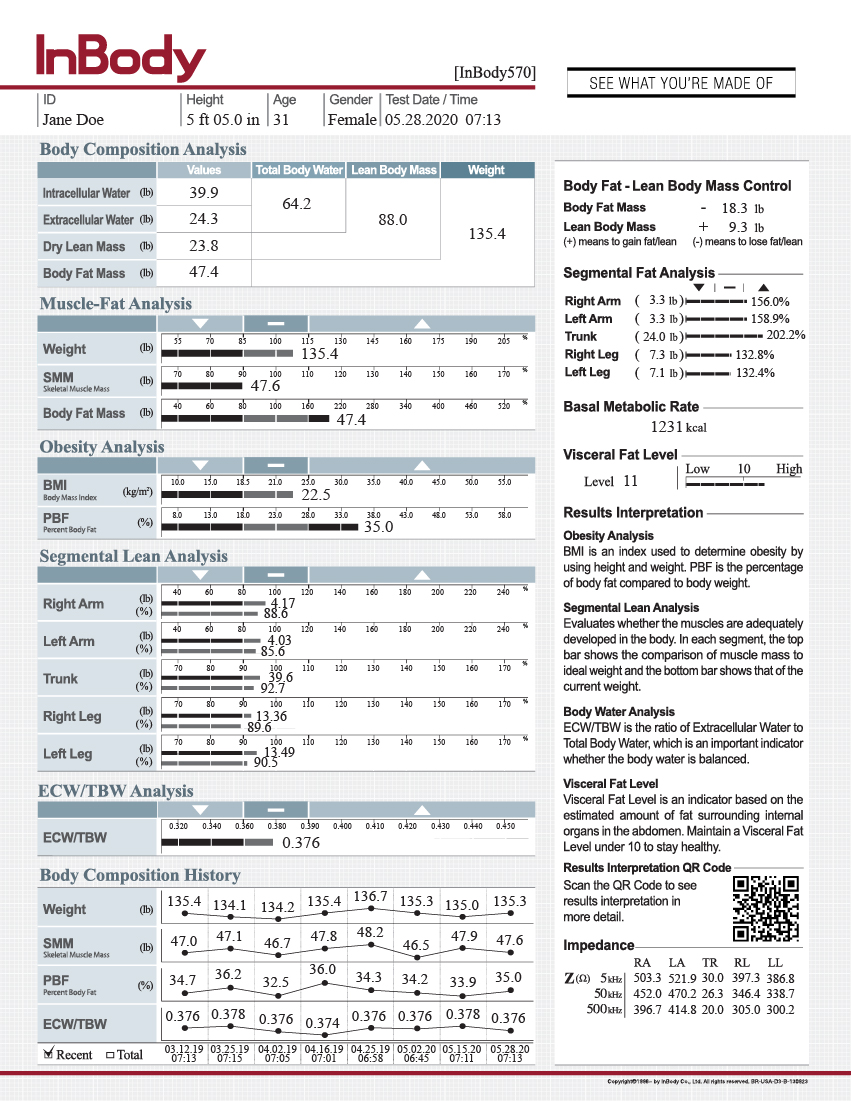
“We tell our clients, ‘You can’t change what you don’t measure.’ Knowing your strengths and areas for improvement in great detail can help you and your trainer prioritize what you want to work on first.”
It’s motivating.
When you’re making steady effort in working out and eating well, seeing how your InBody numbers change for the better is a big boost that can help you stick with your program, Lorenzo says. The insights also help you make adjustments in your routine to maximize your results.
Breaking free of fixation on a body-weight number reaps dividends, adds Fitness Science’s Registered Dietician Holly Gilligan. “Seeing your muscle mass increasing and body fat decreasing can be much more motivating than stepping on a scale every week and agonizing over whether you are down a pound or up a pound.”
Fitness Science at UR Medicine
Fitness Science athletic trainers and our Registered Dietician work with clients of all ages to improve their fitness and health. If you’d like to learn more about getting an individual assessment and fitness plan, visit the Fitness Science website.
Connect with us!



